Biology
The Test Said No, The Sequencing Said Yes
Genome sequencing published this week places the virus behind Central Africa's fastest-growing Ebola outbreak on a distinct branch of the Bundibugyo family tree — with an evolutionary signal nobody expected. Here is what that means for diagnostics built on the wrong prior, and where AI-assisted sequencing genuinely helps.
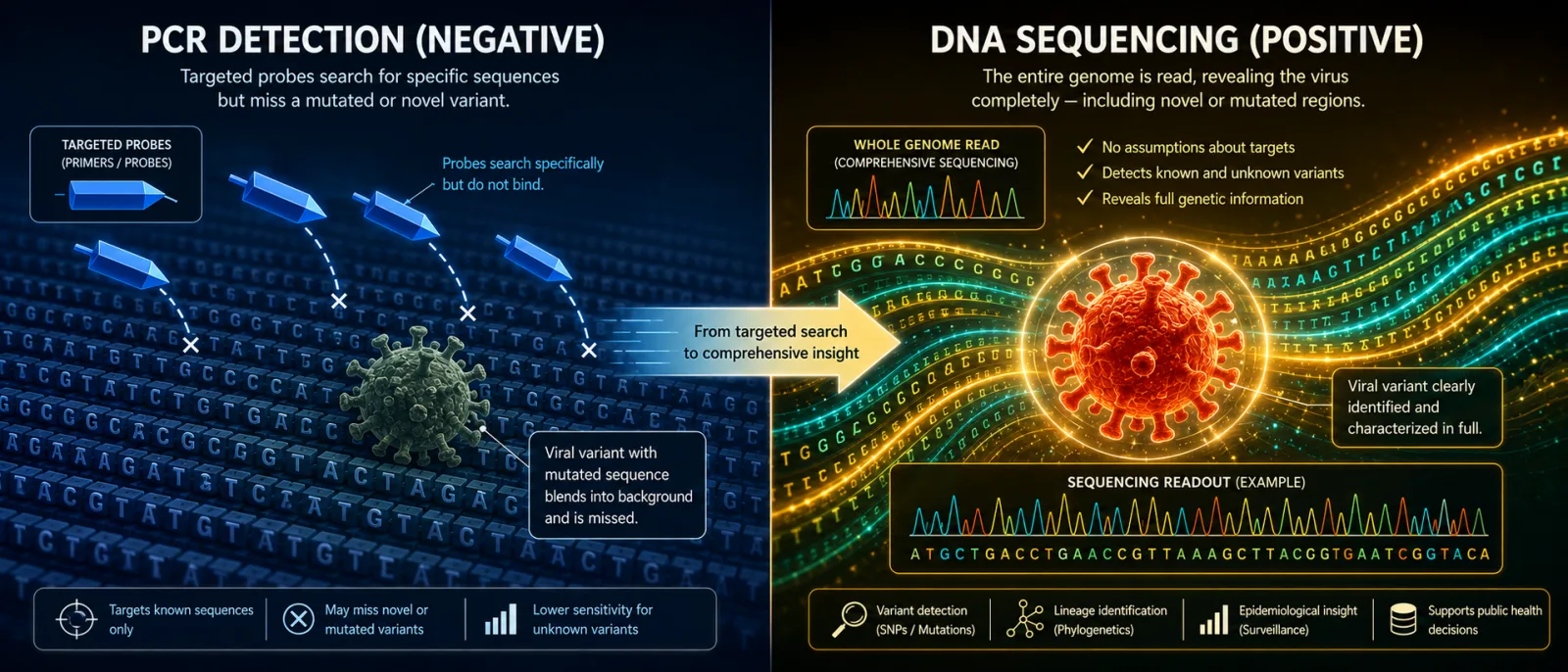
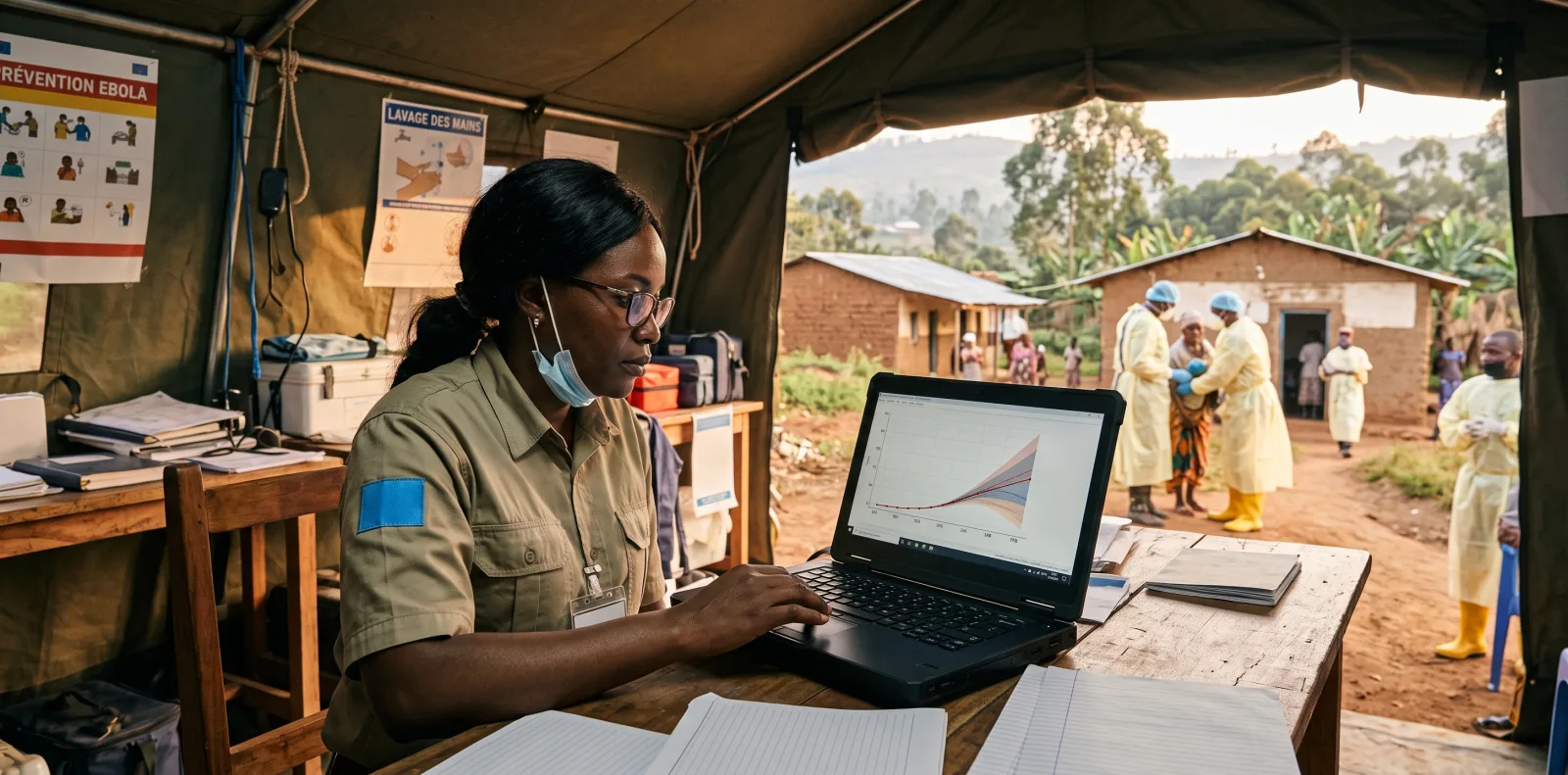
In early May, a hospital in Bunia Health Zone in northeastern Democratic Republic of the Congo saw a cluster of severe illness among its own healthcare workers. The samples were tested. They came back negative for Ebola virus. By 15 May, after further testing, 8 of 13 samples were positive, 5 were inconclusive, and genetic fingerprinting identified the culprit: not Ebola virus at all, but Bundibugyo virus, a different orthoebolavirus species (CDC situation summary).
That gap between a test that said no and a genome that said yes is the whole story of this outbreak, and it is the most useful thing happening right now at the intersection of AI, virology, and pandemic preparedness. This week the genomic picture got sharper, and stranger.
What happened#
On Wednesday 29 July, an international team including Uganda's Ministry of Health, the Interdisciplinary Consortium for Epidemics Research, DRC's National Institute of Medical Research, Dalhousie University and the University of St Andrews reported that the virus driving the current outbreak is a genetically distinct lineage of Bundibugyo virus, not a re-emergence of the strains sampled in Uganda in 2007-08 or DRC in 2012 (University of St Andrews).
The numbers are specific. Whole-genome sequencing found 219 nucleotide differences between a 2026 genome and genomes from the 2007-08 Ugandan outbreak, and 216 to 227 differences from the 2012 DRC genomes, roughly 1.2 per cent of the comparable sequence. Several of the changes fall in proteins involved in cell entry, RNA replication and particle assembly. The work is published in The Lancet01079-2/fulltext>) and Nature Medicine.
A companion evolutionary analysis in the Journal of Infection in Developing Countries produced the genuinely odd result. Comparing molecular clocks across Bundibugyo, Sudan and Ebola viruses, the 2026 genomes had accumulated fewer changes than the clock predicted. Two hypotheses are on the table: persistence in an immune-privileged site in a previously infected person, or a separate spillover from an animal reservoir under different selective pressure. Both remain hypotheses.
This is unfolding against a severe epidemic. WHO declared the DRC and Uganda outbreaks a public health emergency of international concern on 17 May. As of 19 July, DRC had recorded 2,423 confirmed cases, 967 deaths and 469 recoveries across five eastern provinces, with Ituri accounting for more than 90 per cent of cases; WHO incident manager Dr Thierno Baldé called it the fastest-growing Ebola outbreak on record and said plainly, "this outbreak remains ahead of us, and we are still in the phase of catching up" (UN News). Case counts have continued to climb since. There is no licensed vaccine or therapeutic for Bundibugyo virus.
Why it matters#
The interesting failure here was not a sequencing failure. It was a prior failure.
Most deployed filovirus diagnostics in the region were built around Ebola virus (formerly Zaire ebolavirus), the species that caused the 2014-16 West Africa epidemic and most subsequent DRC outbreaks. That is a reasonable base rate. It is also exactly the assumption that breaks when the base rate is wrong. A review of Bundibugyo diagnostics and countermeasures published on 15 July makes the historical point bluntly: the 2007-08 outbreak already showed "that assays optimised for known filoviruses can miss divergent ebolaviruses," and the 2026 outbreak "underscored the importance of diagnostic breadth, sequencing-based confirmation, decentralised laboratory capacity, and regional coordination" (Viruses, 2026).
A companion paper on sequencing strategy under 2026 field conditions describes the same constraint from the workflow side: sparse historical genome sampling plus Ebola-virus-centred diagnostic assumptions plus non-specific febrile presentations created a need for broad differential diagnosis and rapid species assignment, and useful genomes depended on sample quality, biosafety, infrastructure and bioinformatics at least as much as on the sequencer (Viruses, 2026).
Anyone who works with machine learning will recognise the shape of this problem. A narrow, well-optimised classifier fails on out-of-distribution input, and it fails silently: a negative result looks like a negative result. The fix in diagnostics is the same as the fix in ML: broaden the hypothesis space. In practice, that means pan-filovirus RT-qPCR assays designed to detect across the genus rather than one species, multiplex point-of-care tests covering Bundibugyo, Zaire, Sudan and Marburg together, and (where it can be run) metagenomic sequencing, which is species-agnostic by construction because it asks "what nucleic acid is in this sample?" rather than "is this one thing here?"
Metagenomic next-generation sequencing is where AI has a real, non-hype role. A 2025 review in Frontiers in Microbiology argues that mNGS has long been bottlenecked less by chemistry than by computation: assembly and classification are slow and complex precisely when turnaround time matters most. Neural architectures (CNNs, RNNs and transformers) are being applied to genome assembly and sequence classification, and the authors note that pattern-recognition approaches can outperform traditional homology-based methods, which matters enormously for divergent or novel viruses that have no close match in a reference database (Frontiers in Microbiology). A 2026 review of Bundibugyo genomics makes the parallel case that the first genomes from this outbreak are an occasion to think hard about the cost of sequencing and how to bring it down (Microbial Genomics).
Homology search is, in effect, nearest-neighbour lookup against what we already know. A virus 1.2 per cent divergent from its nearest sampled relative is still findable that way. A genuinely novel one may not be. That is the argument for learned representations over reference matching, and it is why the same review warns about an emerging "AI divide," where compute-intensive analysis concentrates capability in exactly the places that are not experiencing the outbreak.
The limitations are several, and they are not small.#
Genomic difference does not equal phenotypic difference. The St Andrews team was explicit: genetic differences alone do not show the virus is more transmissible, causes more severe disease, or evades existing diagnostics or experimental countermeasures. Clinical signs so far appear broadly consistent with 2007 and 2012. Whether the 2026 lineage produces a clinically distinct disease pattern has not been established.
The molecular clock result is a puzzle, not a finding. Fewer-than-expected substitutions is a real signal, but the two explanations offered (persistent human infection versus a fresh zoonotic introduction) have very different implications and neither has been demonstrated. Treat confident narratives about it with suspicion.
AI did not detect this outbreak. No model triaged those first Bunia samples. Sequencing did, at a centralised laboratory, after a delay. The AI contribution to filovirus surveillance today is largely potential rather than deployed, and the Frontiers review lists the blockers candidly: limited training data, model interpretability, and computational demands.
Structure prediction is not a free oracle. Related work published this month reports that deep learning tools for protein structure prediction can generate physically and chemically implausible folds, particularly for variant sequences and proteins with ionizable residues, and require human oversight (Phys.org summary). If you want to reason from those 219 nucleotide changes to a claim about glycoprotein binding or antibody escape, a predicted structure is a hypothesis generator, not evidence.
The binding constraint in Ituri is not algorithmic. It is armed conflict, population displacement, and thin laboratory infrastructure: conditions CDC flagged in June, adding that the true scope of the outbreak is likely larger than reported data suggest (MMWR). Better classifiers do not fix that. Decentralised sequencing capacity and multiplex point-of-care tests might partially.
FAQs#
Is this a new virus? No. It is a distinct lineage of a known species, Orthoebolavirus bundibugyoense, first identified in Uganda in 2007. The 2026 genomes sit on their own branch of that family tree.
Does "distinct lineage" mean more dangerous? There is no evidence for that. The researchers explicitly cautioned against inferring transmissibility, severity, or immune escape from sequence differences alone.
Why did the first tests miss it? Widely deployed assays were optimised for Ebola virus. Bundibugyo virus is divergent enough that a Zaire-targeted test can return negative. Sequencing-based confirmation resolved it.
Can AI predict the next spillover? Not reliably today. AI is most credible in this space as an accelerant for analysing sequencing data that has already been generated (assembly, classification, transmission-chain reconstruction) rather than as a forecasting oracle.
Is there a vaccine? Not a licensed one for Bundibugyo virus. Animal data are strongest for rVSV vaccines expressing Bundibugyo glycoprotein; most other countermeasure evidence is preclinical or extrapolated from other filoviruses (Viruses, 2026).
Should travellers be worried? Check current CDC and WHO travel notices rather than a blog post. As of its last update, CDC assessed overall risk to the American public and travellers as low.
This post is science journalism, not medical advice. For clinical questions, consult a qualified healthcare professional; for travel and exposure guidance, consult CDC and WHO directly.
Sources#
- Ebola Disease: Current Situation — CDC
- Notes from the Field: Outbreak of Ebola Disease Caused by Bundibugyo Virus — DRC and Uganda, May 2026 — MMWR, 5 June 2026 (DOI: 10.15585/mmwr.mm7522e3)
- Scientists identify distinct Ebola lineage behind 2026 outbreak — University of St Andrews, 29 July 2026
- Lancet report on the 2026 Bundibugyo lineage01079-2/fulltext>) — The Lancet
- Clinical profile and genomic characterization of the 2026 Bundibugyo virus index case in Uganda — Nature Medicine
- Companion evolutionary analysis — Journal of Infection in Developing Countries
- DR Congo: Ebola outbreak still expanding, WHO sees signs of stabilization — UN News, 21 July 2026
- PHEIC determination — WHO, 17 May 2026
- Bundibugyo Virus Disease: Diagnostics and Medical Countermeasures for a Neglected Ebolavirus — Viruses, 15 July 2026
- Whole-Genome Sequencing for High-Consequence Emerging RNA Viruses: Strategy Selection for Bundibugyo Virus Disease Under 2026 Outbreak Constraints — Viruses, 28 June 2026
- 2026 Bundibugyo virus outbreak: the role of genomics in Orthoebolavirus outbreaks — Microbial Genomics
- AI-powered analysis of viral metagenomic sequencing data for rapid outbreak investigation and novel pathogen discovery — Frontiers in Microbiology
- AI tools for predicting protein folding produce chemically impossible structures and need human oversight — Phys.org, July 2026
No preprints were used as the basis for factual claims in this post; all primary sources cited above are peer-reviewed journal articles, official public health agency communications, or institutional press releases describing peer-reviewed work.