Where an outbreak spreads next usually becomes clear only after people fall ill. In eastern Democratic Republic of the Congo (DRC), responders are trying to answer that question earlier, and part of the answer is coming from where people's phones have been. As the country fights the fastest-growing Ebola outbreak on record, teams have started feeding anonymised phone-movement data into models that forecast the epidemic's next locations. In its first real test, the method got uncomfortably close to the truth.
According to the World Health Organization (WHO), researchers have begun using anonymised mobile-phone data to map population movements and predict where new clusters of Ebola are likely to appear. WHO says the approach has never been used in an Ebola response before. It arrives four months into an epidemic that responders are struggling to slow.
"Population movements have always been a factor in outbreaks, but they are particularly important in the current epidemic," Olivier Le Polain, head of epidemiology and analytics for response at the WHO Health Emergencies Programme, told Reuters. The affected region is dotted with mining sites that draw transient workers, and with camps of displaced people, so knowing how people travel helps predict where help will be needed.
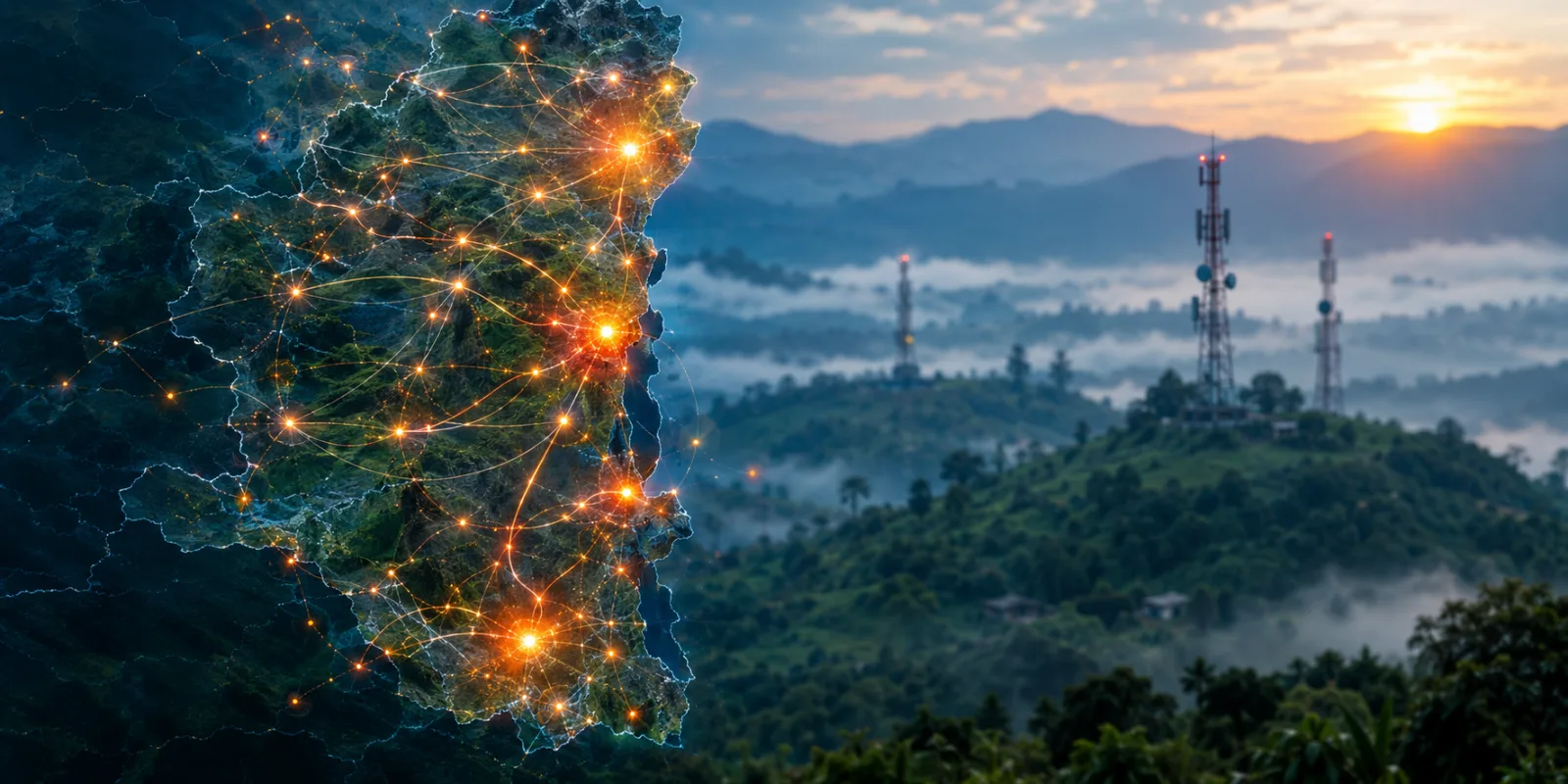
The analysis is produced by Flowminder, a Swedish non-profit that works with movement data, using records generated when phones connect to a network. The data is supplied free by Vodacom, Congo's largest operator, with more than 26 million subscriptions and roughly a third of the market. Flowminder says it receives only aggregated, anonymised records and cannot identify individual subscribers.
The proof came in the timing. Flowminder's first analysis, published in early June, looked at the three areas where the outbreak is thought to have begun: Bunia, Mongbwalu and Rwampara. Researchers tracked where people who had spent time in those areas between 3 and 23 April travelled afterwards. The largest flows went to nearby parts of Ituri and North Kivu provinces. By the end of June, all ten of the destinations that had received the biggest flows of travellers had reported confirmed Ebola cases. As Flowminder founder Linus Bengtsson put it, "We seek to provide estimates of how people move, which in turn is a predictor of how infectious people move."
The science behind the story#
Two things need unpacking here: the virus, and the data.
Ebola is a viral haemorrhagic fever spread through contact with the bodily fluids of infected people or animals, with fruit bats considered the likely natural reservoir. This outbreak is unusual because it is caused by the Bundibugyo virus, one of the rarer members of the ebolavirus family. The DRC declared its 17th Ebola outbreak on 15 May 2026, and the WHO Director-General designated it a public health emergency of international concern two days later. Bundibugyo matters for a hard reason: unlike the more familiar Zaire ebolavirus, it has no licensed vaccine or specific treatment. Ervebo, the one approved Ebola vaccine, targets a different species, and the WHO concluded on 31 August that the evidence is still too thin to say whether it protects against Bundibugyo, partly because cross-reactive antibody levels run several times lower. The species has caused only two other known outbreaks since it was identified in 2007, so the scientific literature on it is sparse. A recent commentary in Nature Immunology noted an evidence map with just 49 publications on Bundibugyo, against 857 for Ebola virus.
Now the data. "Mobile-phone data" here does not mean listening to calls or tracking named individuals by GPS. Every time a phone connects to a mast, the network logs which mast and when. Aggregate millions of those connections and you can estimate how many people typically move between one area and another, without knowing who they are. Epidemiologists call this kind of work digital or mobility epidemiology, and it has informed responses to cholera, malaria and COVID-19. The models that sit on top are not crystal balls. They are statistical and machine-learning tools that turn patterns of human movement into a ranked list of places the virus is most likely to reach, so responders can act before cases appear rather than after.
Why this matters#
The immediate value is triage. This outbreak has outrun the response on nearly every measure. A CDC analysis in the MMWR found the response below target on all five critical control indicators, with only 15 to 20 percent of new cases linked to known transmission chains against a target above 90 percent. Case totals stand at 6,686 confirmed cases and 3,226 deaths, and the WHO says another 5,000 workers and about 1,600 treatment beds are still needed as the virus threatens larger cities, including Kinshasa. When beds, staff and vaccine doses are scarce and the map is large, a credible forecast of the next hotspot is not a luxury. It tells you where to move resources first.
The broader significance is that this is a template. The ingredients are cheap and already in place in most countries: a mobile network, aggregated records and a modelling team. Nothing here required a new satellite or a bespoke sensor network. For pandemic preparedness, a low-cost method that repurposes existing infrastructure is easier to imagine deploying for the next Marburg, Nipah or influenza event than a system that has to be built from scratch during the emergency.
It also marks a shift in how AI shows up in public health. Much of the excitement around AI and disease has been about prediction in the abstract or discovery in a database. This is different. It is a data-driven method being used inside a live emergency to direct where people and supplies go. That is a more demanding test, and a more useful one.
Critical analysis#
The June result was validated against what actually happened, the method is inexpensive, it keeps humans in the loop, and it uses data that already exists. But there are limitations.
The biggest is coverage. The analysis relies on a single operator. Vodacom is the largest, but a third of the market still leaves most subscribers on rival networks invisible to the model, and it captures little movement across international borders, which matters for an outbreak that has already reached Uganda. There is also a subtler bias: people who own and carry phones are not a random sample. The very poor, many women, young children and people in remote areas are underrepresented, so the movements the model sees are skewed towards those already better connected.
Then there is the gap between prediction and outcome. Knowing where the virus is heading is not the same as stopping it. The outbreak has kept growing while the tool has been in use. Some of the reasons have nothing to do with data: unpaid and under-equipped health workers have reportedly been allowing families to touch the bodies of the dead, breaking one of the most basic rules of Ebola control, and the response is unfolding amid armed conflict and mass displacement across the east. A forecast cannot pay a nurse or calm a conflict zone. It can only make good decisions easier to reach.
Two questions remain open. First, does the forecasting measurably change the course of the outbreak, or does it mainly confirm what responders already suspect? There is no published evidence yet that it has slowed spread. Second, who governs this data flow once the emergency passes? A telecom company handing movement data to responders during a crisis is one thing. Standing arrangements, with clear limits on anonymisation, retention and access, are another, and they do not yet exist in most places. As for timeline, the method is operational now, but turning a one-off collaboration into durable, well-governed infrastructure is a multi-year project, not a quick win.
How this fits the wider AI wave#
It helps to place this against the other AI tools now aimed at outbreaks, well summarised in a recent Nature technology feature. Some work at the level of the virus itself. LucaProt, a deep-learning model built by the virologist Edward Holmes and colleagues, was used in 2024 to identify 70,458 previously unknown RNA virus species from public sequence databases, the largest such haul in a single study. Others scan the information around outbreaks. BlueDot, a Canadian firm, filters thousands of reports across 65 languages and layers in air-travel data; a decade ago it flagged Miami as a likely Zika site before the cases arrived. HealthMap, running for about twenty years out of Boston, sent one of the first automated alerts about the illness that became COVID-19 in late 2019, and now feeds BEACON, an LLM-and-human dashboard tracking the Congo and Uganda Ebola outbreaks for more than 227,000 users.
What sets the Flowminder work apart is that it is neither discovery nor news-scanning. It uses real human-movement data, in near real time, to steer an active response. That is a narrower job than "predict the next pandemic," and precisely because it is narrower, it is testable, which is why we can say the June forecast landed.
Researchers are careful not to oversell any of this. As virologists Nader Ebrahimi and Amir Ghaemi wrote in The Lancet Infectious Diseases, combining AI with sequencing "cannot, by itself, resolve the fundamental uncertainties in pathogen emergence." The economics point the same way as the technology: the World Bank has estimated that prevention guided by a One Health approach would cost up to 11.5 billion US dollars a year, about a third of what managing pandemics costs. The barrier is politics and follow-through, not clever code.
One caution is worth adding, because the same technology cuts both ways. In August, a paper in Science showed that AI models can now design novel bacteria-infecting viruses about as well as nature does, prompting biosecurity specialists to call for stronger guardrails. The tools that help us see an outbreak coming and the tools that could help someone start one are drawn from the same well. Preparedness now has to hold both ideas at once.
Key takeaways#
- For the first time in an Ebola response, WHO and Flowminder are using anonymised mobile-phone movement data to forecast where the DRC's Bundibugyo outbreak will spread next.
- The first analysis worked: every one of the ten areas predicted to receive the largest traveller flows later reported confirmed cases.
- The outbreak is the fastest-growing Ebola epidemic on record, caused by a Bundibugyo virus that has no licensed vaccine or treatment, which raises the value of getting ahead of it.
- The method is cheap and repeatable, but limited by single-operator coverage, phone-ownership bias, and the fact that a forecast cannot fix unpaid workers, insecurity or unsafe funerals.
- It signals a shift from AI as lab-bound prediction towards AI used operationally inside a live emergency, with data governance the main unresolved issue.
Frequently asked questions#
Is the government tracking individuals through their phones? No, according to the responders involved. Flowminder says it works only with aggregated, anonymised network records and cannot identify individual subscribers. The output is an estimate of how many people move between areas, not a map of named people.
Has this ever been done before? Mobility data has informed responses to diseases such as cholera, malaria and COVID-19, but WHO says this is the first time it has been used in an Ebola outbreak.
Did the predictions actually come true? The first analysis, focused on the outbreak's origin areas, correctly anticipated the ten destinations that received the largest traveller flows. By the end of June, all ten had reported confirmed Ebola cases.
Why is this outbreak considered so dangerous? It is the largest and fastest-growing Ebola outbreak documented, it is caused by the Bundibugyo species for which there is no approved vaccine or treatment, and it is spreading amid conflict and displacement, with contact tracing far below target.
Can AI stop the outbreak on its own? No. It can help direct scarce resources to likely hotspots, but it does not treat patients, pay health workers or resolve the security and trust problems driving transmission.
What are the main weaknesses of the phone-data method? It draws on one mobile operator, so it misses users on other networks and most cross-border movement, and it underrepresents people who do not own phones, which can skew the picture of who is moving.
What happens to this data after the outbreak? That is unresolved. There is no standing framework in most countries governing how telecom movement data is shared, anonymised, retained and eventually deleted for public-health use.
Glossary#
Bundibugyo virus: A rarer species of ebolavirus, first identified in 2007, causing the current DRC outbreak. It has no licensed vaccine or specific treatment.
Ebola (viral haemorrhagic fever): A severe, often fatal illness spread through contact with the bodily fluids of infected people or animals.
Mobility data (call detail records): Records generated when a phone connects to a network mast, which can be aggregated to estimate how populations move without identifying individuals.
Digital epidemiology: The use of data from non-traditional sources, such as phones, search queries or news reports, to track and forecast disease.
Public health emergency of international concern (PHEIC): The WHO's highest formal alarm, signalling an event that poses a risk to multiple countries and needs a coordinated response.
One Health: An approach that treats human, animal and environmental health as linked, and central to preventing outbreaks that jump from animals to people.
Zoonotic disease (spillover): An infection that passes from animals to humans; Ebola, COVID-19 and many other threats are zoonotic in origin.
Large language model (LLM): An AI system trained on large amounts of text, used in tools like BEACON to sift and summarise outbreak reports.
References#
- WHO / Reuters, Health officials turn to mobile-phone data to track Ebola spread in Congo, 3 September 2026.
- CIDRAP, Ebola case counts reach 6,250 in DR Congo outbreak, September 2026.
- CIDRAP, Ebola outbreak in DR Congo tops 6,600 cases, September 2026.
- Medical Daily, Phone movement data is guiding Ebola response in Congo for the first time as cases top 6,000, September 2026.
- WHO, Ebola disease caused by Bundibugyo virus, Democratic Republic of the Congo (Disease Outbreak News), May 2026.
- WHO, Guidance on Ervebo vaccine use against Bundibugyo virus, 31 August 2026.
- CDC, Morbidity and Mortality Weekly Report analysis of the DRC Ebola response, 2026.
- Richardson, H., AI models are being used to track zoonotic diseases. Will they prevent the next pandemic?, Nature Technology Feature, 30 August 2026.
- Nature Immunology, Accelerating the research response to the Bundibugyo virus emergency, 2026.
- Bulletin of the Atomic Scientists, Newly created viruses are a warning: we still have a window to stop AI-enabled bioweapons, September 2026.
- Global Biodefense, Biodefense Headlines, September 7, 2026.
Note: this article draws on peer-reviewed sources, official WHO and CDC communications, and reporting from established science outlets. The Bundibugyo evidence-map commentary and the virus-design work are recent research; findings in fast-moving outbreak reporting may be revised as case data is updated.