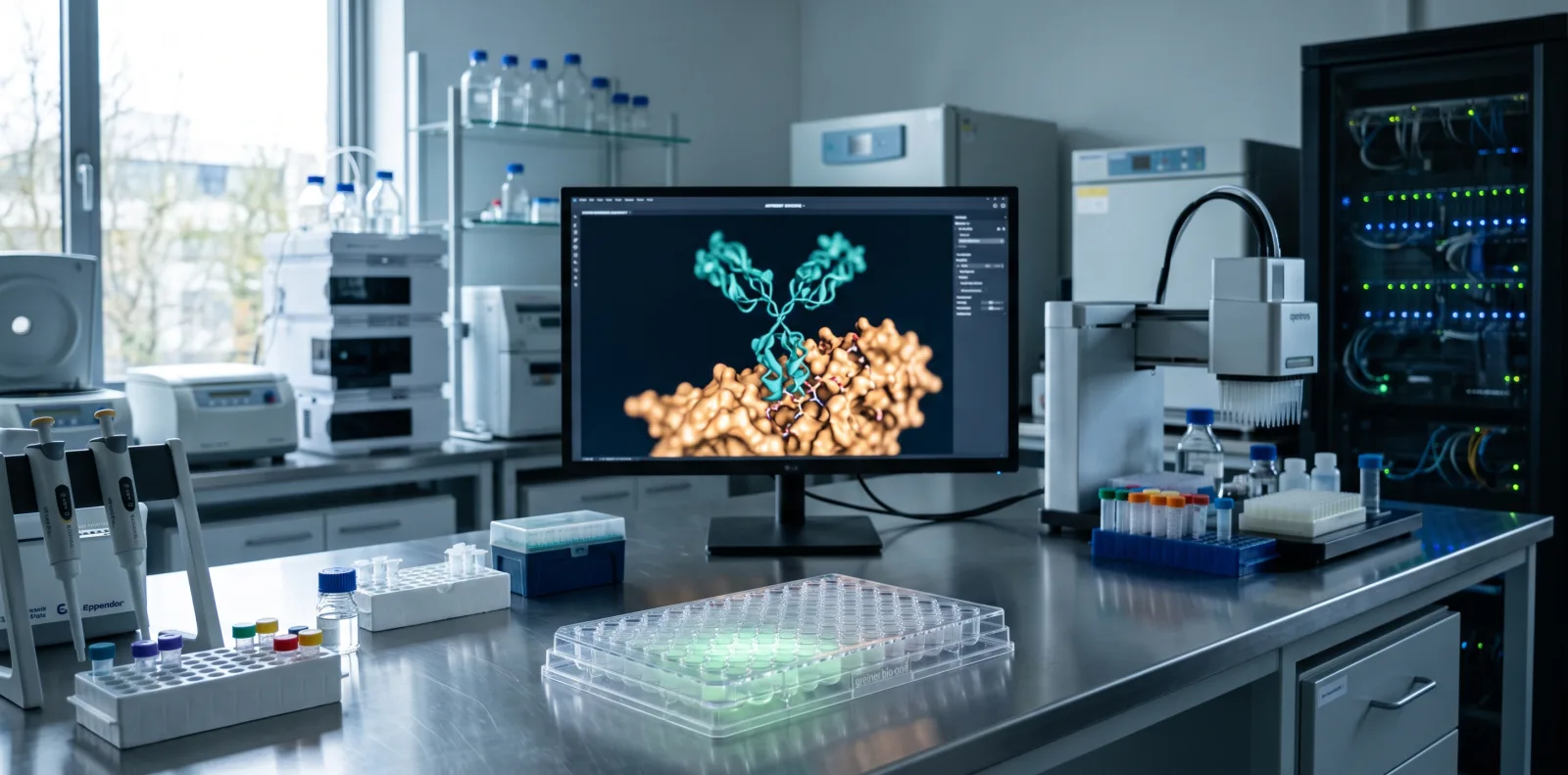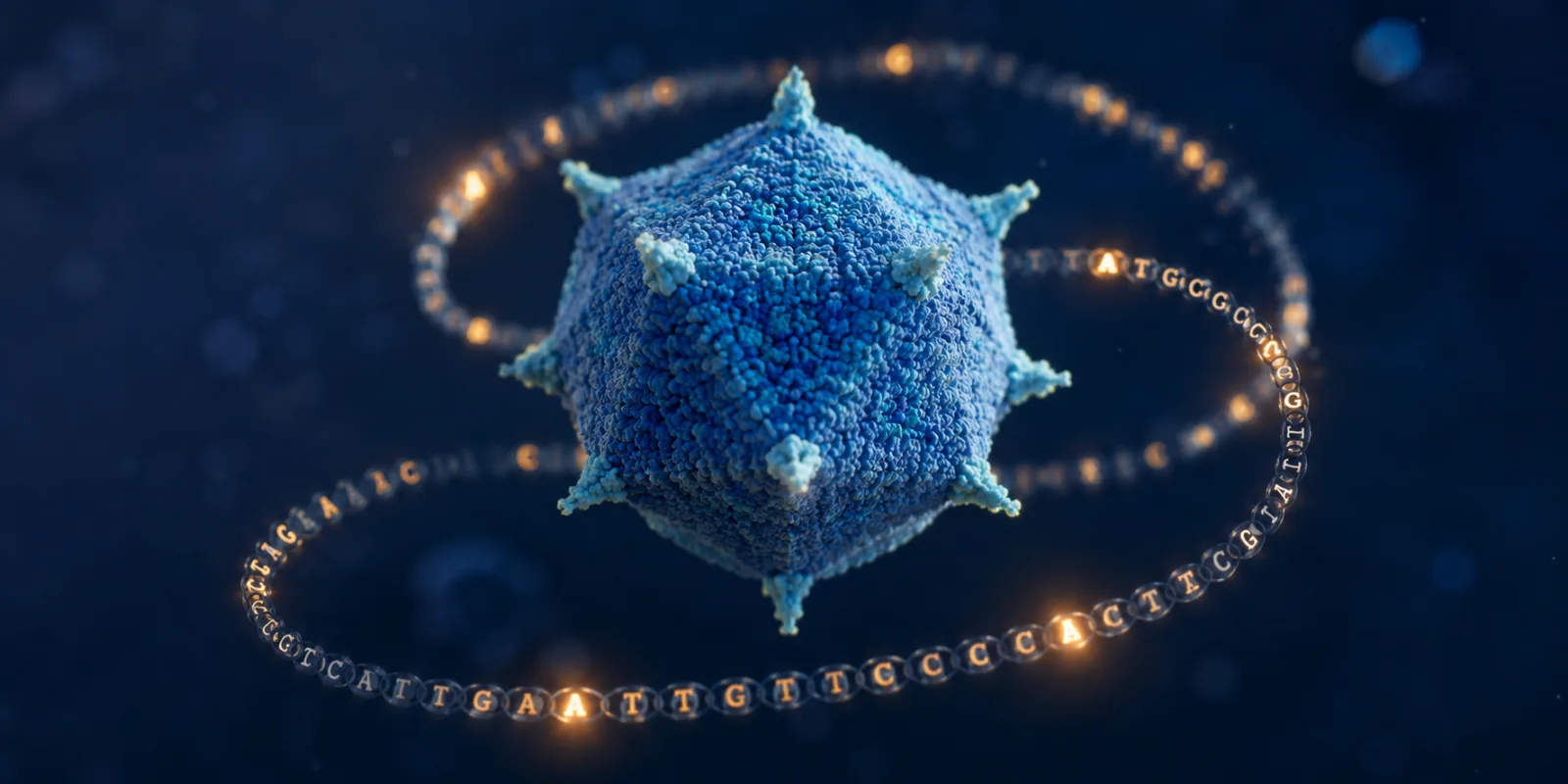
A month ago, an artificial-intelligence model wrote the genome of a virus from scratch, and it worked in the lab. This week, a different team took the very same virus, changed almost every letter of its DNA one at a time, and found that the best AI models in biology could not reliably say what those changes would do. Same virus. Two very different verdicts on how well machines actually understand living things.
The virus is a tiny bacteria-eating phage called ΦX174. The new study, posted as a preprint in late July and reported by Nature on 1 September, is the first time anyone has mutated an entire genome, position by position, and measured the consequences. The headline result is a humbling one. Even for one of the most studied organisms on Earth, roughly a quarter of the lethal mutations have no known explanation, and today's AI cannot fill that gap.
What happened#
Researchers led by Ben Lehner at the Wellcome Sanger Institute, working with Huijin Wei at the Centre for Genomic Regulation in Barcelona and Xianghua Li at King's College London, built more than 44,000 versions of ΦX174, each carrying a single deliberate change, and then watched which ones lived or died (Wei, Li & Lehner, bioRxiv preprint, 2026, not peer reviewed).
Their approach is a scaled-up form of a method called deep mutational scanning. Rather than test mutations one by one, you make a large library of variants, let them compete, and read out the winners and losers by DNA sequencing. The team altered every nucleotide (the individual A, C, G and T letters of DNA) in each of its three possible ways, and every amino acid (the chemical building blocks of proteins) into all 19 alternatives. They then grew thousands of these mutant viruses alongside Escherichia coli, the gut bacterium ΦX174 infects, for about 80 minutes, which is long enough for two or three rounds of infection. Viruses that copied themselves thrived; those carrying harmful changes faded out. Sequencing told the researchers which was which (preprint).
The numbers caught the authors off guard. Half of all single-letter DNA changes, and more than 60% of the changes to proteins, damaged the virus's fitness, meaning its ability to reproduce. That is a much larger share than expected for a genome long assumed to be finely tuned. A handful of mutations even made the virus slightly fitter. And when the researchers asked leading AI models to predict these effects ahead of time, the models managed only moderately well (preprint; Nature).
Background: the little virus that keeps making history#
ΦX174 (spoken as "phi X 174") is a bacteriophage, a virus that infects bacteria rather than humans, animals or plants. It is about as simple as a virus gets: a circular loop of single-stranded DNA holding just 5,386 letters and encoding only 11 proteins (Nature). That simplicity has made it a favourite laboratory workhorse for half a century, and it keeps setting records. It was the first genome ever fully sequenced, by Fred Sanger's group in 1977. It was the first genome to be chemically synthesised, by Craig Venter's team in 2003. And the first viral genomes ever designed by an AI, published in Science in 2026, were versions of, yes, phi X.
So what are the "AI models" that stumbled here? They belong to a fast-growing family of tools called variant effect predictors. Feed one a genetic change and it estimates whether the change is harmless or damaging. Some, such as DeepMind's AlphaMissense, are trained to flag disease-causing mutations in human proteins. Others are protein language models, which learn the "grammar" of protein sequences much as a text model learns the grammar of English, and use that to judge whether a new sequence looks plausible. A newer class, genome language models such as Evo 2, read raw DNA directly. These systems have grown good enough that many researchers now lean on them to prioritise experiments and interpret patient genomes. This study is a direct test of how far that trust should go.
Why this matters#
The appeal of AI in biology rests on a simple promise: that a model can predict an experiment's outcome without your having to run it. If that held, you could design a vaccine antigen, an antiviral or a gene therapy on a screen and skip years of bench work. The phi X result puts a firm boundary on that promise. If the best models only moderately predict the behaviour of a 5,386-letter virus we have studied for fifty years, we should be cautious about trusting them on a human genome that is roughly 570,000 times larger and far less understood.
It also reframes what AI in virology is genuinely good at right now. Predicting why a change matters is hard. Spotting patterns across mountains of sequence data is much easier, and that is where these tools already earn their keep, from discovering tens of thousands of unknown RNA viruses to flagging spillover risk in wildlife surveillance. The lesson is not that AI is oversold. It is that pattern-finding and mechanistic understanding are different jobs, and success at one does not guarantee the other.
There is a biosecurity dimension too. The same generative models that can write a working phage genome cannot yet reliably foresee what their designs will do once they are alive. That is a real limit on misuse, at least for now, and a reason the field keeps returning to questions of oversight.
Critical analysis#
Start with the caveats. This is a preprint (not peer reviewed), so the specific figures may shift before formal publication. ΦX174 is a bacteriophage, not a human pathogen, and "fitness" here means how fast the virus multiplies against one bacterial host in a dish over 80 minutes. Real-world viral success depends on immune systems, transmission between hosts and changing environments, none of which a competition assay captures. Reproductive speed in a flask is a clean, measurable proxy, but it is still a proxy.
"Moderately well" is also doing a lot of work. The authors report that combining AI predictions with structural modelling, the kind of protein-shape prediction that AlphaFold made routine, produced useful mechanistic hypotheses and even fresh insight into the virus's DNA-copying machinery (preprint). So the models are not useless; they are incomplete. The honest reading is that AI plus experiment beats either alone.
The deeper finding is arguably not about AI at all. Nearly half of the harmful protein mutations worked by disrupting the interfaces where proteins touch other proteins, a quarter destabilised the buried cores that hold proteins together, and a final quarter had no mechanistic explanation the team could pin down (preprint). As Lehner put it to Nature, even in this well-studied system, "we can't explain why one-quarter of the mutations kill the virus." The models fail partly because the underlying biology is genuinely not understood. You cannot learn a rule from data that does not yet contain it.
As for timelines: this is a research result, not a product. Its practical value is in raising the bar for how AI biology tools are benchmarked, which is a matter of months to inform practice, not years.
Expert perspective#
It helps to line this up against the milestones it echoes. When Venter's group synthesised phi X in 2003, the achievement was writing DNA. When Stanford and Arc Institute researchers used the Evo model to generate novel phage genomes in 2026, the achievement was designing DNA. Both are acts of construction. This study is an act of comprehension, and comprehension is turning out to be the harder problem.
It differs from earlier work in scope and intent. Deep mutational scanning has been applied to individual genes and proteins for over a decade, and predictors like AlphaMissense have been benchmarked against human clinical databases. What is new is doing this across a complete genome, coding and non-coding regions alike, with a clean experimental readout, and then using that gold-standard map to grade the AI rather than the other way round. Most benchmarks test models against messy, partial data. Here the model is tested against something close to ground truth, and the gap it reveals is the point.
The competing view worth airing is optimistic: models such as Evo 2 are barely a year old, scaling has repeatedly closed gaps like this before, and a "moderate" score on the hardest possible test may improve quickly with more experimental data of exactly this kind. That may prove right. This work is best read not as a ceiling on AI biology, but as a map of where the missing data lies.
Key takeaways#
- Scientists mutated nearly every letter of the ΦX174 virus genome, the first time this has been done for a whole genome, and measured how each change affected the virus.
- Half of DNA changes and over 60% of protein changes harmed the virus, a higher share than expected, and a few changes even improved it.
- State-of-the-art AI models predicted these effects only moderately well, a direct check on the idea that AI already "understands" biology.
- The main reason mutations were damaging was the disruption of protein-to-protein contact points; roughly a quarter of lethal mutations still have no explanation.
- The bottleneck is data and understanding, not just algorithms. AI combined with experiments and structural models remains the strongest approach.
Frequently asked questions#
Is ΦX174 dangerous to people? No. It is a bacteriophage that infects E. coli bacteria and cannot infect humans, animals or plants. It is one of the oldest and safest model systems in molecular biology.
Does this mean AI in biology has failed? No. It means AI is much better at finding patterns in data than at explaining the mechanism behind a specific mutation. The same study found that AI paired with structural modelling produced genuinely useful hypotheses.
What is deep mutational scanning? A laboratory method that creates thousands of genetic variants at once, lets them compete, and uses DNA sequencing to measure how each variant performs. It turns a slow one-at-a-time process into a single large experiment.
Which AI models were tested? The preprint refers to state-of-the-art models without singling out specific products. They belong to the family of variant effect predictors and protein and genome language models, examples of which include AlphaMissense and Evo 2.
Is this study peer reviewed? Not yet. It is a preprint posted on bioRxiv in July 2026 and should be treated as provisional until it clears peer review. The findings were subsequently reported by Nature.
Why does a bacteria-eating virus matter for human medicine? Because it is a controlled test bed. If AI struggles to predict mutation effects in a simple, well-understood virus, that is a strong signal about its current limits on far more complex human genomes.
Glossary#
Bacteriophage (phage): A virus that infects bacteria. ΦX174 is a phage that infects E. coli.
Genome: The complete set of genetic instructions in an organism. In ΦX174 it is 5,386 DNA letters long.
Nucleotide: A single letter of DNA (A, C, G or T). The order of nucleotides spells out genetic information.
Amino acid: One of the chemical building blocks that join in chains to form proteins. Changing an amino acid can alter how a protein works.
Fitness: In this context, how successfully a virus reproduces. Harmful mutations lower fitness; a rare beneficial one raises it.
Deep mutational scanning: A technique that builds and tests many genetic variants simultaneously, measuring the effect of each through competition and sequencing.
Variant effect predictor: An AI model that estimates whether a genetic change is harmless or damaging without running a wet-lab experiment.
Protein / genome language model: An AI trained on biological sequences the way text models are trained on language, learning statistical patterns it can use to judge new sequences.
References#
- Callaway, E. Mutating every DNA letter of a genome shows surprising effects — and the limits of AI. Nature News, 1 September 2026.
- Wei, H., Li, X. & Lehner, B. Complete Mutagenesis of the Genome and Proteome of ΦX174. bioRxiv, 26 July 2026. Preprint (not peer reviewed).
- Sanger, F. et al. Nucleotide sequence of bacteriophage φX174 DNA. Nature 265, 687–695 (1977).
- Smith, H. O., Hutchison, C. A., Pfannkoch, C. & Venter, J. C. Generating a synthetic genome by whole genome assembly: φX174 bacteriophage from synthetic oligonucleotides. PNAS 100, 15440–15445 (2003).
- King, S. H. et al. Generative design of bacteriophages with genome language models. Science 393, eaec2657 (2026).
- Brixi, G. et al. Genome modelling and design across all domains of life with Evo 2. Nature (2026).
- Cheng, J. et al. Accurate proteome-wide missense variant effect prediction with AlphaMissense. Science 381, eadg7492 (2023).
- Richardson, H. AI models are being used to track zoonotic diseases. Will they prevent the next pandemic? Nature Technology Feature, 30 August 2026.
- World's first AI-designed viruses a step towards AI-generated life. Nature News, 2025.
This article is for general information and science communication. It is not medical or clinical advice. Findings drawn from the bioRxiv preprint are provisional until peer reviewed.