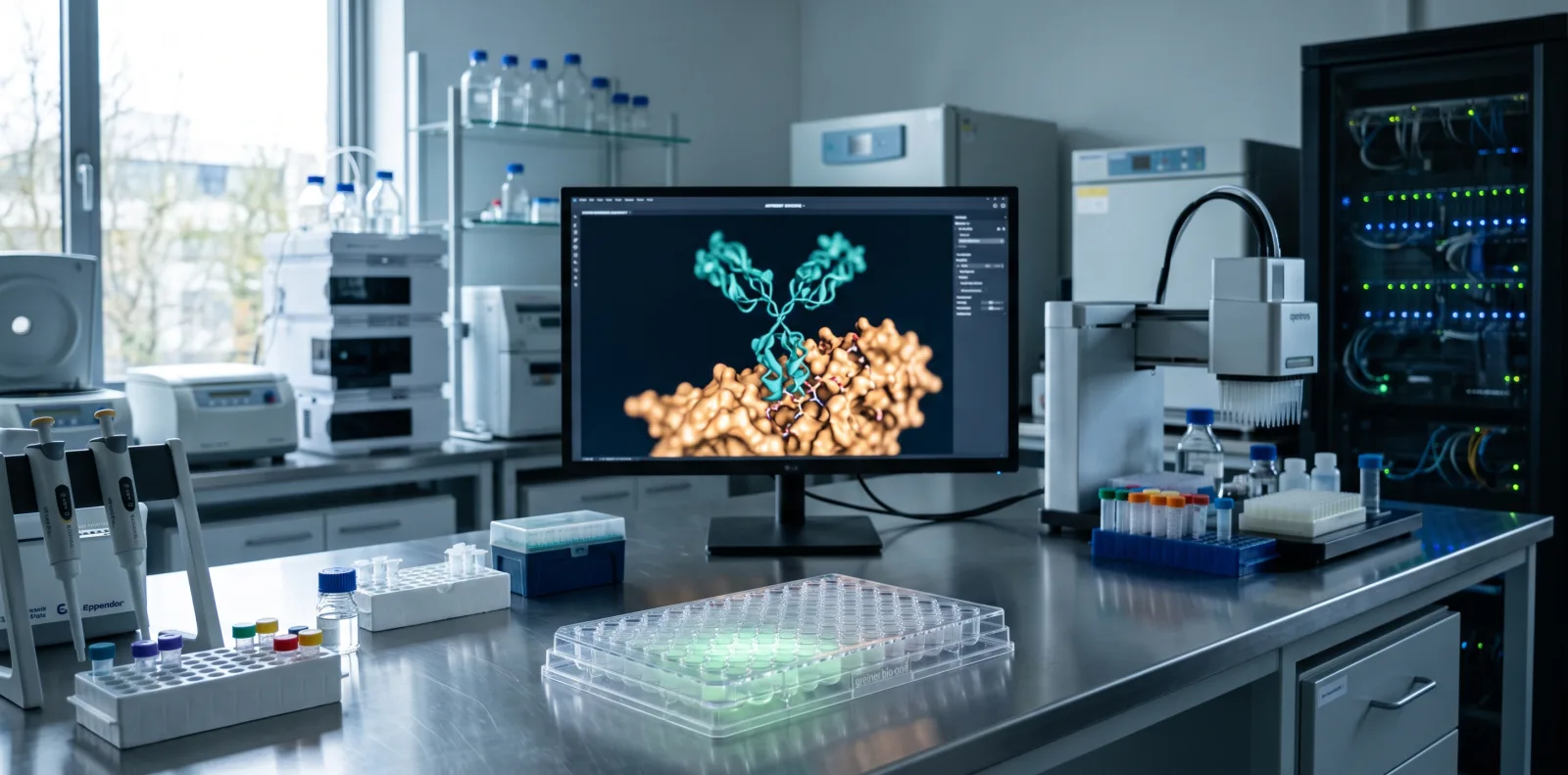
On the misty forest edges of Uganda's Bwindi Impenetrable National Park, conservationists have spent more than twenty years shielding endangered mountain gorillas from human illnesses such as scabies. For most of that time the work was reactive: wait for an outbreak, then scramble to contain it. That habit is starting to break, and the reason is artificial intelligence. A Nature technology feature published on 30 August 2026 sets out, in unusual detail, how AI has crossed from research demo into the everyday plumbing of pandemic preparedness. It now helps flag dangerous viruses hidden in genetic data, reads the world's news for the faint first signs of an outbreak, and informs which threats deserve a vaccine before anyone gets sick. The promise is large. So is the fine print.
The new findings#
The Nature piece, reported by science journalist Heather Richardson, is not the story of one breakthrough. It is a stock-take, and that is exactly what makes it worth reading. It catches a field in the act of moving from clever prototype to working tool, and it names the systems already in use.
Some are hunting for viruses we have never catalogued. Others are watching for outbreaks in real time. The University of Sydney virologist Edward Holmes and his collaborators built LucaProt, a deep-learning model that finds RNA viruses by reading protein structures inferred from raw sequence data. In a 2024 study published in Cell, the team ran it across 10,487 public datasets and identified 161,979 species of RNA virus, including 70,458 that no one had ever recorded. It was the largest haul of new viruses in a single study. Most are unlikely to harm people, but the exercise maps the raw material from which the next human pathogen might emerge.
On the surveillance side, the Toronto firm BlueDot uses AI to sift thousands of articles and official reports in 65 languages, then layers in data such as airline ticket sales to tell clients which disease risks are heading their way. The HealthMap system at Boston Children's Hospital sent one of the first alerts anywhere in the world about the illness that became COVID-19, back in late 2019. Its team has since helped build BEACON, a large-language-model dashboard run from Boston University that now serves more than 227,000 users across 233 countries and territories, and which has been tracking the current Ebola outbreak in the Democratic Republic of the Congo and Uganda.
From reactive to predictive: how AI hunts viruses#
To see why this matters, it helps to unpack a few ideas. Most new human diseases are zoonotic, meaning they start in animals and jump to us. SARS-CoV-2 is one example. The ebolaviruses, thought to originate in fruit bats, are another. That jump is called spillover, and it is becoming more likely as farming, deforestation and a warming climate push people and wildlife into closer contact.
Catching spillover early depends on data, and there is a lot of it. This is where the two main strands of AI come in. The first is metagenomics, the practice of sequencing all the genetic material in a sample, whether from a bat, a market or a river, without knowing in advance what is there. Machine-learning models such as LucaProt are trained on the genetic signatures of every known human pathogen, so they learn to spot the traits, such as the cell receptors a virus uses or its likely route of transmission, that mark a virus as risky. A 2021 study in PLOS Biology took a similar approach to rank which animal viruses might cross into humans, and research published in 2026 in EcoHealth built a model that predicts which animal hosts to sample and when.
The second strand is natural-language processing, the branch of AI behind large language models. Systems like HealthMap and BEACON read news reports, government bulletins and social media in dozens of languages, filter out the noise, and surface the handful of signals that might mean something. HealthMap uses a spam-filtering technique, Fisher-Robinson Bayesian filtering, to separate real leads from chatter. The result is closer to an air-traffic-control view of global disease than to the slow, country-by-country reporting that public health has traditionally relied on.
Why this matters#
The pay-off is speed, and speed is everything in an outbreak. The clearest example is the 100 Days Mission, the goal backed by the G7 and G20 to develop a safe, effective vaccine within 100 days of identifying a new threat. Getting there means knowing which threats to prepare for. If AI can help rank the viruses most likely to spill over and spread, funders such as the Coalition for Epidemic Preparedness Innovations (CEPI) can stock a vaccine library, a store of prototype vaccines that could be adapted quickly when a real emergency hits. CEPI and the World Economic Forum have gone further, backing a Pandemic Preparedness Engine that aims to knit together surveillance, vaccine design and regulatory data on a single platform.
There is a hard economic case too. The World Bank estimated in 2022 that preventing pandemics through a coordinated "One Health" approach, which treats human, animal and environmental health as one system, would cost up to 11.5 billion dollars a year, roughly a third of what the world spends cleaning up after pandemics once they arrive. Holmes frames the barrier bluntly in the Nature feature: it is a politics and people problem, not a technical one, because short-term thinking tends to win over long-term savings.
The Uganda example points to a quieter benefit. When local teams generate and analyse their own samples and feed the results into shared models, surveillance stops being something done to lower-income countries and becomes something done with them. Whether the field lives up to that ideal is an open question, and one worth watching.
Critical analysis#
It is easy to oversell this. The honest summary is that most of these tools are still used for research rather than frontline surveillance, and they do not remove the need for human judgement.
Start with the data. A model is only as good as what it learns from, and genetic databases skew heavily towards regions and pathogens that are already well studied. Feed a biased map into an algorithm and you get confident predictions about the places you were already looking, not the blind spots where the next Disease X is most likely to hide. Language models carry their own risk: they can misread context, and researchers warn that community knowledge on the ground can be flattened or ignored if it never makes it into the training data.
Then there is the limit of the science itself. As virologists Nader Ebrahimi and Amir Ghaemi cautioned in The Lancet Infectious Diseases in 2026, combining AI with metagenomic sequencing is valuable but cannot on its own resolve the deep uncertainties in how pathogens emerge. Knowing that a virus has worrying features is not the same as knowing it will infect people, spread between them and cause serious disease. Prediction narrows the search. It does not end it.
The most uncomfortable issue is dual use. The same generative models that design vaccines can, in principle, design threats. In August 2026, a Stanford-led team reported using generative AI to design a synthetic virus, the first time AI has been used to lay out the genome of a virus not seen in nature. The viruses in question were bacteriophages that infect bacteria, not people, but the demonstration sharpened a worry that biosecurity specialists have raised for years, discussed at length in Nature's own reporting: AI could lower the expertise needed to build something dangerous, and novel sequences might slip past the screening tools meant to catch them. CEPI says it is designing biosecurity safeguards into its platform from the start. The tension between openness and caution will not go away.
On timelines, temper expectations. Early-warning journalism and outbreak forecasting are real and improving now. Routine, AI-guided genomic surveillance at spillover hotspots is closer to a five-to-ten-year build, and it depends less on smarter algorithms than on funding, trained local staff and political will.
Expert perspective#
None of this is entirely new. Digital disease detection goes back two decades, to tools like HealthMap in 2006 and the volunteer-run ProMED network before it. The field even has a signature success: in 2015, BlueDot researchers combined mosquito ecology, temperature data and flight records to flag Miami as a likely Zika outbreak site, a prediction later published in The Lancet that proved right when more than 1,400 cases followed in Florida.
So what has actually changed? Three things. Scale, because foundation models can now read messy, unlabelled genetic and text data at a volume that older systems could not touch. Breadth, because a single large language model can absorb sources in dozens of languages and formats that once needed hand-built dictionaries. And autonomy, the newest and least proven shift, as developers add "agentic" features that let systems chain together several steps, from pulling in fresh virus data to updating a risk ranking, with lighter human oversight.
The competing philosophies are worth naming. One camp bets on virus discovery, cataloguing nature's full viral diversity so we recognise a threat the moment it appears. Another bets on signal detection, watching human and animal populations for the first ripples of an outbreak regardless of which pathogen causes it. The most credible plans, including the CEPI-backed engine, try to do both and keep experts in the loop throughout. As the Nature feature stresses, the strongest setups pair AI with human specialists rather than replacing them. The machine sorts the haystack. A person still decides which needle matters.
Key takeaways#
- AI is now embedded across pandemic preparedness, from discovering unknown viruses in genetic data to scanning global media for outbreak signals, according to a Nature review published on 30 August 2026.
- The biggest concrete win so far is virus discovery: LucaProt uncovered more than 70,000 previously unknown RNA viruses in a single 2024 study, mapping the pool from which future threats could emerge.
- Speed is the point. Faster, smarter threat-ranking feeds directly into the 100 Days Mission to build a vaccine within 100 days of spotting a new pathogen.
- Human judgement is still essential. Data bias, contextual blind spots and the limits of prediction mean the best systems keep experts firmly in the loop.
- Dual-use risk is real and unresolved. The tools that design vaccines can also design pathogens, which is why biosecurity safeguards are now central to the debate.
Frequently asked questions#
Can AI actually predict the next pandemic? Not on its own, and not with a date on the calendar. What AI does well is narrow the field: ranking which viruses look risky and flagging unusual disease signals earlier than traditional reporting. It shortens the odds rather than reading the future.
What is a zoonotic disease? An illness that starts in animals and jumps to humans. COVID-19, Ebola and most influenza pandemics began this way. The jump itself is called spillover.
What is the 100 Days Mission? A goal backed by the G7 and G20 to develop a safe, effective vaccine within 100 days of identifying a new pathogen. AI-driven surveillance and vaccine design are meant to help hit that target.
Is AI in biology dangerous? It can be. The same generative models that design vaccines could design harmful pathogens, and in 2026 researchers used AI to design a synthetic virus for the first time, though it infected only bacteria. This dual-use risk is why safeguards and screening are a live concern.
Are these AI tools already being used? Some are. Media-scanning systems like HealthMap and BEACON operate now and serve public-health users worldwide. Virus-discovery models are mostly still research tools, and routine AI-guided genomic surveillance is years away.
Does this replace public-health workers? No. Every credible system keeps humans in the loop. AI filters and ranks vast amounts of data, but trained specialists verify the signals and decide what to act on.
Glossary#
Zoonosis / spillover: A disease that passes from animals to humans; spillover is the moment of transfer.
Metagenomics: Sequencing all the genetic material in a sample at once, without knowing in advance which organisms are present.
Foundation model: A large AI model trained on huge, broad datasets that can be adapted to many tasks, including reading genetic sequences or text.
Large language model (LLM): A type of AI trained on vast amounts of text that can interpret and summarise written information, used here to scan news and reports.
One Health: An approach that treats human, animal and environmental health as a single connected system.
Disease X: A placeholder name for an unknown pathogen that could cause a future epidemic or pandemic.
Dual use: Research or technology that can be used for benefit or for harm, such as AI that designs both vaccines and pathogens.
Agentic AI: AI systems that can plan and carry out multi-step tasks with limited human supervision.
References#
Richardson, H. "AI models are being used to track zoonotic diseases. Will they prevent the next pandemic?" Nature 657, 308-310 (30 August 2026). https://www.nature.com/articles/d41586-026-02684-1
Hou, X. et al. "Using artificial intelligence to document the hidden RNA virosphere." Cell 187, 6929-6942 (2024). https://doi.org/10.1016/j.cell.2024.09.027
LucaProt model repository. https://github.com/alibaba/LucaProt
Mollentze, N., Babayan, S. A. & Streicker, D. G. "Identifying and prioritizing potential human-infecting viruses from their genome sequences." PLOS Biology 19, e3001390 (2021). https://doi.org/10.1371/journal.pbio.3001390
Clancey, E., Nuismer, S. L. & Seifert, S. N. EcoHealth (2026). https://doi.org/10.1007/s10393-026-01789-3
Bogoch, I. I. et al. "Anticipating the international spread of Zika virus from Brazil." The Lancet 387, 335-336 (2016). https://tinyurl.com/mpj5s4zu
Ebrahimi, N. & Ghaemi, A. The Lancet Infectious Diseases 26, E6 (2026). https://tinyurl.com/3x3euur8
BEACON (Biothreats Emergence, Analysis and Communications Network). https://beaconbio.org/en
HealthMap. https://www.healthmap.org
Coalition for Epidemic Preparedness Innovations, "Artificial intelligence." https://cepi.net/artificial-intelligence
CEPI, "The 100 Days Mission." https://cepi.net/100-days-mission
World Economic Forum, "How AI reshapes global preparedness for infectious disease" (January 2026). https://www.weforum.org/stories/2026/01/ai-global-preparedness-infectious-disease/
Axios, "AI designs synthetic virus in scientific first, raising biosecurity concerns" (6 August 2026). https://www.axios.com/2026/08/06/ai-virus-designed-bacteria-viruses
Nature, "AI can design viruses, toxins and other bioweapons. How worried should we be?" (2026). https://www.nature.com/articles/d41586-026-01476-x