For all the noise about protein language models and structure prediction, one part of the picture has stayed stubbornly fuzzy: the metal ions that sit at the heart of so many proteins. A zinc atom holds a transcription factor's fingers together. A magnesium ion lets an enzyme cut DNA. A calcium ion switches a signalling protein on. Get the ion wrong and you have misread the protein. This week a compact deep-learning model called BiteNetI put that gap back in the spotlight by beating AlphaFold 3, the field's flagship system, at pinpointing where those ions bind, and doing it in seconds.
What happened?#
Researchers Igor Kozlovskii and Petr Popov, at Constructor University and Constructor Labs, published BiteNetI, a model that reads a protein's three-dimensional shape and predicts exactly where 14 biologically important ions attach. The work appeared in Communications Biology, part of the Nature portfolio, and has drawn steady attention since, with general-science coverage this week describing how it maps the ion binding sites that control how proteins work.
The headline result is direct. On two independent test sets, BiteNetI reaches state-of-the-art accuracy against existing ion-binding predictors and against AlphaFold 3 when the latter is used to build a protein's full structure with its ions in place. For three of the most common physiological ions, calcium, sodium and potassium, the model delivers a two- to three-fold improvement in accuracy. It needs only a few seconds per structure, where predicting a whole complex from scratch can take far longer.
BiteNetI treats a protein as a three-dimensional image and uses a 3D convolutional neural network, the same broad family of models that powers image recognition, to scan that image for ion-binding pockets. It was trained on more than 10,000 high-resolution protein-ion complexes, with a careful cleaning step: where two related proteins share a near-identical binding site, the ion is transferred between them so the annotations stay consistent. One network handles all 14 ions at once, rather than needing a separate tool for each.
Why metal ions are the hard part#
To see why this matters, it helps to separate two things AI has learned to do with proteins.
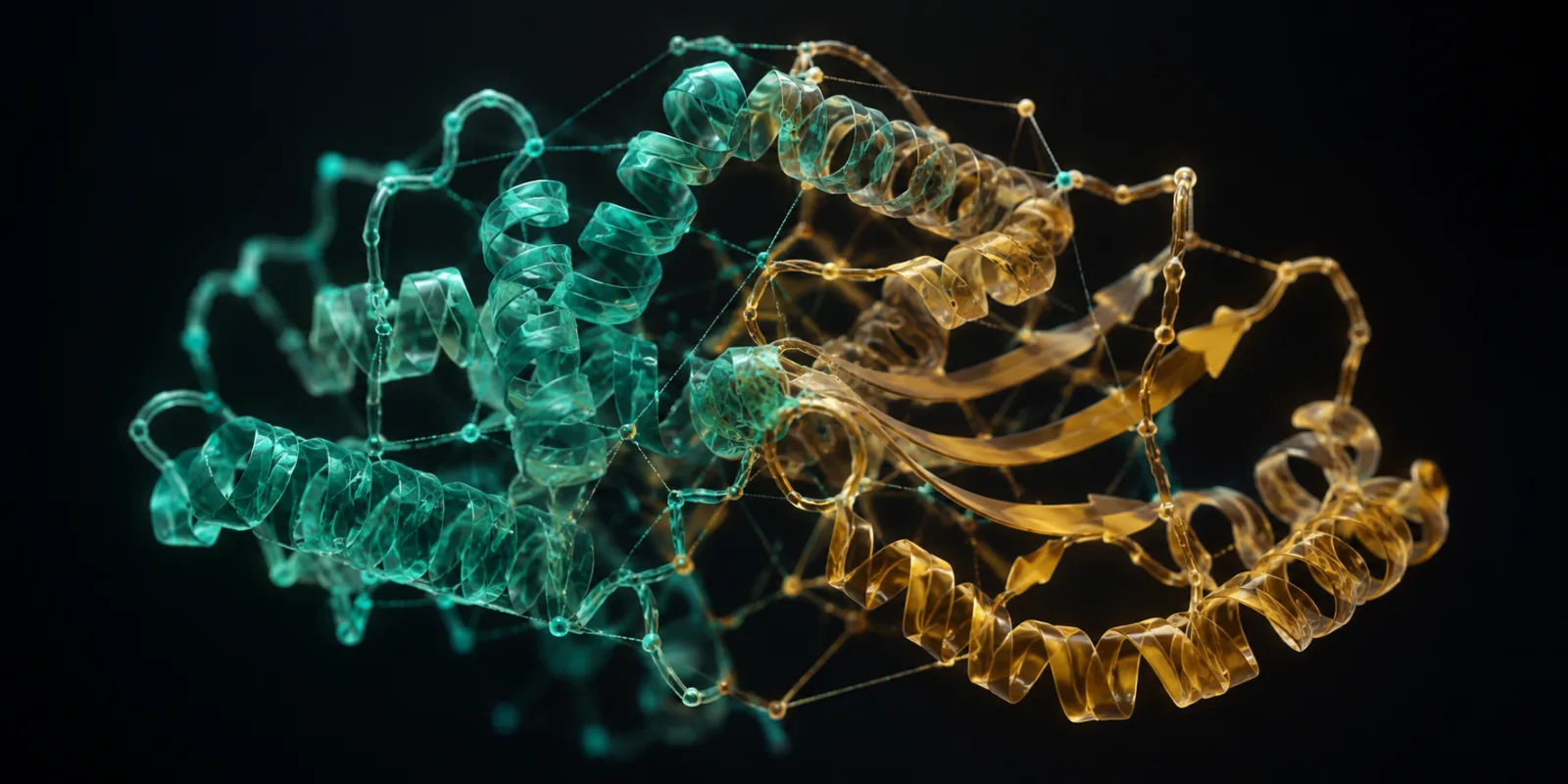
The first is folding. A protein is a chain of amino acids that twists into a specific shape, and that shape largely decides what the protein does. Protein language models, such as the ESM series, treat amino-acid sequences the way a text model treats words. Trained across millions of natural sequences, they learned to read the statistical "grammar" of evolution. Coupled with structure predictors like AlphaFold, they turned protein folding from a decades-long experimental slog into something you can run on a laptop. Chan Zuckerberg Biohub recently pushed this further with an open database of more than a billion predicted structures, dwarfing what came before.
The second thing is chemistry: what the folded protein actually grabs hold of. Here the ions matter enormously. Roughly a third of all known proteins bind a metal ion, and about half of all enzymes need one to function. These ions are tiny, they carry electric charge, and they are often held by a handful of scattered amino acids that only fall into place once the protein has folded. That makes them awkward for sequence-first models, because nothing in the raw amino-acid string announces "a magnesium ion sits here." AlphaFold 3 was a leap precisely because it began to predict proteins together with ions, small molecules and nucleic acids rather than the bare protein alone. But building the whole complex at once is a heavier task, and the ions can slip.
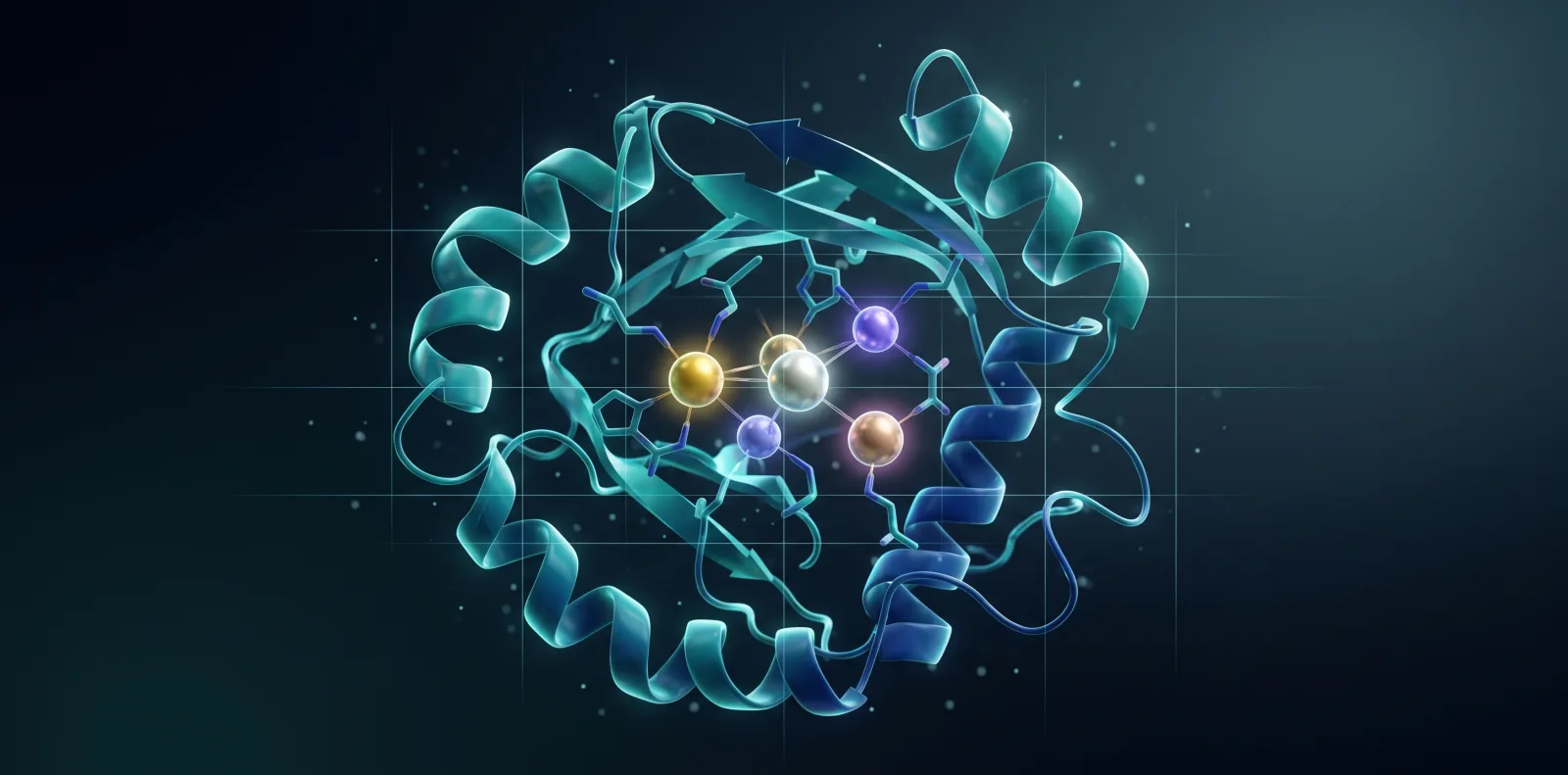
It helps to picture what a binding site actually looks like. A metal ion is usually pinned in place by the side chains of a few specific amino acids, often histidine, cysteine, aspartate or glutamate, arranged in a precise geometry that the folded protein creates. Those residues can be far apart in the sequence and only neighbours in three dimensions. That is exactly the kind of spatial pattern a sequence reads badly and a 3D image reads well, which is the intuition behind treating the protein as a volume to be scanned.
BiteNetI narrows the job. Instead of rebuilding the entire structure, it takes a structure as given and asks one focused question: where do the ions go? Specialisation, it turns out, still buys accuracy.
Why this matters#
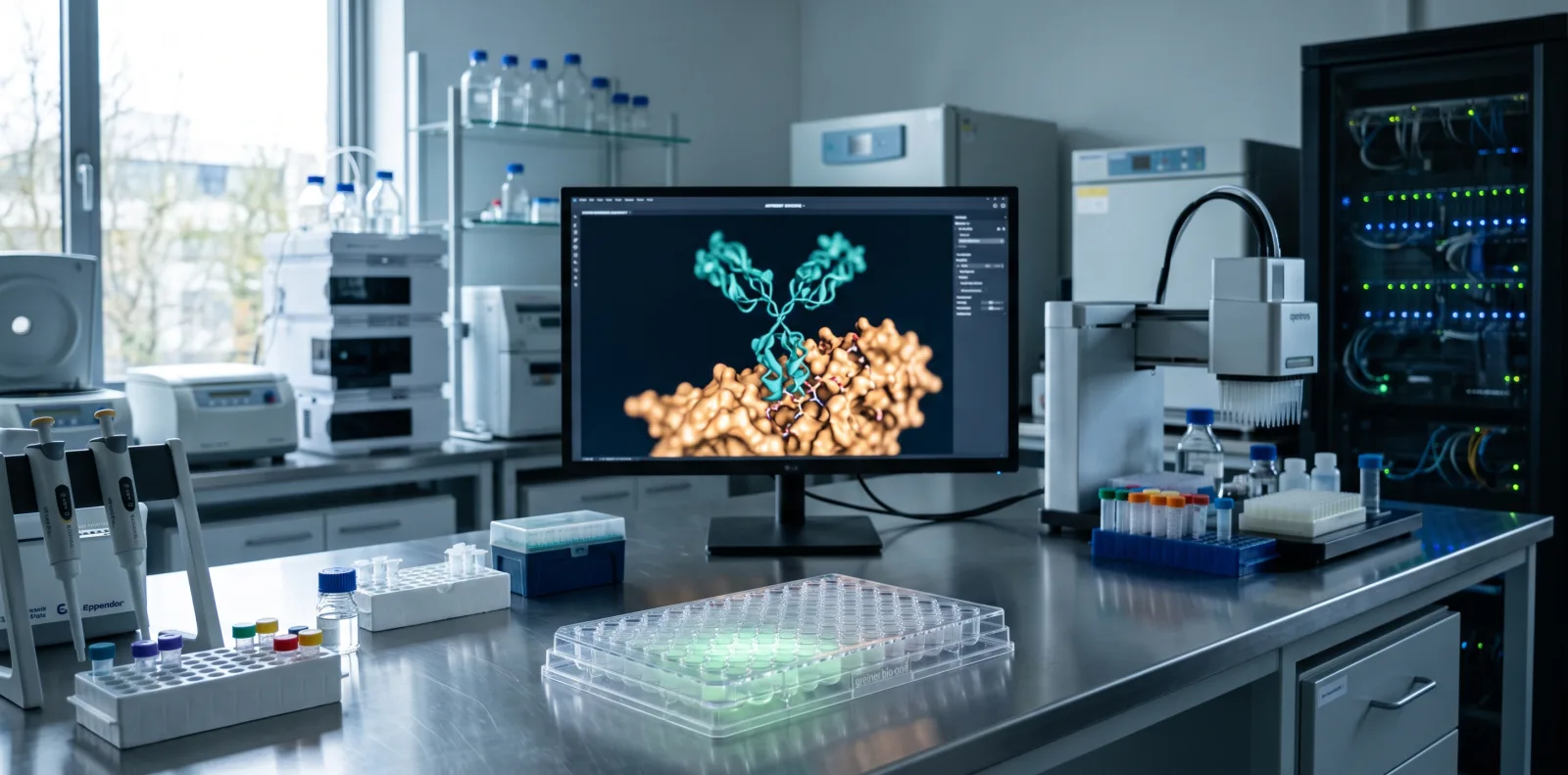
The practical stakes sit squarely in drug discovery and basic biology. Metal-binding sites are frequent drug targets. Many enzymes that drive disease depend on a metal in their active site, and blocking or mimicking that site is a well-worn therapeutic strategy. A fast, accurate map of where ions bind gives medicinal chemists a better starting point, and it can be run across the enormous catalogues of predicted structures now available. That is the real multiplier. An atlas of a billion-plus structures is only as useful as the questions you can ask of it, and "where are the functional metal sites?" is a good one.
There is a broader lesson for the AI-in-biology field too. The past two years have been dominated by ever-larger foundation models that try to do everything at once. BiteNetI is a reminder that a small, specialised model, trained on well-curated data, can still beat a general-purpose giant on a specific task. For the many labs that cannot afford to run frontier models, that is quietly encouraging.
Critical analysis#
The strengths are clear. The work is peer reviewed, open access, fast, and benchmarked head-to-head against the obvious rival. Reporting a two- to three-fold gain on named ions, rather than a vague overall score, makes the claim easy to check.
The limitations deserve equal billing. BiteNetI needs a three-dimensional structure to begin with; it does not fold the protein for you. In practice you feed it an experimental structure or an AlphaFold prediction, which means any error in that input can carry through to the answer. The comparison with AlphaFold 3 is also not quite like-for-like, and the authors say so: AlphaFold 3 is solving the far harder problem of building an entire complex from sequence, so BiteNetI's edge shows up on the narrower task of placing ions in a structure that already exists. The model covers 14 ion types, so rarer or unusual metal centres fall outside its scope. The paper also notes that accounting for the water molecules around a binding site could improve results, which is a frank admission that the current version does not capture everything about the chemistry.
One question hangs over all such tools. A predicted ion site is a hypothesis, not a measurement. It still needs experimental confirmation before anyone builds a drug programme on it. The value is in ranking and prioritising candidates, not in replacing the wet lab.
On timeline, this is a tool researchers can pick up now rather than a promise for later. The code and model are released, and binding-site prediction slots into existing computational pipelines. Real-world impact in drug discovery, as ever, will play out over years, because the bottleneck is rarely the prediction. It is the validation, chemistry and trials that follow.
Expert perspective: specialists versus generalists#
BiteNetI sits in a lineage. The original BiteNet, from the same group in 2020, treated proteins as 3D images to spot druggable and hidden pockets. This new version carries that idea into the world of ions. Set against the arc of the field, from AlphaFold 2's folding breakthrough, to protein language models reading evolution at scale, to AlphaFold 3 folding whole complexes, BiteNetI is not trying to be a foundation model. It is a scalpel, not a Swiss Army knife.
That is what makes it interesting. Much of the current excitement in protein AI assumes the winning move is scale: bigger models, more parameters, more data. Recent work complicates that story. A 2026 analysis in Nature Computational Science found that larger protein language models do not always predict function better, because raw scale can drift away from the evolutionary signal that actually carries meaning. BiteNetI makes a similar point from another direction: for a well-defined problem with good data, a focused design can beat a general one. Both approaches will coexist. Foundation models give you breadth, while specialised tools give you depth on a particular question. Knowing which one to reach for is becoming a skill in its own right.
Key takeaways#
- BiteNetI, a structure-based deep-learning model, predicts where 14 important ions bind in proteins and beats AlphaFold 3 at the task, with a two- to three-fold accuracy gain for calcium, sodium and potassium.
- Metal ions are a genuine blind spot for sequence-first AI. Roughly a third of proteins bind one, yet they are chemically subtle and easy to misplace.
- Speed is part of the story, at seconds per structure, which lets the model run across the billion-plus predicted structures now available.
- A predicted ion site is a hypothesis for the lab to test, not a finished answer. Validation remains essential.
- The result strengthens a growing case that small, well-trained specialist models still have a place alongside sprawling foundation models.
Frequently asked questions#
What is BiteNetI? A deep-learning model, published in Communications Biology, that reads a protein's 3D structure and predicts where 14 biologically important ions bind. It uses a 3D convolutional neural network and was trained on over 10,000 protein-ion structures.
How is it different from AlphaFold 3? AlphaFold 3 predicts a protein's whole structure, including ions, from its sequence. BiteNetI does one narrower job, placing ions in a structure that already exists, and does it more accurately and much faster for the ions it covers.
Is it a protein language model? No. Protein language models read amino-acid sequences like text. BiteNetI reads three-dimensional shape as if it were an image. It complements language models and folding tools rather than replacing them.
Why do metal ions matter so much? About a third of proteins bind a metal ion, and roughly half of enzymes need one to work. Ions are central to catalysis, signalling and regulation, and many are important drug targets.
Can I use it now? Yes. The work is open-access and the model is released, so it can be added to existing structural-biology pipelines. You do need a structure to feed it.
What are the main limitations? It requires an input structure, so errors in that structure can carry through. It covers only 14 ion types, and its predictions still need experimental confirmation.
Does this replace laboratory experiments? No. It helps researchers decide which sites to study first, but binding still has to be confirmed in the lab.
Glossary#
Protein language model: an AI system trained on large collections of amino-acid sequences, treating them like sentences to learn patterns that predict structure and function.
AlphaFold 3: a structure-prediction system from Google DeepMind that models proteins together with ions, small molecules and nucleic acids.
Ion-binding site: the precise spot on a protein where a charged atom such as calcium, zinc or magnesium attaches, often essential to the protein's job.
Metalloprotein: a protein that contains or binds a metal ion, a category that covers a large share of all enzymes.
3D convolutional neural network: a type of AI model that analyses three-dimensional data, scanning a volume for patterns much as image-recognition models scan a photograph.
Allosteric site: a location on a protein, away from its main active site, where a molecule can bind and change how the protein behaves.
Benchmark: a standard test set used to compare different models fairly on the same task.
References#
- Kozlovskii, I. & Popov, P. Multivalent ion binding site identification with structure-based deep learning. Communications Biology 9, 1039 (2026). Peer reviewed, open access.
- Phys.org. New AI model maps the ion binding sites that control how proteins work (September 2026). Science journalism.
- Abramson, J. et al. Accurate structure prediction of biomolecular interactions with AlphaFold 3. Nature 630, 493-500 (2024). Peer reviewed.
- Kozlovskii, I. & Popov, P. Spatiotemporal identification of druggable binding sites using deep learning (original BiteNet). Communications Biology 3, 618 (2020). Peer reviewed.
- Hayes, T. et al. Simulating 500 million years of evolution with a language model (ESM3). Science (2025). Peer reviewed.
- Hou, C., Liu, D. & Shen, Y. Understanding language model scaling for protein fitness prediction. Nature Computational Science 6, 778-788 (2026). Peer reviewed.
- Lab Manager. How a new protein-folding AI generates over one billion structures for research (2026), on the Chan Zuckerberg Biohub ESM Atlas and ESMFold2. Science journalism; the underlying ESMFold2 methods are reported in an accompanying preprint (not peer reviewed).
- Prediction of metal ion binding sites in proteins, background review for statistics on metalloprotein prevalence. Peer reviewed.