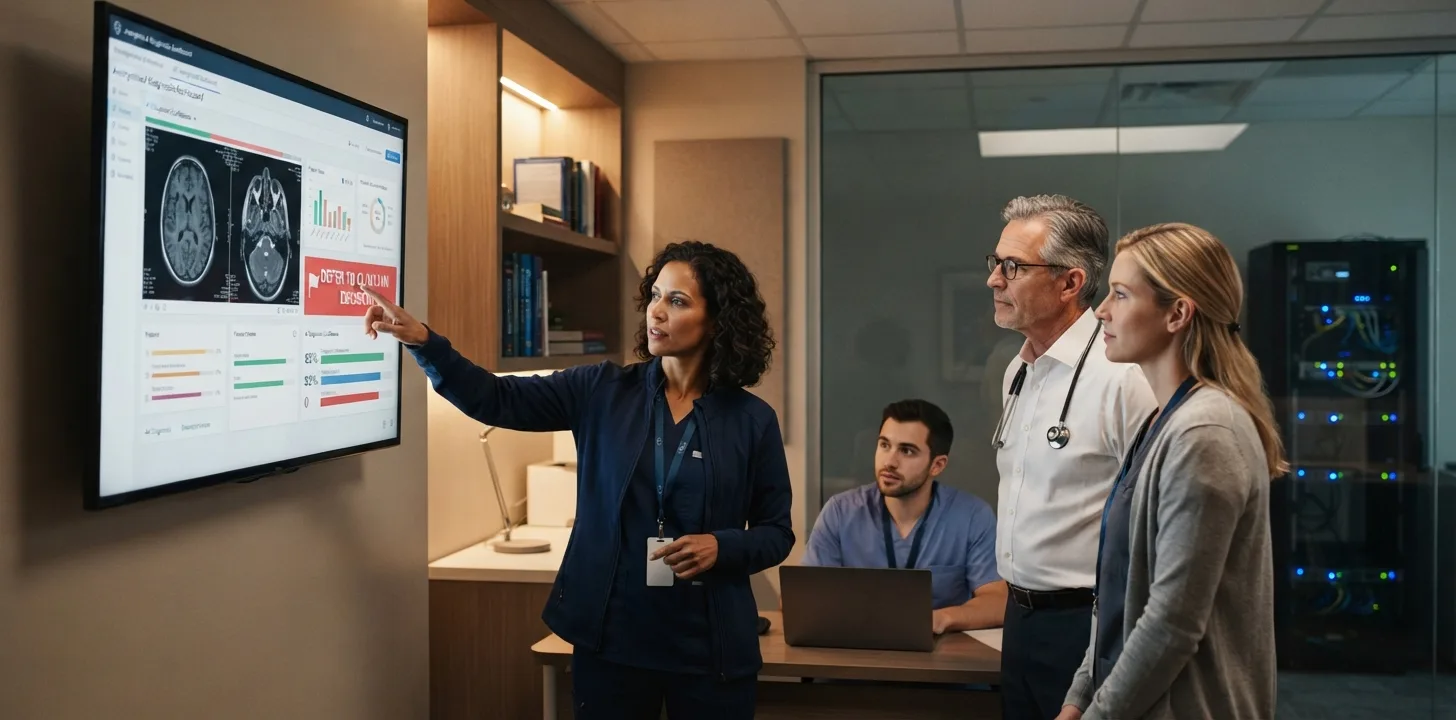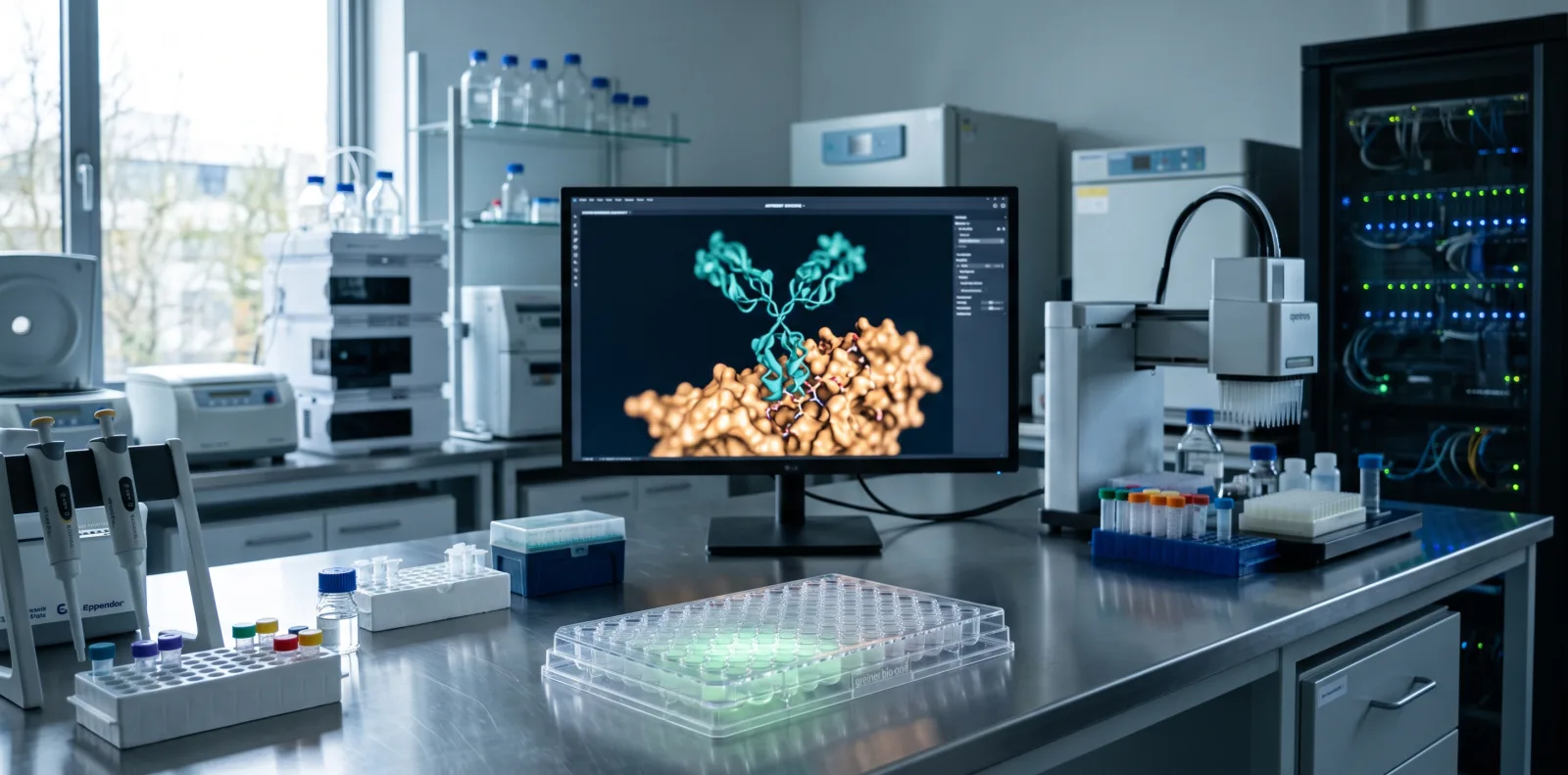
Artificial intelligence can now predict the shape of almost any protein, design molecules that have never existed, and read the grammar of DNA. So here is an awkward question: how much of that can you actually trust in a hospital or a factory? On 24 August 2026, the European Union's in-house science service published its answer, and it is more sobering than the headlines about AI curing disease. After studying 480 biological AI systems, its verdict is that the field is scientifically dazzling and, by the measures that matter for real-world use, barely tested.
What happened?#
The European Commission's Joint Research Centre (JRC), its internal science and knowledge service, released a report titled Artificial Intelligence for Biology: Capabilities, Readiness, and Policy Implications. It is an official EU assessment rather than a peer-reviewed research paper, drawing on a dataset of 480 biological AI models to map what these systems can do, what they need to run, and how close they are to being deployed safely.
The central finding is a mismatch the authors name the "maturity paradox". High-profile models such as AlphaFold and the protein language model ESM3 are the most advanced in their fields, yet they sit at low-to-mid technology-readiness levels, a scale that measures how close a technology is to real deployment. None of the surveyed models has passed an integrated readiness assessment, and none is certified for clinical or industrial use. In other words, brilliant on the benchmark, unproven in the clinic.
The report also finds the progress is lopsided. Biological AI is racing ahead where data are rich and standardised, such as protein structure, and lagging where data are scarce, such as single-cell biology, an area with real clinical stakes because it helps characterise tumours and predict who might respond to immunotherapy. Protein models got their head start from decades of community effort and curated public archives like the Protein Data Bank and UniProt, supported by European infrastructure such as the European Molecular Biology Laboratory. Fields without that scaffolding have not caught up.
The report was authored by a team led by researchers at the JRC and carries the identifier JRC147549, with a formal digital object identifier (10.2760/9397036). Its timing is pointed. It lands the same month the EU's AI Act reached a major milestone in its staggered rollout, and days after a startup unveiled a "virtual cell" model claiming to simulate an entire human cell, a reminder of how fast the capability side is moving while the governance side plays catch-up.
What "biological AI" actually means#
Much of modern AI-for-biology rests on foundation models, the same class of large model that powers chatbots, trained here on the sequences of life. A protein is a chain of amino acids and DNA is a chain of bases, so both can be treated a bit like text. Feed enough of these sequences into a model and it learns patterns that generalise to new ones. That is how AlphaFold learned to predict a protein's three-dimensional shape from its sequence, and how protein language models such as ESM3 learned to read and even generate protein sequences.
The report's key yardstick is the technology-readiness level, or TRL, a nine-point scale originally from aerospace that rates how far a technology has travelled from a lab idea to a deployable product. A model can be scientifically state of the art, meaning it tops the benchmarks in its niche, while still being early on the TRL scale, meaning nobody has validated it end to end for a real clinical or industrial setting. Separating those two ideas, scientific maturity and deployment readiness, is the report's main contribution.
One more distinction matters: curated versus synthetic data. Curated data are experimentally measured and checked by humans, like the structures in the Protein Data Bank. Synthetic data are generated by other models. The report flags that protein models increasingly train on predicted structures from the AlphaFold Database rather than only on experimental ones. That speeds progress, but it also means models are learning from other models' guesses, a dependency worth watching.
Why this matters#
For medicine and public health, the message is a useful brake on hype. A model that predicts a protein structure beautifully is not the same as a validated diagnostic or a drug you can prescribe. By formalising that gap, the report gives regulators, hospitals and investors a shared vocabulary for asking "ready for what, exactly?" This is context for decision-making, not medical or investment advice.
For biosecurity, the divergence between capability and oversight carries specific risk. The authors warn that powerful, publicly available models could in principle be misused for harmful applications such as pathogen design or toxin engineering. A capability that outruns its guardrails is exactly the situation safety researchers worry about.
For research integrity, the report puts numbers on a trend many scientists have sensed. Academia contributes to about 85 per cent of the surveyed models and industry to nearly 40 per cent, but only 17 per cent of industry-only models release their training code. As commercial labs pull ahead, more of the field becomes a black box, which makes results harder to reproduce and to compare.
For Europe specifically, the findings read as a strategic wake-up call. The continent has real strengths, including serious computing capacity through the EuroHPC Joint Undertaking and its new AI Factories programme. Yet among the world's top 20 model developers, the only EU representative is the Technical University of Munich, and collaboration within the EU is thinner than the EU's collaboration with the US, China and the UK.
Critical analysis#
The report's strengths are its scope and its framing. Surveying 480 models is a serious empirical base, and separating scientific maturity from technology readiness is a genuinely clarifying move. It resists the usual binary of "AI will save us" versus "AI will doom us" and asks a more practical question about whether these tools are ready for the jobs people want to give them.
There are limits worth stating plainly. This is a landscape assessment and a policy document, not an experimental study, so its value lies in synthesis and framing rather than new lab results. Some of its headline numbers, such as the share of models that publish code or the geography of training data, depend on how the 480-model dataset was assembled and classified, and the full methodology sits in the underlying report rather than the summary. The recommendations are also aimed squarely at EU policymakers, so a reader in Boston or Bangalore should treat the diagnosis as broadly relevant while the prescriptions are regional.
The open questions are the interesting part. How do you build a fair readiness benchmark for a model whose job is to generate a novel molecule that, by definition, has no ground truth yet? Who certifies a biological AI, and against what standard? And can openness and biosecurity be reconciled, given that releasing code aids reproducibility but can also lower the barrier to misuse? The report calls for clinically relevant benchmarks and clearer regulatory pathways without claiming to have built them. On timelines, none of this changes overnight. Readiness frameworks, shared benchmarks and data-governance reforms are multi-year projects, and the report is best read as an agenda rather than a finished toolkit.
Expert perspective#
Plenty of groups now rank AI capabilities, from academic leaderboards to industry indices. What sets this report apart is the lens. Most trackers ask which model is best; the JRC asks whether "best" is even the right question when nothing has been validated for deployment. Pairing domain-specific maturity with technology-readiness levels is closer to how aviation or pharmaceuticals think about risk than to how AI benchmarks usually work.
It also reflects a distinct European instinct. Where much of the AI conversation is framed around who ships the most capable model, the report is preoccupied with data governance, reproducibility and public goods, recommending that Europe support biological AI foundation models as public goods and strengthen coordination of its data infrastructure. Whether that emphasis proves prescient or simply slower than the competition is the live debate. Supporters would say trustworthy infrastructure is the durable advantage; skeptics would counter that readiness frameworks mean little if the frontier models keep being built elsewhere. The report itself, to its credit, mostly documents the tension rather than pretending it away.
Key takeaways#
- The EU's Joint Research Centre studied 480 biological AI models and found a "maturity paradox": scientifically advanced systems that remain far from certified for real-world use.
- Progress is uneven, surging where data are rich (protein structure) and lagging where data are scarce (single-cell biology), because curated public archives gave protein AI a decades-long head start.
- Openness is shrinking. Only 17 per cent of industry-only models release their training code, which threatens reproducibility as commercial labs pull ahead.
- The gap between capability and oversight raises real biosecurity concerns, including the potential misuse of open models for pathogen or toxin design.
- Europe has world-class computing but thin representation at the frontier; the report urges shared benchmarks, better data governance and public-good foundation models.
Frequently asked questions#
What is the JRC? The Joint Research Centre is the European Commission's in-house science service. It produces independent, evidence-based analysis to inform EU policy, so this report is an official assessment rather than a commercial or academic paper.
What is the "maturity paradox"? A term the authors coined for the gap between a model being scientifically advanced in its field and being ready for real deployment. Many biological AIs top their benchmarks yet have never passed an integrated readiness check.
What is a technology-readiness level (TRL)? A nine-point scale, originally from aerospace, that rates how close a technology is to real-world use, from an early lab concept up to a proven, deployed system. It measures readiness, not raw scientific quality.
Why is single-cell biology "behind" protein AI? Protein AI benefited from decades of standardised, curated data in archives like the Protein Data Bank. Single-cell data are newer, messier and less standardised, so models there have less to learn from.
Does the report say biology AI is dangerous? It does not raise an alarm about any specific system. It warns that when capability outpaces oversight, publicly available models could in principle be misused, for example in pathogen design, which is why readiness and governance matter.
What does it recommend? Broadly: support emerging areas like single-cell and multimodal models, strengthen data infrastructure and quality, back European foundation models as public goods, and build frameworks that assess both scientific maturity and deployment readiness.
Is this the same as the EU AI Act? No. The AI Act is binding law rolling out in stages. This report is advice and analysis. But the two are related, because the report highlights the readiness and safety gaps that regulation will eventually have to address.
Glossary#
Biological AI: AI models trained on biological data such as DNA, RNA and proteins to predict, annotate or design biological molecules and systems.
Foundation model: A large model trained on broad data that can be adapted to many downstream tasks, the same basic technology behind large language models.
Protein language model: A foundation model trained on protein sequences, able to read and sometimes generate them, with ESM3 as a prominent example.
Technology-readiness level (TRL): A nine-point scale describing how close a technology is to real-world deployment, distinct from how scientifically advanced it is.
Maturity paradox: The report's term for the gap between high scientific maturity and low deployment readiness in the same model.
Curated data: Experimentally measured, human-checked data, such as protein structures in the Protein Data Bank.
Synthetic data: Data generated by another model rather than measured experimentally, increasingly used to train protein AI.
Biosecurity: Measures to prevent the misuse of biological knowledge or tools, including AI, to cause harm.
References#
- European Commission, Joint Research Centre, "Biological AI models: new paradigms to leverage the languages of life", news update, 24 August 2026.
- Ruiz Serra, V., Fortuna, P., Curion, F., Petrillo, M., Leoni, G., et al., Artificial Intelligence for Biology: Capabilities, Readiness, and Policy Implications, Publications Office of the European Union, JRC147549, 2026. DOI: 10.2760/9397036.
- European Commission, "Regulatory framework for AI (AI Act)".
- European Commission, "AI Factories".
- EuroHPC Joint Undertaking.
- AlphaFold Protein Structure Database, EMBL-EBI.
- Protein Data Bank (RCSB) and UniProt.
- European Molecular Biology Laboratory (EMBL).
This article is for information only. It is not medical or legal advice.