Biology
AI Drug Discovery's Moment of Truth: A $2.75B Bet, Zero Approvals, and the Drug That Could Change Both
Eli Lilly just wagered up to $2.75 billion on AI-designed medicines, yet not one AI-discovered drug has full FDA approval. Here's why 2026 is the year the field finally gets tested against clinical reality.
For a decade, "AI is going to transform how we make medicines" has been the most repeated sentence in biotech. In 2026 it stops being a promise and starts being a test. The industry has spent roughly $60 billion chasing the idea since 2019. About 175 AI-originated drug programmes have entered human trials. And the number that hold full FDA approval? Still zero. (Clinical Trial Vanguard)
That gap between spending and shipping is the story of the year. And two things happening right now are about to close it, or blow it wide open.
What actually happened#
First, the money. In late March, Eli Lilly signed a research and licensing agreement with Insilico Medicine worth up to $2.75 billion, plus royalties. Insilico takes $115 million upfront and the rest arrives as candidates hit development, regulatory, and commercial milestones. In exchange, Lilly gets an exclusive licence to run Insilico's generative-AI platform, Pharma.AI, across multiple therapeutic areas. (CNBC, PharmExec) One of the largest and most conservative drugmakers on earth just made a nine-figure down payment on the premise that software can design better molecules than chemists working alone.
Second, the science that has to justify all of it. In July, Insilico dosed the first patients in a Phase III trial of rentosertib, an oral drug for idiopathic pulmonary fibrosis (IPF), a scarring lung disease that kills most patients within a few years of diagnosis. (Insilico Medicine, PR Newswire) Rentosertib matters because of what it is: both its biological target and its chemical structure came out of AI models, not a traditional screening campaign. If it clears Phase III, it becomes the strongest candidate yet to be the first genuinely AI-discovered drug to reach the market.
The earlier data is why anyone is paying attention. The Phase IIa trial, GENESIS-IPF, enrolled 71 patients across 22 sites in China and was published in Nature Medicine in 2025, a peer-reviewed journal rather than a preprint. Patients on the highest once-daily dose gained an average of 98.4 mL of lung capacity over 12 weeks. The placebo group lost 20.3 mL. (Nature Medicine) For a disease defined by lungs that only get stiffer, a measurable gain is the kind of signal that gets a Phase III funded.
Why it matters#
Insilico says its platform took a target from idea to a preclinical candidate in under 18 months for about $2.6 million, which it frames as roughly a 99% cost reduction against the industry's usual multi-year, multi-hundred-million-dollar slog. (Drug Discovery News) Those numbers come from the company, so treat them as a claim rather than a fact. But even discounted heavily, the direction is real: generative models that propose novel molecular structures, plus systems that help pick which protein to aim at in the first place, genuinely compress the earliest and most wasteful stage of drug hunting.
This is where large language models quietly entered biology. Pharma.AI and platforms like it don't just draw chemical structures. They read the literature, help rank disease targets, and increasingly reason over messy biological evidence the way a research team would, only faster and without getting tired. The same architecture behind chatbots is being pointed at "which protein, in which disease, is worth betting a programme on": historically the question where most drugs are secretly lost, years before a single patient is dosed.
Under the hood, the mechanics are less mysterious than the marketing suggests. Generative chemistry models learn the statistical grammar of drug-like molecules from millions of known structures, then propose new ones that fit a target's binding pocket. Property predictors flag toxicity or poor absorption before a compound is ever synthesised, killing bad ideas on a laptop instead of at the bench. That is the real productivity story: not a robot inventing cures, but a filter that lets a small team explore a chemical space too large for humans to search by hand. The flip side is a question the field is only starting to answer honestly: those models are only as good as the data behind them, and where that training data came from, whether it was licensed and collected ethically, and whether its biases quietly steer which diseases get targeted, are now live concerns rather than footnotes.
The Lilly deal is the tell. Pharma companies do not hand rivals or startups billions for a press release. They pay when they have looked at the underlying models, the pipeline, and the early clinical readouts, and concluded the approach de-risks their own R&D. Insilico now reports having advanced at least 28 AI-designed programmes, with nearly half at a clinical stage. (BioSpace) That is no longer a science project.
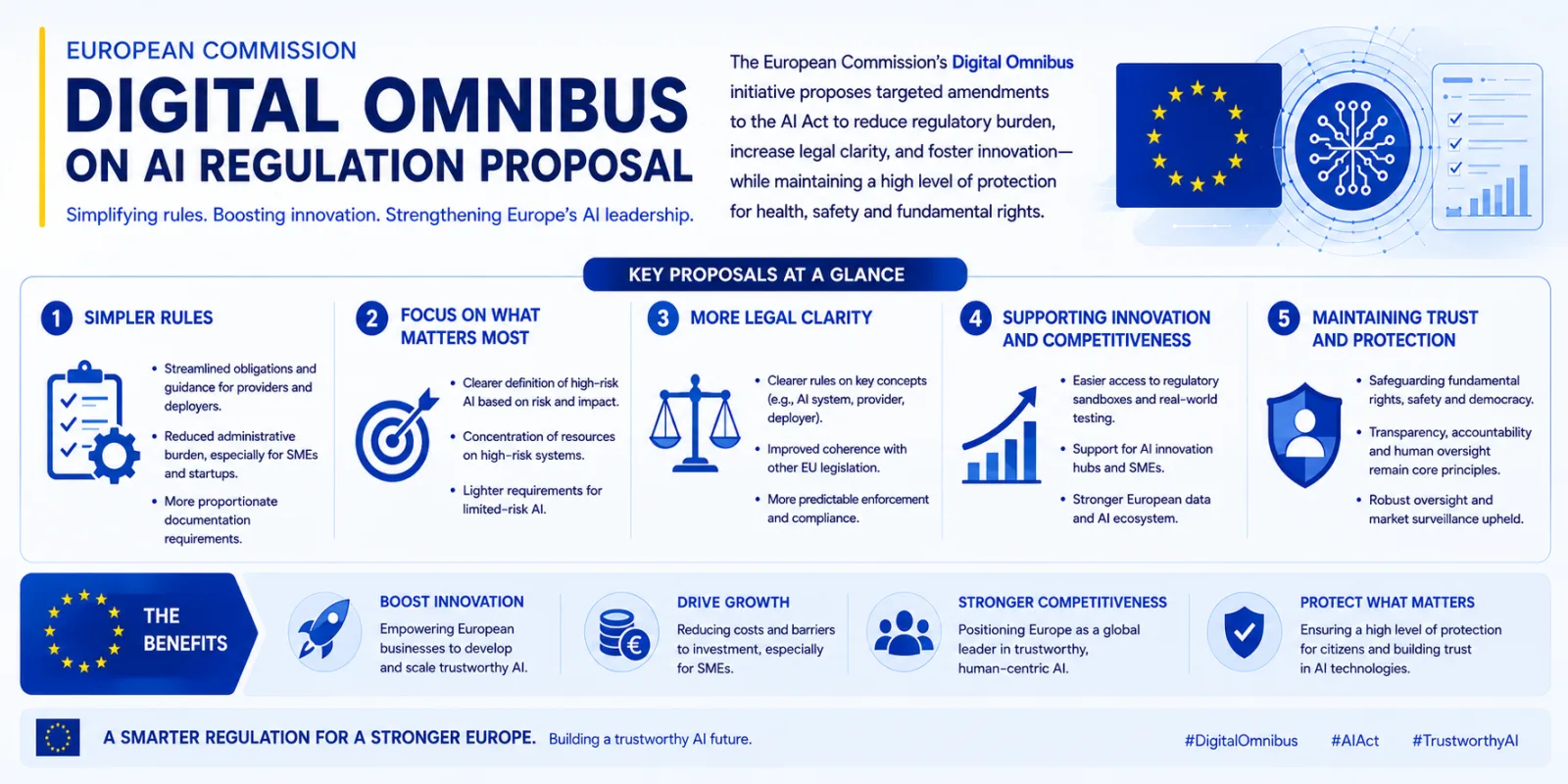
There is a regulatory clock running alongside the clinical one. On August 2, 2026, the "high-risk" provisions of the EU AI Act came into force. Systems used for diagnosis, clinical decisions, and treatment recommendations now carry obligations around data quality, transparency, human oversight, record-keeping, and incident reporting. (Pinsent Masons, RAPS) Whether AI used purely in early discovery counts as high-risk is still being argued, but the point is that the "move fast" era is ending. Earlier in the year, the FDA and the European Medicines Agency jointly published ten guiding principles for good machine-learning practice in medicine development, a sign that regulators want a shared rulebook before the first approval lands, not after. (Drug Target Review)
So 2026 is a convergence. The biggest bet, the most advanced drug, and the first serious rules are all arriving in the same twelve months.
The limitations#
Here is the sentence the marketing decks leave out: Phase III is where drugs go to die, and AI does nothing to change that.
AI has been genuinely good at the front of the pipeline. Reported early-stage success rates for AI-originated candidates look better than the historical baseline, with some analyses citing Phase I pass rates well above the traditional 40–65% range. (IntuitionLabs) But those are the easy phases. Early trials mostly ask "is it safe and does it do something biological?" The brutal question, "does it actually help patients more than what we already have, in a big, diverse population?", only gets answered in Phase III, and no amount of clever molecular design guarantees a yes.
The field has already been burned. Exscientia's DSP-1181, once celebrated as the first AI-designed molecule to reach human trials, was dropped after Phase I. (Clinical Trial Vanguard) Faster candidate generation is not the same thing as a working medicine, and pretending otherwise is how you end up with $60 billion invested and nothing on a pharmacy shelf.
Watch the goalposts, too. The prediction that "the first AI drug will be approved next year" has slid three years running. (Clinical Trial Vanguard) Rentosertib's Phase IIa was also run entirely at sites in China in 71 patients (Nature Medicine); a global Phase III with a broader population, real endpoints, and a longer timeline is a much harder exam. A promising 12-week lung-function blip is encouraging, not decisive.
Then there are the questions that don't show up on a trial dashboard. What data were these models trained on, and was it collected and licensed ethically? How do you audit a molecule that a model "reasoned" its way to when the reasoning isn't fully legible? Who is accountable when a high-risk system contributes to a call that turns out wrong? Regulators are writing those answers in real time, which is exactly why the EU rules and the FDA–EMA principles landed this year rather than later.
None of this means the skeptics win. It means the honest position is boring: AI has clearly made the beginning of drug discovery faster and cheaper, and it has not yet proven it can carry a drug across the finish line. In 2026, for the first time, we get to find out.
FAQs#
Has any AI-discovered drug been approved by the FDA? No. As of August 2026, not a single fully AI-discovered drug holds FDA approval, despite roughly $60 billion invested and around 175 AI-originated programmes entering human trials since 2019. (Clinical Trial Vanguard)
What is rentosertib and why does it matter? Rentosertib (formerly ISM001-055) is an oral small-molecule TNIK inhibitor for idiopathic pulmonary fibrosis. Both its target and its structure came from Insilico's generative-AI platform. It entered Phase III in July 2026 and is the leading candidate to become the first AI-discovered drug to reach the market. (Insilico Medicine, Nature Medicine)
What did Eli Lilly and Insilico actually agree to? Lilly gets an exclusive licence to Insilico's Pharma.AI platform across several therapeutic areas. Insilico receives $115 million upfront and up to $2.75 billion total through milestones, plus royalties. (CNBC, PharmExec)
How do large language models fit into drug discovery? Beyond drawing molecules, LLM-based systems read scientific literature, help rank which disease targets to pursue, and reason over biological evidence to guide decisions, the early, high-failure stage where most programmes are quietly lost. (BioSpace)
Is AI drug discovery regulated? Increasingly, yes. The EU AI Act's high-risk provisions took effect August 2, 2026, and the FDA and EMA jointly issued ten guiding principles for good machine-learning practice in medicine development earlier in the year. (Pinsent Masons, Drug Target Review)
So is the hype justified? Partly. AI has demonstrably compressed the earliest stages of discovery in cost and time. It has not yet proven it can get a drug through Phase III and onto the market. Both things are true at once, and 2026 is when the second one gets tested. (Clinical Trial Vanguard)
Sources#
- Eli Lilly reaches $2.75 billion deal with Insilico to bring AI-developed drugs to the global market — CNBC
- Eli Lilly and Insilico Enter $2.75 Billion Research and Licensing Agreement — Pharmaceutical Executive
- Lilly Doubles Down on Insilico's AI Medicines, Bets up to $2.75B — BioSpace
- A generative AI-discovered TNIK inhibitor for idiopathic pulmonary fibrosis: a randomized phase 2a trial — Nature Medicine (peer-reviewed)
- Insilico Initiates Phase III Clinical Trial for Rentosertib — Insilico Medicine
- Insilico Initiates Phase III Clinical Trial for Rentosertib — PR Newswire
- AI Drug Discovery Has $8.9 Billion in Hype and Zero FDA Approvals — Clinical Trial Vanguard (opinion)
- AI-Discovered Drugs in Clinical Trials 2026: Full Pipeline — IntuitionLabs
- The 2026 AI power shift — Drug Discovery News
- AI in drug discovery: predictions for 2026 — Drug Target Review
- Pharmaceutical companies face wait on EU AI regulation question — Pinsent Masons
- EU Commission drafts guidelines on classifying high-risk systems under the AI Act — RAPS