Pandemic Preparedness
The World Just Built an AI Factory for the Next Pandemic
As world leaders gather at the UN for a High-Level Meeting on pandemics, a new AI-powered global infrastructure (the Pandemic Preparedness Engine and Global Pathogen Analysis Platform) is quietly being built to compress vaccine development from months to days.

A Political Deadline Meets a Technological Leap#
Six years after COVID-19 killed more than seven million people, world leaders are converging on New York this week for the Second UN General Assembly High-Level Meeting on Pandemic Prevention, Preparedness and Response, held on 25 September 2026. It's an easy meeting to wave off as another round of diplomatic promises. But this year, the political timeline has collided with a genuine technical shift: a global AI infrastructure purpose-built to compress vaccine development from years to days is now operational, and its backers just put fresh money behind it.
In the space of one week, WHO member states advanced negotiations on the treaty mechanism for sharing virus samples fairly, Ethiopia, Norway and the UK pledged US$240 million to the Coalition for Epidemic Preparedness Innovations (CEPI), and a political declaration on pandemic readiness heads for adoption at the General Assembly. Underpinning all of it is a pair of AI systems, the Pandemic Preparedness Engine (PPX) and the Global Pathogen Analysis Platform (GPAP), that their architects say represent the first attempt to turn pandemic response into something closer to an automated pipeline than a scramble.
At the World Economic Forum's Annual Meeting in Davos in January 2026, CEPI, the University of Chicago and the European Vaccine Hub launched the Pandemic Preparedness Engine, described as the world's first "AI-factory-based" platform for infectious disease response. A sister system, the Global Pathogen Analysis Platform, was built by the Technical University of Denmark with the University of Copenhagen, the Statens Serum Institut and funding from the Novo Nordisk Foundation. Together they are meant to close the loop between spotting a dangerous pathogen and getting a vaccine candidate into a lab.
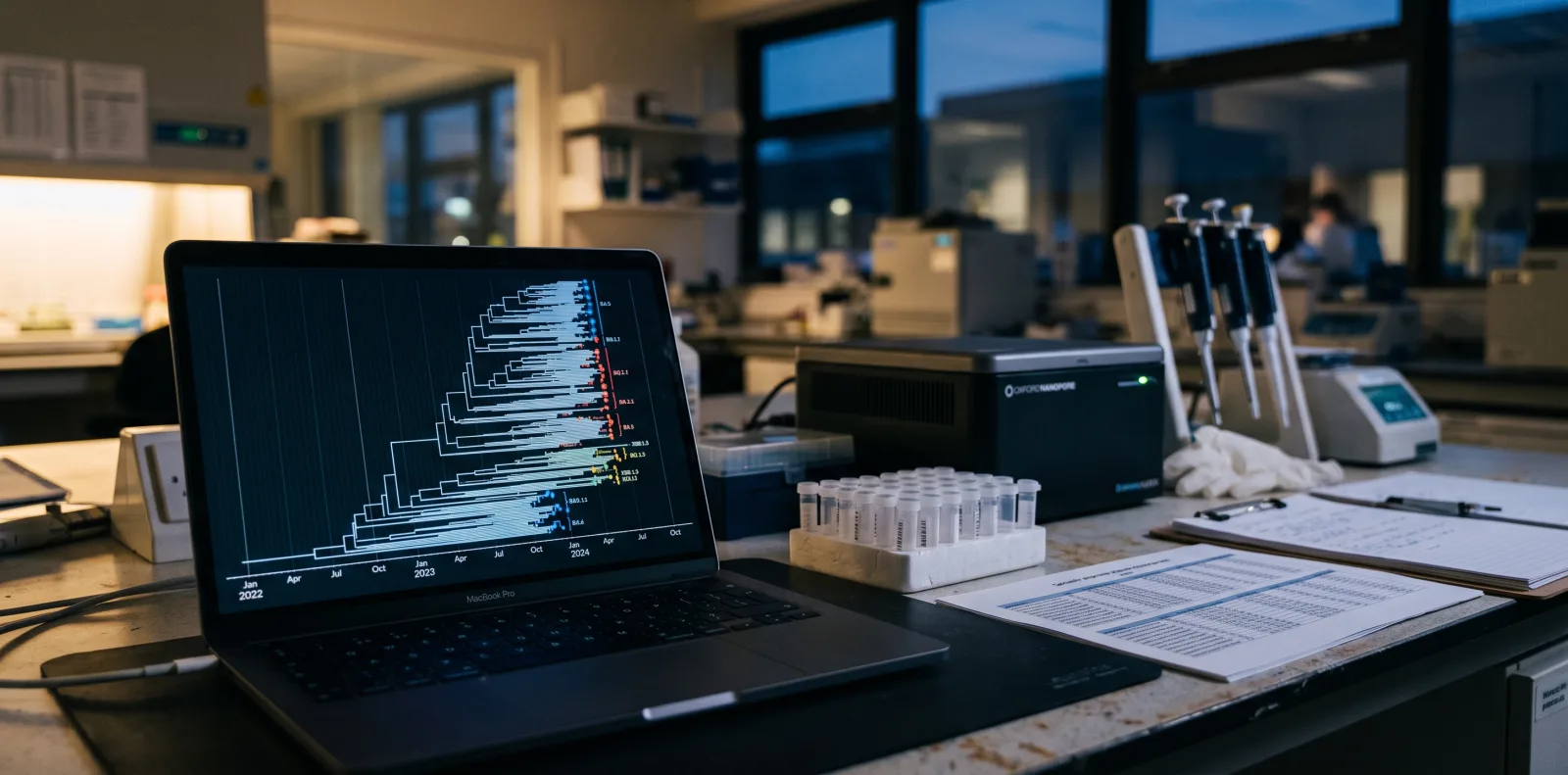
PPX works by pulling together genomic surveillance data, epidemiological models, records of how viruses have evolved, vaccine design toolkits and even manufacturing and regulatory information into one platform. Generative AI tools then search that pool of information, flag whether a newly detected pathogen looks like it could cause a pandemic, and propose specific antigen designs, the molecular targets a vaccine would need to provoke an immune response against, according to CEPI's own account of the system. CEPI says the aim is to turn a process that traditionally took months of laboratory work into one that takes minutes, hours or days.
GPAP, meanwhile, is aimed at a more basic but equally stubborn problem: most of the world still can't quickly and cheaply analyse pathogen genomes at scale. It combines bioinformatics with AI to standardise and interpret genomic and surveillance data gathered from humans, animals, plants and the environment, while letting the institutions that generate the data keep control of it, a design choice meant to address long-standing concerns from lower-income countries about outside actors taking their genetic data without giving anything back.
The timing is not incidental. The funding pledge from Ethiopia, Norway and the UK, announced on 21 September at a CEPI side event during the UN General Assembly's 81st session, is explicitly earmarked for CEPI 3.0, the organisation's 2027-2031 strategy that leans on AI, genomics and biomanufacturing advances to make the "100 Days Mission" (developing a safe, effective vaccine within 100 days of identifying a new pandemic threat) an operational reality rather than an aspiration. That same week, WHO negotiators wrapped up an eighth round of talks on the Pathogen Access and Benefit-Sharing (PABS) system, the mechanism that would require countries to share dangerous pathogen samples while guaranteeing everyone, not just wealthy nations, gets access to the vaccines built from them.
How AI Fits Into Pandemic Response#
To see why this matters, it helps to separate what "AI in pandemic preparedness" actually covers, because it's not one technology. Genomic surveillance is the ongoing practice of sequencing pathogen samples to track how a virus is mutating and spreading; machine learning models can now spot a concerning new variant in that sequencing data faster and with less computing power than older statistical methods, as demonstrated by a filtering algorithm described in a 2026 Nature Communications study from Texas A&M researchers, which outperformed existing approaches at flagging emerging SARS-CoV-2 variants using epidemiological and travel data. Early warning systems go a step further, mining search trends, wastewater data and climate patterns to predict where and when an outbreak might start; a 2026 system described in Nature Communications combined Google search trends with epidemiological data to flag respiratory disease outbreaks an average of five weeks ahead of time across all 50 US states.
Vaccine design AI, the piece PPX specialises in, is different again. It uses generative models, AI systems trained to produce new outputs rather than just classify existing ones, to suggest protein structures (antigens) that could train the immune system against a pathogen it has never seen before. This builds on the same broad family of techniques behind protein-structure prediction tools that have already reshaped structural biology over the past several years.
None of these approaches works in isolation, which is exactly the gap PPX and GPAP are trying to close: surveillance tools detect a threat, analysis platforms interpret it, and design platforms turn that interpretation into a candidate vaccine, ideally without months of manual hand-off between separate teams and institutions scattered across different countries.
Why This Matters#
For public health, the practical promise is speed. The 100 Days Mission, endorsed by G7 and G20 leaders, was set as a target precisely because COVID-19 vaccines, developed at record pace by historical standards, still took roughly a year to reach large-scale deployment. Shaving that down changes the entire calculus of an outbreak response: fewer infections before countermeasures exist, less pressure on health systems, smaller economic disruption. Research cited by CEPI estimates that unchecked future pandemics could cost the world more than US$700 billion a year in economic losses.
For biotechnology and the wider scientific community, PPX and GPAP represent something notable in their own right: an attempt to build shared, publicly governed AI infrastructure for science, rather than leaving pandemic-relevant AI capability concentrated inside a handful of well-resourced private companies or countries. CEPI has been explicit that this is a deliberate hedge against a future where AI-driven vaccine development widens the gap between nations that have access to advanced computing and those that don't, which is why the platform is being built around a federated network of international computing hubs rather than a single centralised system.
The current Ebola-family outbreak offers a live test case. CEPI says its investment in rapid-response platforms let it mobilise support within days of the Bundibugyo ebolavirus outbreak being declared an international emergency in the Democratic Republic of the Congo, backing five vaccine candidates in parallel. It's a smaller-scale rehearsal, in other words, for the kind of response the AI platforms are meant to accelerate further.
Critical Analysis#
The claims here deserve scrutiny, and CEPI itself is candid about the limits. PPX and GPAP are still early: PPX launched formally in January 2026 and is being trained initially on data from a defined set of high-risk viral families (coronaviruses, filoviruses such as Ebola, arenaviruses such as Lassa fever, plus Nipah virus, Rift Valley fever and Crimean-Congo haemorrhagic fever). It has not yet been tested against a genuinely novel pandemic pathogen under real-world pressure, so its headline "minutes to days" turnaround for identifying antigen candidates remains an engineering target rather than a demonstrated track record in a live pandemic.
There's also a gap between designing a vaccine candidate and actually deploying one. Generative AI can propose antigen structures quickly, but preclinical testing, safety trials, manufacturing scale-up and regulatory approval remain slow, human-supervised processes that AI has only marginally sped up so far. A candidate proposed in days can still take months to reach a clinic. CEPI's own framing treats PPX as compressing the discovery phase, not the entire pipeline.
Governance is the other open question. A September 2026 review in Frontiers in Digital Health found that AI adoption in disease surveillance has outpaced the governance frameworks meant to manage it, citing unresolved issues around algorithmic bias, transparency, data protection and the additional barriers facing low- and middle-income countries with limited computing infrastructure. CEPI says it is building "biosecurity by design" into PPX, including an automated monitoring agent meant to guard against misuse, but independent, external audits of these safeguards have not yet been published.
Money is the other constraint. CEPI is seeking US$2.5 billion for its 2027-2031 strategy. The $240 million pledged this week helps, but it covers less than a tenth of that target. Whether the rest materialises, and whether the PABS treaty annex is actually finalised rather than remaining in negotiation, will shape whether this AI infrastructure gets the equitable access framework its designers say it needs.
Expert Perspective#
The PPX and GPAP launch sits alongside, and is explicitly framed as complementary to, earlier AI surveillance efforts such as WHO's genomic surveillance strategy and various national early-warning systems built during and after COVID-19. What distinguishes this initiative is scope: rather than one country or agency building a tool for its own surveillance needs, PPX and GPAP are designed from the outset as shared global infrastructure, governed jointly by CEPI, an academic consortium and the World Economic Forum's convening apparatus, and intended to serve both public health agencies and private industry partners across sectors from agriculture to logistics.
CEPI CEO Richard Hatchett has framed the moment as one of capability meeting will: "we now have the science to develop a vaccine against a new viral threat in a fraction of the time it once took, but being able to do so requires steady investment and shared responsibility to keep that capability ready and waiting," he said when announcing the new funding. That captures the central tension of this story: the technology is arguably ahead of the political and financial commitments needed to make it universally useful, which is precisely what this week's UN meeting is meant to address.
Key Takeaways#
The Pandemic Preparedness Engine and Global Pathogen Analysis Platform mark the first attempt to build shared, AI-driven global infrastructure spanning pathogen detection through to vaccine design, rather than leaving each step to separate national or private systems.
Fresh funding, $240 million from Ethiopia, Norway and the UK, lands directly ahead of the UN's High-Level Meeting on pandemics on 25 September 2026, tying political commitment to the technical build-out.
The AI systems compress vaccine candidate design, not the full development pipeline; clinical trials, manufacturing and regulatory approval remain largely unaccelerated by these tools so far.
Governance and equitable access remain unresolved, with independent reviews flagging that oversight of AI-driven surveillance and design tools is lagging behind their deployment.
The WHO's Pathogen Access and Benefit-Sharing annex, still under negotiation, will determine whether the data and benefits these AI platforms depend on and produce are shared fairly across rich and poor countries alike.
Frequently Asked Questions#
What is the Pandemic Preparedness Engine (PPX)? It's an AI platform, backed by CEPI, the University of Chicago and the European Vaccine Hub, that integrates genomic, epidemiological and vaccine-design data to help researchers identify pandemic-risk pathogens and propose vaccine candidate designs faster than traditional methods. Details are available from CEPI.
How is the Global Pathogen Analysis Platform (GPAP) different from PPX? GPAP focuses on making genomic surveillance data usable, standardising and analysing pathogen sequences from humans, animals and the environment so countries with limited computing resources can interpret their own surveillance data, as described by the World Economic Forum. PPX then uses that intelligence to help design vaccines.
Has PPX actually developed a vaccine yet? Not against a novel pandemic pathogen under real-world conditions. It is currently being trained on data from known high-risk viral families and has supported the ongoing Bundibugyo ebolavirus response, but a full, independently verified 100-day turnaround for an unknown pathogen has not yet been demonstrated.
What is the 100 Days Mission? A goal endorsed by G7 and G20 leaders to develop a safe, effective and accessible vaccine within 100 days of identifying a new pandemic threat, down from roughly a year for COVID-19 vaccines. More detail is in CEPI's announcement.
What is the UN High-Level Meeting on 25 September 2026? A one-day meeting of the UN General Assembly bringing together heads of state to adopt a political declaration on pandemic prevention, preparedness and response, and to review progress since the first such meeting in 2023. Background is available from UN News.
What is the PABS annex, and why does it matter for AI platforms like GPAP? The Pathogen Access and Benefit-Sharing annex is a proposed system under the WHO Pandemic Agreement to ensure that countries sharing pathogen samples and genetic sequence data also get fair access to the vaccines and treatments developed from them. It remains under negotiation, as reported by WHO.
Is this AI system at risk of being misused to design dangerous pathogens? CEPI says it has built "biosecurity by design" safeguards into PPX, including vetting of researchers and an automated monitoring system, detailed in its security overview. Independent, published audits of these safeguards are not yet available.
How is this funded? CEPI is seeking US$2.5 billion for its 2027-2031 strategy (CEPI 3.0). Ethiopia, Norway and the UK pledged a combined $240 million towards this in September 2026, as detailed in CEPI's funding announcement.
Glossary#
Antigen: a molecule, often a piece of a virus's protein coat, that the immune system recognises and responds to. It's the basis of most vaccine designs.
Generative AI: artificial intelligence systems trained to produce new content or designs (text, images, or in this case molecular structures) rather than simply classify or predict from fixed categories.
Genomic surveillance: the ongoing sequencing and analysis of pathogen genetic material to track how it is spreading and mutating over time.
100 Days Mission: a G7/G20-endorsed goal to develop a safe, effective, accessible vaccine within 100 days of identifying a new pandemic-potential pathogen.
Pathogen Access and Benefit-Sharing (PABS): a proposed mechanism under the WHO Pandemic Agreement requiring pathogen samples and sequence data to be shared internationally, alongside guaranteed, equitable access to the resulting vaccines and treatments.
Federated computing / AI factories: a network of distributed, internationally located high-performance computing hubs that let researchers in different countries access shared AI infrastructure without centralising all data or computing power in one place.
Bundibugyo ebolavirus: one of several species in the Ebola virus family, currently the cause of an active outbreak in the Democratic Republic of the Congo.
References#
- World Health Organization. Second United Nations General Assembly High-Level Meeting on Pandemic Prevention, Preparedness and Response. 2026.
- World Health Organization. Member States advance negotiations on pathogen access and benefit-sharing ahead of UN General Assembly meeting on pandemics. 18 September 2026.
- CEPI. Ethiopia, Norway and UK commit US$240 million to CEPI's global plan to tackle epidemic and pandemic threats. 21 September 2026.
- CEPI. Building a global AI platform for pandemic preparedness. 19 September 2025.
- World Economic Forum. How AI is reshaping global preparedness for infectious disease. 23 January 2026.
- UN News. The race to build a pandemic-proof world. 19 September 2026.
- Nature Communications. Optimizing global genomic surveillance for early detection of emerging SARS-CoV-2 variants. 2026.
- Nature Communications. A real-time early warning system to anticipate respiratory disease outbreaks using transfer learning. 2026.
- Frontiers in Digital Health. Artificial intelligence is transforming disease surveillance, but governance is failing to keep pace. September 2026.
- PMC (National Center for Biotechnology Information). Global genomic surveillance strategy for pathogens with pandemic and epidemic potential, 2022-2032.
- Springer Nature, International Economics and Economic Policy. Estimated global economic losses from future pandemics.
- CEPI. Securing the Pandemic Preparedness Engine.