The patient who doesn't match the checklist#
Here is a number worth sitting with. Among the first 1,099 laboratory-confirmed COVID-19 patients reported from 552 hospitals across mainland China, fever was present in just 43.8% on admission. It reached 88.7% only later, during hospitalisation (Guan et al., 2020).
In early 2020, fever was the front door to testing in most of the world. More than half of those patients would have walked straight past a thermometer-based screen on the day they presented.
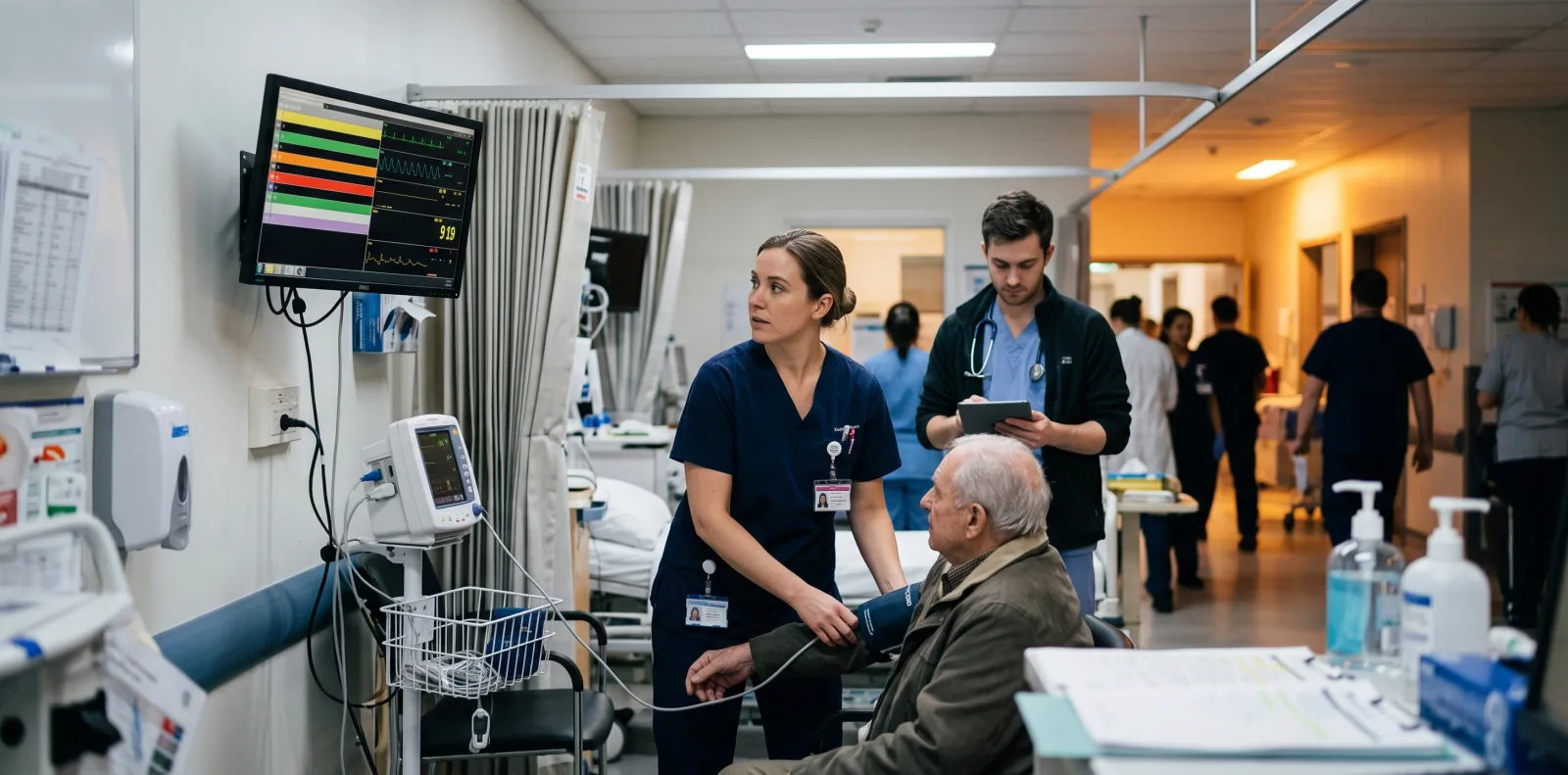
That is not a story about one virus being sneaky. It is a structural feature of how the world watches for outbreaks, and it sits at the centre of what pandemic preparedness actually asks of a health system. We write down what a disease looks like, hand the list to clinicians and border officials, and then ask them to match patients against it. The method works beautifully for diseases we already understand. For a pathogen nobody has characterised yet, the list is the problem.
On 2 November 2026, Nature published a comment by Serge Tonen-Wolyec and Laurent Belec arguing that this gap is fixable, and setting out five steps to fix it. They call the approach "symptom preparedness" (Tonen-Wolyec & Belec, 2026). One of those steps hands a job to artificial intelligence, and what is striking is how narrowly they define it.
Background: the three ways the world currently watches#
Before getting to the proposal, it helps to know what is already running, because the terms get used loosely. Global disease surveillance rests on three methods, and emerging infectious diseases test each of them differently.
Each is a form of public health surveillance, and each has a characteristic blind spot.
Event-based surveillance scans local information sources for early signals: media reports, social media posts, community alerts, reports from health workers. It is the digital equivalent of listening for rumours, and it is what the World Health Organization's Epidemic Intelligence from Open Sources platform does at scale.
Genomic surveillance sequences the genetic code of pathogens from patient samples to confirm what they are and watch how they change. This is the capability that tracked SARS-CoV-2 variants, and its reach has grown substantially. A study covering the first phase of African sequencing efforts reported more than 100,000 SARS-CoV-2 genomes generated on the continent, and found that countries able to sequence domestically achieved faster turnaround times and more regular routine surveillance (Tegally et al., 2022).
Syndromic surveillance is the one this article is really about. Rather than waiting for laboratory confirmation, it monitors people presenting with a characteristic set of symptoms, defined in advance by a case definition: the official checklist stating which signs and symptoms qualify someone as a suspected, probable or confirmed case.
Two more terms will come up. Sensitivity is the proportion of genuinely affected people a test or rule correctly picks up. Specificity is the proportion of unaffected people it correctly clears. You can almost always buy more of one by giving up some of the other, and where you set that trade-off is a policy decision disguised as a technical one.
The weakness Tonen-Wolyec and Belec identify is specific: all three approaches assume the disease presents roughly as expected. An emerging pathogen may not. Symptoms shift as a pathogen evolves, vary between people with different immunity, and get obscured by co-infections that look similar (Tonen-Wolyec & Belec, 2026).
Three outbreaks where the symptoms moved#
The argument rests on cases where this already happened, and they are not obscure.
Loss of smell took months to be accepted in many countries as an indicator of COVID-19, even though it had been documented early, which let people bypass isolation protocols (Tonen-Wolyec & Belec, 2026). Then the target moved again. The REACT-1 study, which surveyed 1,542,510 adults in England between May 2020 and March 2022, found that Omicron was associated with markedly lower reporting of lost smell or taste than earlier variants, and higher reporting of cold-like and influenza-like symptoms, after controlling for vaccination status (Whitaker et al., 2022). A checklist tuned to anosmia had quietly stopped working.
Mpox in 2022 is the sharper example. An international case series of 528 confirmed infections across 43 sites in 16 countries found that transmission was suspected to have occurred through sexual activity in 95% of cases (Thornhill et al., 2022). Many presented with localised genital and anal lesions rather than the widespread rash in the classic case definition, and were initially misdiagnosed as having sexually transmitted infections, which plausibly delayed recognition and public health action (Tonen-Wolyec & Belec, 2026).
Nipah virus makes the same point in the present tense. Clinicians in Bangladesh and India are finding it hard to diagnose because its presentation shifts between brain inflammation, with confusion and seizures, and breathing difficulties (Gupta et al., 2026).
Three different pathogens, one repeated failure mode. The surveillance system was looking for the right disease with the wrong description.
What symptom preparedness would actually involve#
The proposal is a loop rather than a tool: clinical signals get detected, validated, translated into surveillance and diagnostic guidance, then fed back to front-line clinicians quickly enough to matter (Tonen-Wolyec & Belec, 2026).
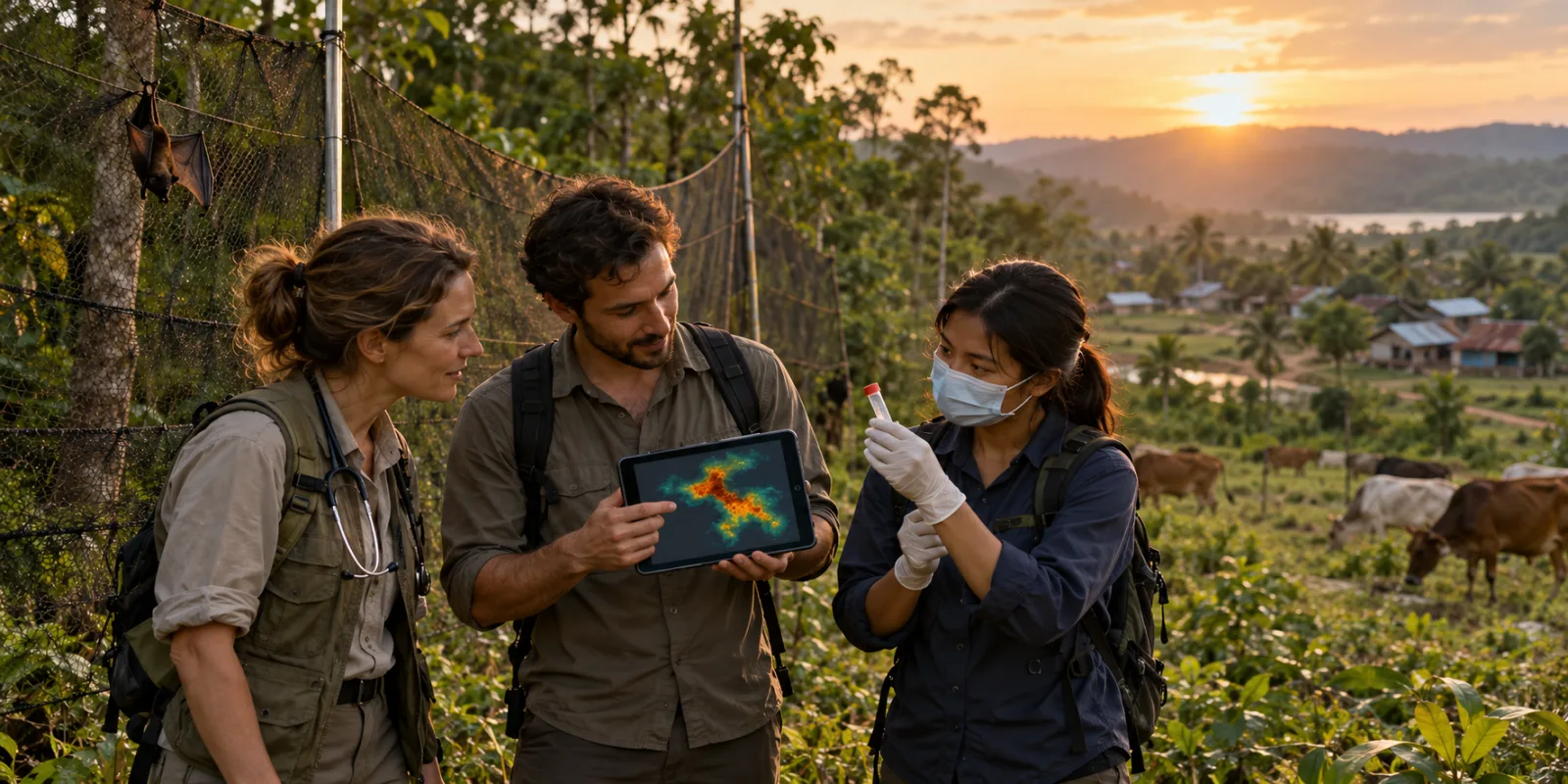
The first step is unglamorous and probably the most important. Clinicians need a formal route to report the intuition that something is odd, such as several patients turning up with the same unrecognised cluster of symptoms. The authors suggest documenting this "clinical drift" through existing digital surveillance tools, naming the widely deployed District Health Information Software 2 platform, with a second senior clinician or hospital epidemiologist verifying that the cluster really is atypical before an alert propagates.
The third step is to retire the single fixed checklist in favour of tiered case definitions that separate suspected, probable and confirmed cases, maintained by specialist committees and updated on a weekly or rolling basis as real-time clinical data arrive. Applied to 2022, the authors argue, public health authorities could have widened the suspected-case definition for mpox to include localised genital sores within days of atypical clusters being recognised.
Note what is doing the work there. No new sensor, no new model. A governance change in who is allowed to update a definition, and how fast.
The narrow job AI is actually given#
Step two is where machine learning enters, and the framing is unusually disciplined for 2026.
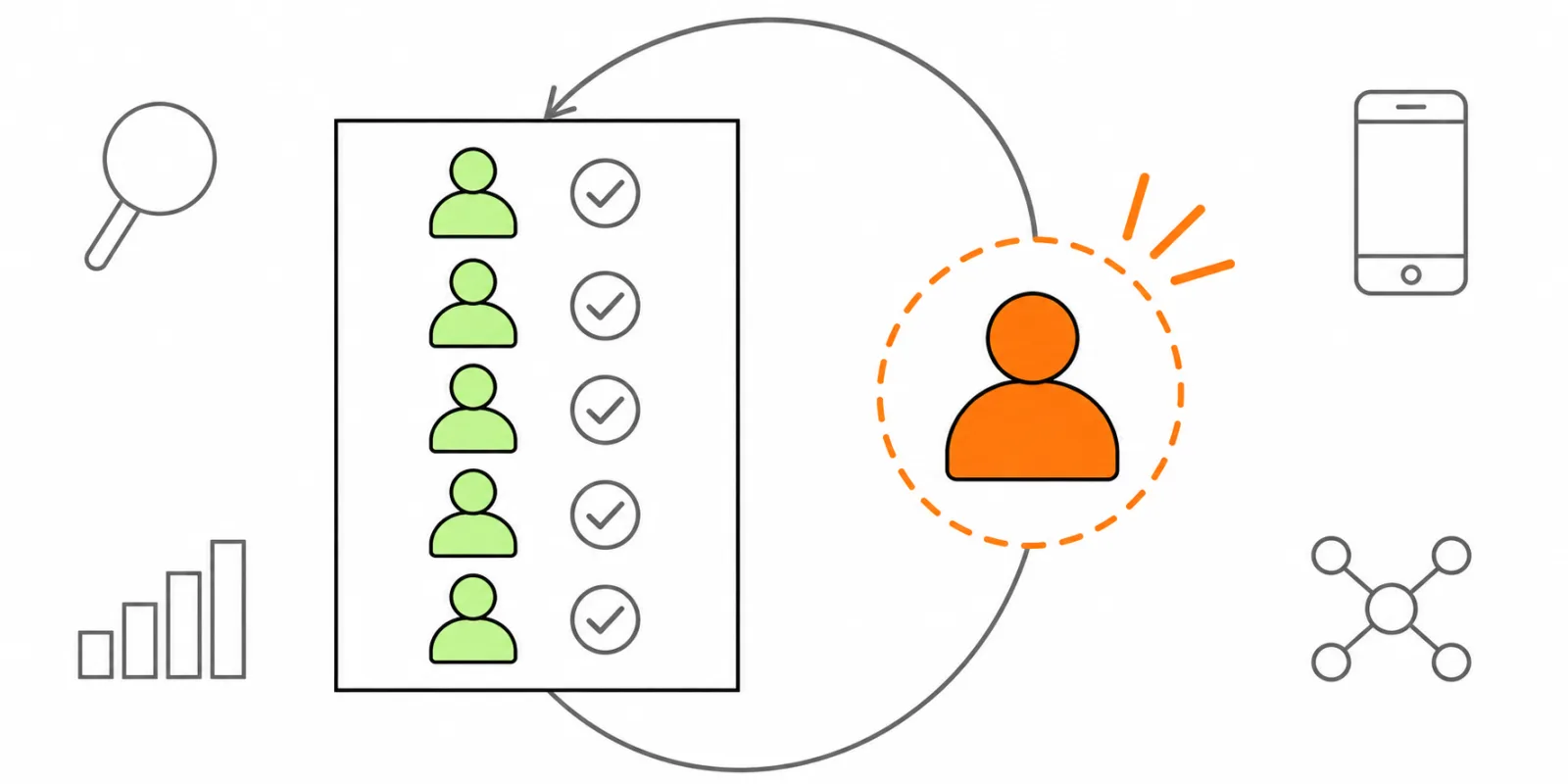
Models trained on clinical data labelled by time and place could help physicians spot patients whose symptoms differ from the patterns normally seen in that same population. Crucially, the authors specify that such models should not provide a diagnosis. They should flag cases warranting further examination, augmenting rather than replacing clinical judgement (Tonen-Wolyec & Belec, 2026).
This is anomaly detection, not diagnosis. The model never needs to know what the new disease is, which is fortunate, because by definition nobody does. It only needs to know what normal looks like here, this month, and say when something departs from it.
The authors are candid that such systems exist but remain in their infancy, and they list the preconditions plainly: reliable connectivity, adequate data quality, testing and evaluation in the actual local setting, ongoing performance monitoring, and privacy safeguards (Tonen-Wolyec & Belec, 2026, citing Getchell et al., 2026). Where facilities cannot run a model locally, they suggest health workers submit anonymised clinical information to a national system by phone app, SMS or existing electronic registries, and receive an alert back.
Is there evidence that data-driven rules can beat standardised symptom criteria in exactly the settings where this would be deployed? Yes, though from an adjacent problem. A study of 3,405 children aged 1 to 59 months presenting with acute febrile illness at seven hospitals across Bangladesh, Cambodia, Indonesia, Laos and Vietnam developed clinical prediction models for deciding which children need referral. Against WHO danger signs, the model built from simple clinical parameters reached a sensitivity of 74.7% and a specificity of 99.1%, compared with 55.5% and 82.6% for the WHO criteria (Chandna et al., 2026).
That result deserves its caveat, which is why the caption carries one. It concerns triage of a known clinical problem, not discovery of an unknown pathogen, and the sensitivity intervals overlap. What it does show is that in real district hospitals across five countries, a standardised symptom checklist left substantial accuracy on the table.
Why accuracy is no longer the bottleneck#
If better models were all that stood between us and earlier outbreak detection, the problem would be close to solved. The people who build these systems say it is not.
The thirteenth session of the WHO Pandemic and Epidemic Intelligence Innovation Forum, whose meeting report was published in BMC Proceedings, gathered researchers from Oxford, Harvard, Google, the Centre for Epidemic Response and Innovation, Copenhagen and the WHO Hub to review where AI stands in epidemic intelligence and infectious disease modelling. Their conclusion was blunt: technical performance alone is insufficient. Tools must be transparent, auditable, transferable across settings, operationally usable, and responsive to local data and infrastructure constraints (Kraemer et al., 2026).
Several themes from that forum bear directly on symptom preparedness. Participants raised trust in black-box models, noting that methods grounded in familiar epidemiological reasoning are easier to explain to decision-makers, and suggested that pairing classical models with AI components helps teams stay confident without ceding control. They warned that models developed in high-income, data-rich settings often fail to generalise where population structures, reporting systems and data realities differ. And they made an argument that cuts against most of the field's instincts: even a well-benchmarked model fails if it needs infrastructure, bandwidth or expertise that is not there, which makes simpler, frugal models that run offline and update incrementally more impactful in practice (Kraemer et al., 2026).
Simpler and offline. That is not where the money or the headlines are going.
| Surveillance approach | What it watches | Where it fails on a novel pathogen | What symptom preparedness adds |
|---|---|---|---|
| Event-based | Media, social media, community and health-worker reports | Needs someone to already suspect something is wrong and say so publicly | A formal, verified channel for clinicians to report atypical clusters (Tonen-Wolyec & Belec, 2026) |
| Genomic | Pathogen genetic sequences from confirmed samples | Only sequences samples that were collected, which requires suspicion first; capacity is uneven (Tegally et al., 2022) | Earlier, better-targeted sampling driven by clinical anomalies |
| Syndromic | Patients matching a predefined case definition | The definition is written before the pathogen is understood and updates slowly (Whitaker et al., 2022) | Tiered definitions updated weekly as real-time data arrive |
| AI anomaly flagging | Departures from local symptom patterns | Immature; needs connectivity, data quality and local validation | Flags cases for examination without diagnosing (Kraemer et al., 2026) |
The capacity gap that decides everything#
There is a reason this proposal comes from authors writing about low-resource settings, and it is the part most likely to determine whether any of it works.
The WHO forum heard that public health actors in many low- and middle-income countries lack dedicated analytical teams and depend on external partners to interpret their own data, which can mean losing control of the analytic process precisely during emergencies, when speed, autonomy and trust matter most (Kraemer et al., 2026). The genomic record points the same way: domestic sequencing capacity, not remote assistance, is what shortened turnaround times (Tegally et al., 2022).
Symptom preparedness is relatively well suited to this constraint, which is its quiet advantage. The expensive components are a reporting channel, a verification step and a committee empowered to revise definitions quickly. The AI component is explicitly designed to degrade gracefully, running centrally and reachable by SMS where local compute does not exist (Tonen-Wolyec & Belec, 2026).
It is worth being clear about what is and is not established here. The Nature piece is a comment, which means it is a reasoned proposal from two clinicians, not a trial result. Nobody has yet shown that symptom preparedness detects an emerging pathogen faster in practice. The evidence assembled around it is strong on the problem and thinner on the solution.
But the problem is well documented, and the proposed fix is unusually modest about what the technology contributes. Guidance on evaluating clinical AI has argued for years that the field needs reporting standards covering real-world deployment rather than retrospective accuracy alone (Vasey et al., 2022), and that machine learning in health should be held to a do-no-harm standard built on multidisciplinary review (Wiens et al., 2019). A model whose only output is "this patient is unusual, please look again" is about as auditable as clinical AI gets.
The next Disease X will arrive wearing symptoms nobody wrote down. The useful question is not whether an algorithm can name it. It is whether a clinician somewhere can say "this doesn't look right" and have the system hear them within days rather than months.
Frequently asked questions#
What is syndromic surveillance? It is outbreak monitoring based on symptoms rather than laboratory confirmation, identifying and tracking people who present with a predefined set of clinical signs. Its weakness is that the definition is written in advance, so a pathogen presenting atypically may not be counted (Tonen-Wolyec & Belec, 2026).
What is symptom preparedness? It is the approach proposed in a Nature comment published on 2 November 2026: a five-step loop in which clinical signals are detected, validated, translated into surveillance and diagnostic guidance, and fed back to front-line clinicians quickly (Tonen-Wolyec & Belec, 2026).
Why did fever screening miss so many COVID-19 cases? Because fever was not present in most patients when they first presented. Among 1,099 laboratory-confirmed patients across 552 Chinese hospitals, 43.8% had fever on admission, rising to 88.7% only during hospitalisation (Guan et al., 2020).
What role should AI play in outbreak detection? A narrow one, on this proposal. Models trained on clinical data labelled by time and place would flag patients whose symptoms depart from local patterns, for further examination, without offering a diagnosis, augmenting rather than replacing clinical judgement (Tonen-Wolyec & Belec, 2026).
Is AI accuracy the main obstacle to better epidemic intelligence? Experts convened by WHO concluded it is not. Their meeting report states that technical performance alone is insufficient, and that tools must also be transparent, auditable, transferable between settings and usable under local infrastructure constraints (Kraemer et al., 2026).
Can data-driven rules really outperform standard symptom criteria? In one adjacent setting, yes. Across 3,405 febrile children in five Asian countries, a model using simple clinical parameters reached 74.7% sensitivity and 99.1% specificity for identifying children at risk of severe disease, against 55.5% and 82.6% for WHO danger signs (Chandna et al., 2026). That study concerned referral decisions, not novel pathogen detection.
How would this work where hospitals lack computing infrastructure? By keeping the model central and the interface simple. Health workers could submit anonymised clinical information through a phone app, SMS reporting or existing electronic registries, and receive an alert in return (Tonen-Wolyec & Belec, 2026). WHO forum participants likewise argued that frugal models running offline are often more impactful than larger ones (Kraemer et al., 2026).
Has symptom preparedness been proven to work? No. It is a proposal set out in a comment piece, not a tested intervention, and the authors note that the relevant AI systems remain in their infancy (Tonen-Wolyec & Belec, 2026). The evidence is strongest on the problem it identifies rather than on the remedy.
References#
- Chandna, A., et al. (2026). Predicting referral need for febrile children in low-resource community settings in South and Southeast Asia. Nature Medicine, 32, 1907 to 1916. https://doi.org/10.1038/s41591-026-04338-1
- Getchell, M., et al. (2026). npj Digital Medicine. Cited by Tonen-Wolyec & Belec as evidence on the maturity of AI systems for detecting atypical clinical cases. https://doi.org/10.1038/s41746-026-03189-x
- Guan, W.-J., et al. (2020). Clinical characteristics of coronavirus disease 2019 in China. New England Journal of Medicine, 382(18), 1708 to 1720. https://doi.org/10.1056/NEJMoa2002032
- Gupta, N., et al. (2026). Clinical Microbiology and Infection, 32, 1404 to 1411. https://doi.org/10.1016/j.cmi.2026.03.021
- Kraemer, M. U. G., Tornimbene, B., Bhatt, S., Chang, S., Prasad, G., Tambe, M., Tegally, H., & Morgan, O. (2026). Leveraging AI for infectious disease modelling and public health decision making. BMC Proceedings, 19(S4), Article 41. Meeting report of the thirteenth session of the WHO Pandemic and Epidemic Intelligence Innovation Forum. https://doi.org/10.1186/s12919-026-00398-w
- Tegally, H., et al. (2022). The evolving SARS-CoV-2 epidemic in Africa: insights from rapidly expanding genomic surveillance. Science, 378(6615), eabq5358. https://doi.org/10.1126/science.abq5358
- Thornhill, J. P., et al. (2022). Monkeypox virus infection in humans across 16 countries, April to June 2022. New England Journal of Medicine, 387(8), 679 to 691. https://doi.org/10.1056/NEJMoa2207323
- Tonen-Wolyec, S., & Belec, L. (2026). Five overlooked steps to identify new epidemics, fast. Nature, 659(8139), 34 to 36. Comment, published 2 November 2026. https://doi.org/10.1038/d41586-026-03509-x
- Vasey, B., et al. (2022). Reporting guideline for the early-stage clinical evaluation of decision support systems driven by artificial intelligence. Nature Medicine, 28, 924 to 933. https://doi.org/10.1038/s41591-022-01772-9
- Whitaker, M., et al. (2022). Variant-specific symptoms of COVID-19 in a study of 1,542,510 adults in England. Nature Communications, 13, 6856. https://doi.org/10.1038/s41467-022-34244-2
- Wiens, J., et al. (2019). Do no harm: a roadmap for responsible machine learning for health care. Nature Medicine, 25, 1337 to 1340. https://doi.org/10.1038/s41591-019-0548-6