AI in Healthcare
This Open-Source AI Just Beat 23 of 26 Radiologists
Alibaba's DAMO Academy has open-sourced RADAR, a Science-published AI that outperformed 23 of 26 radiologists reading abdominal CT scans for 146 conditions, free for any hospital to run.
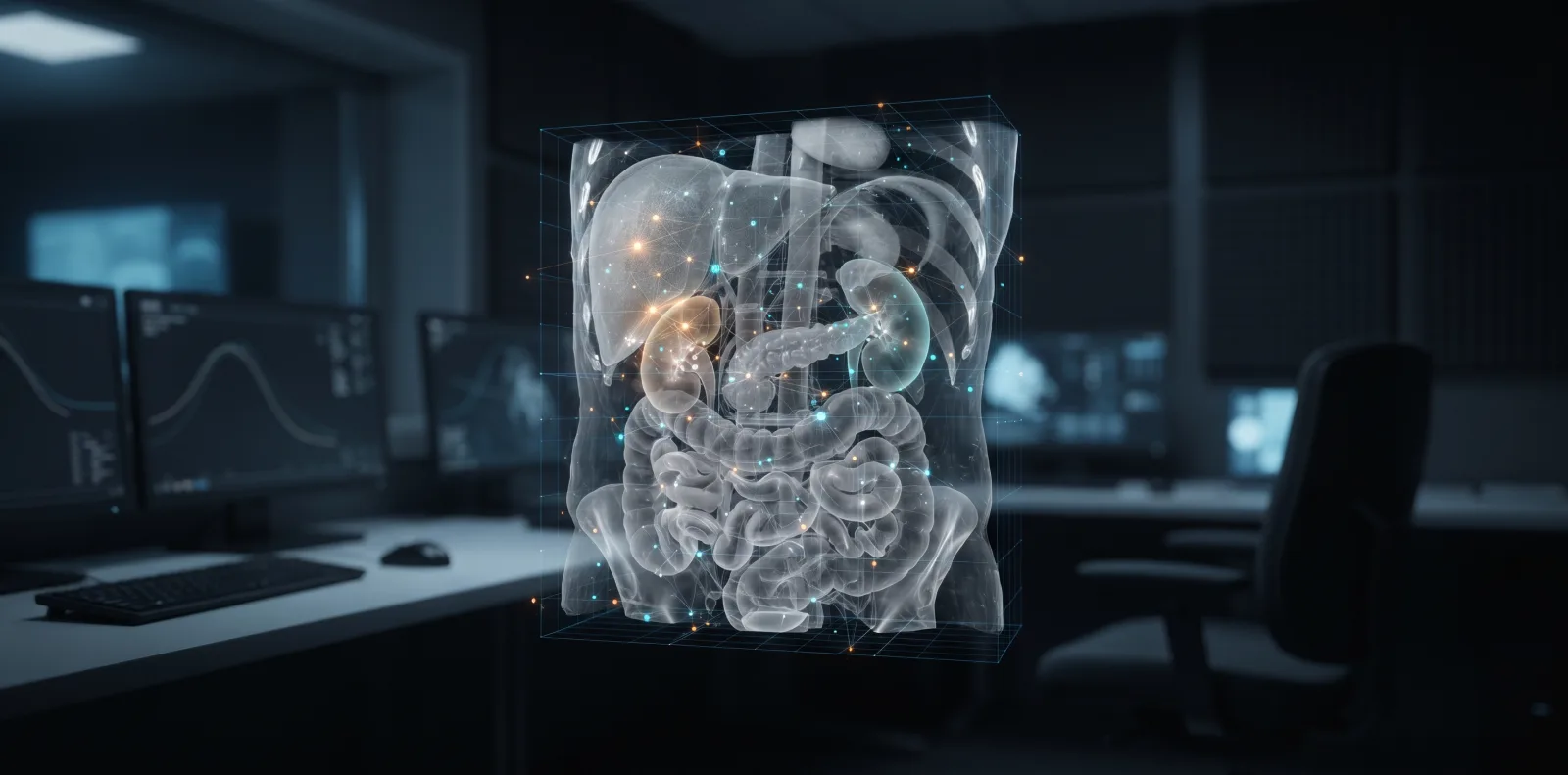
Most artificial intelligence tools built for hospitals do one narrow job well: spot a single type of lung nodule, or flag a possible stroke on a head scan. On 18 September 2026, researchers at Alibaba's DAMO Academy published something built to do the opposite. Their model, RADAR, reads a single abdominal CT scan and checks it for 146 conditions at once, across 18 organs, then hands the results to a radiologist for review, according to the peer-reviewed study in Science.
That alone would make a solid research paper. What makes it the week's most consequential healthcare AI story is what happened next: in a formal reader study against 26 practising radiologists, RADAR's average accuracy beat 23 of them, as Tech Times reported. Within a day of publication, DAMO released the entire model, code, training method and weights, for anyone to download and run for free, via GitHub and reported by the South China Morning Post.
Peer-reviewed evidence, a head-to-head win against specialists, and a free, open release rarely arrive together in medical AI. That combination is worth a closer look.
DAMO Academy, the research arm of the Chinese technology company Alibaba, built RADAR with the First Affiliated Hospital of Zhejiang University School of Medicine and several other clinical partners. They trained it on more than 420,000 contrast-enhanced abdominal CT examinations, generating 15 million paired image-and-text examples, without anyone manually marking up which disease appeared where, according to the project's GitHub documentation. Instead, the system learned by matching each scan to the radiology report a doctor had already written about it.
The team then tested RADAR at eight independent hospitals, on close to 40,000 real-world scans it had never seen during training. Averaged across all 146 findings, it scored an AUC of 0.913, a statistic that measures how well a test separates patients who have a condition from those who don't, where 0.5 is a coin flip and 1.0 is a perfect score, as SCMP detailed. In the reader study, comparing RADAR against 26 radiologists ranging from junior residents to senior consultants, its average accuracy exceeded 23 of them.
Used as a second opinion rather than a replacement, RADAR also made the human readers better. Their sensitivity, meaning their ability to catch true cases of disease, rose by roughly 10 percentage points, and their reading time fell by more than 30%, according to Dataconomy's coverage. Junior radiologists working with RADAR's assistance reached accuracy levels close to their more senior colleagues working alone.
DAMO published the work in Science, one of the most selective journals in research, and released the code under an Apache 2.0 licence and the model's weights under a CC BY-NC-SA 4.0 licence, free for research and non-commercial use. The full model is small enough, roughly 5 gigabytes, to run on a single workstation graphics card, so a hospital does not need a data-centre budget or a per-scan subscription to try it, as MindStudio's technical breakdown notes.
How an AI learns to read a scan#
A contrast-enhanced CT scan is an X-ray-based three-dimensional image of the body's interior, taken after a patient is given an iodine-based dye that makes blood vessels and diseased tissue easier to distinguish from healthy tissue. Reading one means scrolling through hundreds of cross-sectional slices while holding in mind everything that could conceivably be wrong across many organs, which is part of why training a radiologist takes years.
Most existing radiology AI tackles a narrower version of this problem. A "specialist" or "narrow" model is trained for one task, say, spotting liver lesions, and needs a large set of scans that an expert has manually marked up to show exactly where the disease sits. Building a separate tool for every condition a radiologist watches for would take decades. A "generalist" model is trained instead to recognise many conditions at once from a single, broader process, an approach a widely cited 2023 review in Nature argued medical AI needed to move towards.
RADAR is what researchers call a vision-language model: a system trained to connect images with the words used to describe them, the same broad approach behind tools that caption ordinary photographs, adapted here to connect 3D CT volumes with the sentences in a radiology report. Its central technical idea is organ-level alignment. Rather than matching an entire scan to an entire report, too coarse a signal for a disease that might occupy a few cubic centimetres of an entire abdomen, the model first separates the scan into its component organs and matches each one to the specific sentences describing it. That is how RADAR learned from routine hospital paperwork instead of a purpose-built, manually labelled training set.
When DAMO describes RADAR's release as open, it means two things: the code is public so anyone can inspect or modify it, and the trained model's weights, the numbers that encode everything it learned, are downloadable rather than locked behind a paid cloud service.
Why This Matters#
A Lancet Oncology workforce commission projects a global shortfall of roughly 725,000 to 750,000 radiologists by 2050, concentrated most heavily in Africa and Asia, according to Radiology Business. That shortage has less to do with a lack of brilliant specialists than with too few being available quickly enough outside major cities. RADAR's most striking result, bringing junior radiologists' accuracy up towards senior levels when they use it as a second opinion, speaks directly to that gap.
The free, open release compounds the effect. Commercial radiology AI has largely been sold as a per-scan fee for a single narrow task, putting it out of reach for hospitals with tight budgets. A model that covers 146 conditions, runs on one graphics card, and costs nothing to licence for research changes that calculation, particularly for rural hospitals, lower-income countries, or clinics that cannot justify a subscription per disease.
There is a broader signal for AI in science here too: the foundation-model recipe built for language, learning from naturally occurring data rather than expensive hand-labelled sets, can be adapted to sparse, three-dimensional medical scans and still hold up against human experts. DAMO's team believes the same organ-level alignment approach could extend to chest CT, brain MRI and other imaging types as clinical partnerships expand, though that remains a future step rather than a demonstrated one.
Critical Analysis#
RADAR's evidence base is unusually strong for a new medical AI system. It was peer-reviewed by Science, tested at eight independent centres rather than just the hospital that built it, and validated against real radiologists in a formal reader study rather than only against a static benchmark. Few AI health tools launch with all three at once.
The limitations are just as concrete. RADAR was trained and tested exclusively on contrast-enhanced abdominal CT, with no validated capability for non-contrast scans, other imaging types such as X-ray or MRI, or any body region beyond the abdomen. Its training data came from Chinese clinical centres concentrated in Zhejiang province; the eight-centre validation confirms it generalises within that healthcare system, but no independent study has tested it against the body types, disease patterns and scanner hardware found in, say, European or North American hospitals. Medical imaging AI trained on narrow, geographically concentrated datasets has repeatedly shown uneven performance once deployed elsewhere: a 2023 study by Glocker and colleagues at Imperial College London found racial and sex-related gaps in a chest X-ray foundation model for exactly this reason.
RADAR also has no regulatory clearance anywhere. It holds no FDA authorisation in the United States and no CE mark in Europe, and a registered clinical trial, NCT07040358, has not yet published prospective outcome data. Because RADAR's 146-condition scope has no obvious precedent device, the most likely US route is the FDA's De Novo pathway, which typically takes five to eight months once a submission is accepted, a clock that has not yet started, per Tech Times' regulatory analysis. In practice, RADAR is a research instrument today, not a certified clinical product; using it for real patient care would currently fall outside standard regulatory boundaries.
That caution fits the broader mood this same week: the Financial Times reported clinicians pushing back on medical AI tools that move beyond diagnostics into messier territory like suggesting treatment, citing thin real-world data, while a related 2026 survey found persistent worries about deskilling and hallucination even as daily AI use has tripled year on year, as summarised by AI Weekly. RADAR sits at the more evidence-backed end of that spectrum, but strong reader-study results are still not the same as validated real-world outcomes.
Expert Perspective: What's Genuinely New Here#
The idea of a single generalist medical AI is not new. A 2023 Nature review by Moor and colleagues made the case for exactly this kind of system: one able to handle many clinical tasks without a hand-labelled dataset for each. RADAR is among the more concrete demonstrations yet of that vision working at expert level.
It is not alone in reaching for that goal. Harrison.ai, an Australian-founded company, released Harrison.Rad 1.5 earlier in 2026: a generalist model for plain-film X-rays that can draft full reports and was the only AI system to pass the FRCR 2B exam used to certify UK radiologists. Harrison.Rad works across chest, musculoskeletal and abdominal X-rays; RADAR works on three-dimensional CT volumes, a technically harder problem because disease can hide in a small fraction of a much larger, sparser volume. The two systems are converging on the same generalist idea from different directions, rather than competing head-to-head.
What is genuinely new in RADAR is not the ambition but the training method. Earlier attempts at broad medical imaging AI were held back because manually annotating scans for dozens of diseases at once is prohibitively expensive. RADAR's organ-level alignment sidesteps that by extracting supervision directly from radiology reports hospitals were already writing, removing the annotation bottleneck that has kept most imaging AI narrow. That detail, more than the headline numbers, is the one worth remembering.
Key Takeaways#
- RADAR is a generalist AI that screens a single abdominal CT scan for 146 conditions across 18 organs, rather than one disease at a time, and its results were peer-reviewed in Science.
- In a reader study against 26 radiologists, RADAR's average accuracy beat 23 of them, and it improved human readers' own accuracy by around 10 percentage points when used as a second opinion.
- The full model, code and weights, was released free for research use under open licences and runs on a single workstation graphics card.
- It has no regulatory clearance anywhere and has been validated only on Chinese patient populations and contrast-enhanced abdominal CT, so real-world use elsewhere needs independent testing first.
- Its main innovation is learning directly from routine radiology reports instead of manually labelled scans, a method that could plausibly extend to other imaging types if future clinical partnerships allow it.
Frequently Asked Questions#
Can RADAR replace radiologists? No, and the researchers do not claim it can. It performed best as a second reader alongside radiologists, improving their sensitivity and speed rather than working unsupervised.
What does "generalist" mean here? A generalist model is trained to recognise many different conditions from one broad training process, rather than one condition per model. RADAR covers 146 findings across 18 abdominal organs from a single scan.
Is RADAR approved for clinical use? No. It has no FDA clearance in the United States, no CE mark in Europe, and no equivalent approval anywhere else. It is currently a research tool.
Can any hospital start using RADAR today? Any institution can download and run it for research purposes, since the weights are free under a non-commercial licence. Clinical deployment would require regulatory approval, local validation and integration work first.
How was RADAR trained without manually labelling every scan? It learned by matching each CT scan, organ by organ, to the sentences already written about it in the hospital's own radiology reports, rather than requiring a human to mark the disease location on every image.
Does RADAR work on X-rays, MRI or other body regions? Not yet. It was trained and validated only on contrast-enhanced abdominal CT. The developers believe the method could extend to other imaging types but have not yet published that work.
Does it matter that RADAR was built in China? It affects how the model should be evaluated, not whether it works. Its training data and validation are drawn entirely from Chinese hospitals, so performance on other populations is unverified, and any hospital adopting it should treat that as an open question. Because a downloaded copy runs locally, using it for research does not require sending patient data back to DAMO Academy.
Where can I find the paper or the model itself? The peer-reviewed study is published in Science (DOI: 10.1126/science.aec6129); the code and weights are on GitHub and Hugging Face.
Glossary#
AUC (Area Under the Curve): A single score, from 0.5 to 1.0, summarising how well a diagnostic test tells apart people who have a condition from those who don't. Higher is better; above 0.9 is generally considered excellent for a screening tool.
Contrast-enhanced CT: A CT scan taken after injecting an iodine-based dye that makes blood vessels and many diseased tissues stand out more clearly against healthy tissue.
Vision-language model: An AI system trained to connect images with the text used to describe them, letting it learn from picture-and-caption, or scan-and-report, pairs rather than manually drawn labels.
Generalist AI / foundation model: A model trained on a broad range of data or tasks at once, so it can handle many different problems, as opposed to a narrow model built for a single task.
Open-weight model: A trained AI model whose internal parameters are published for anyone to download and run themselves, rather than accessed only through a paid, cloud-hosted service.
Reader study: A clinical research method in which human experts and an AI system independently assess the same set of cases, so their performance can be directly compared.
Sensitivity: In diagnostics, the proportion of people who truly have a condition that a test correctly identifies. Higher sensitivity means fewer missed cases.
FDA De Novo pathway: A US regulatory route for novel medical devices with no existing equivalent already on the market, used when a device cannot rely on comparison to an approved predecessor.
References#
- Zhang, Q., Zhang, J., Cao, W. et al. "An expert-level generalist AI for abdominal CT diagnosis." Science 393, eaec6129 (2026). https://www.science.org/doi/10.1126/science.aec6129
- Alibaba DAMO Academy. "RADAR: An Expert-Level Generalist AI for Abdominal CT Diagnosis" (code and model release). GitHub. https://github.com/alibaba-damo-academy/damo-radar
- Cao, A. "Alibaba open-sources medical AI model that can detect cancer and nearly 150 conditions." South China Morning Post, 18 September 2026. https://www.scmp.com/tech/big-tech/article/3368055/alibaba-open-sources-medical-ai-model-can-detect-cancer-and-nearly-150-conditions
- Manning, J. "Alibaba Radiology AI Outperforms 23 of 26 Radiologists Across 146 Diseases in Science." Tech Times, 19 September 2026. https://www.techtimes.com/articles/327749/20260919/alibaba-radiology-ai-outperforms-23-26-radiologists-across-146-diseases-science.htm
- Çelebi, A. "Alibaba releases open-source AI for abdominal CT diagnosis." Dataconomy, 21 September 2026. https://dataconomy.com/2026/09/21/alibaba-releases-open-source-ai-for-abdominal-ct-diagnosis/
- Chavez-Mattos, L. "What Is RADAR? Alibaba's Open Cancer-Screening AI Explained." MindStudio, 20 September 2026. https://www.mindstudio.ai/blog/radar-medical-ai-benchmarks-explained
- Moor, M., Banerjee, O., Abad, Z.S.H. et al. "Foundation models for generalist medical artificial intelligence." Nature 616, 259-265 (2023). https://www.nature.com/articles/s41586-023-05881-4
- Harrison.ai. "Harrison.Rad 1.5: Clinical reasoning that makes structured draft reporting possible." June 2026. https://harrison.ai/harrison-rad-1-5/
- "'Cancer crisis': Experts warn of impending global shortage of radiology professionals." Radiology Business, reporting on a Lancet Oncology workforce commission. https://radiologybusiness.com/topics/healthcare-management/healthcare-staffing/cancer-crisis-experts-warn-impending-global-shortage-radiology-professionals
- Glocker, B., Jones, C., Roschewitz, M., Winzeck, S. "Risk of Bias in Chest Radiography Deep Learning Foundation Models." Radiology: Artificial Intelligence 5(6) (2023). https://pubs.rsna.org/doi/full/10.1148/ryai.230060
- "FT: Clinicians Push Back on Medical AI Beyond Diagnostics, Cite Thin Performance Data." Summarised by AI Weekly, 20 September 2026. https://aiweekly.co/alerts/ft-clinicians-push-back-on-medical-ai-beyond-diagnostics