Biology
Evolution as Training Data: How Biohub's Open Protein World Model Is Rewiring Drug Discovery
Biohub's open-source ESM models learned the rules of protein biology from evolution alone — and designed working drug binders in days. Here's what the release means, and where it falls short.
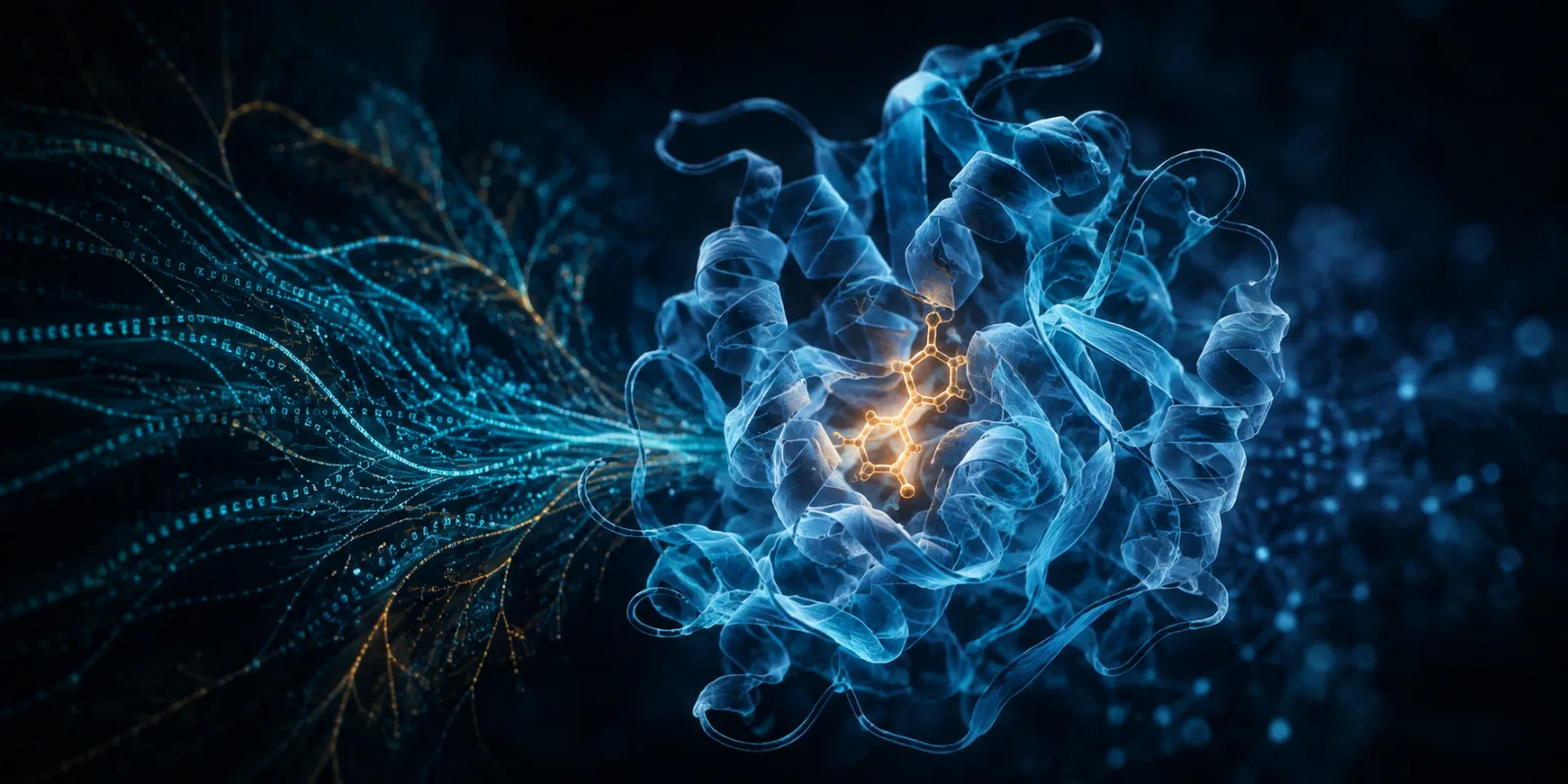
For decades, finding a molecule that sticks to a disease target has meant grinding through the lab: synthesise, screen, fail, repeat. A single preclinical binder candidate can take three to four years to nail down (Biohub, 2026). This summer, that math is being openly challenged. Biohub (the nonprofit research organisation co-founded by Priscilla Chan and Mark Zuckerberg) has released a set of AI models that designed working protein binders against five cancer and immune targets in a matter of days, then handed the entire toolkit to anyone who wants it, free, under an MIT license (GEN, 2026).
The claim underneath the release is the part worth sitting with. Biohub says its language model learned the rules of protein biology from one source only: the raw record of evolution. No physics engine. No hand-coded chemistry. Just sequences.
What Biohub actually released#
The release bundles three connected pieces, described in a preprint posted to bioRxiv that has not yet been peer reviewed.
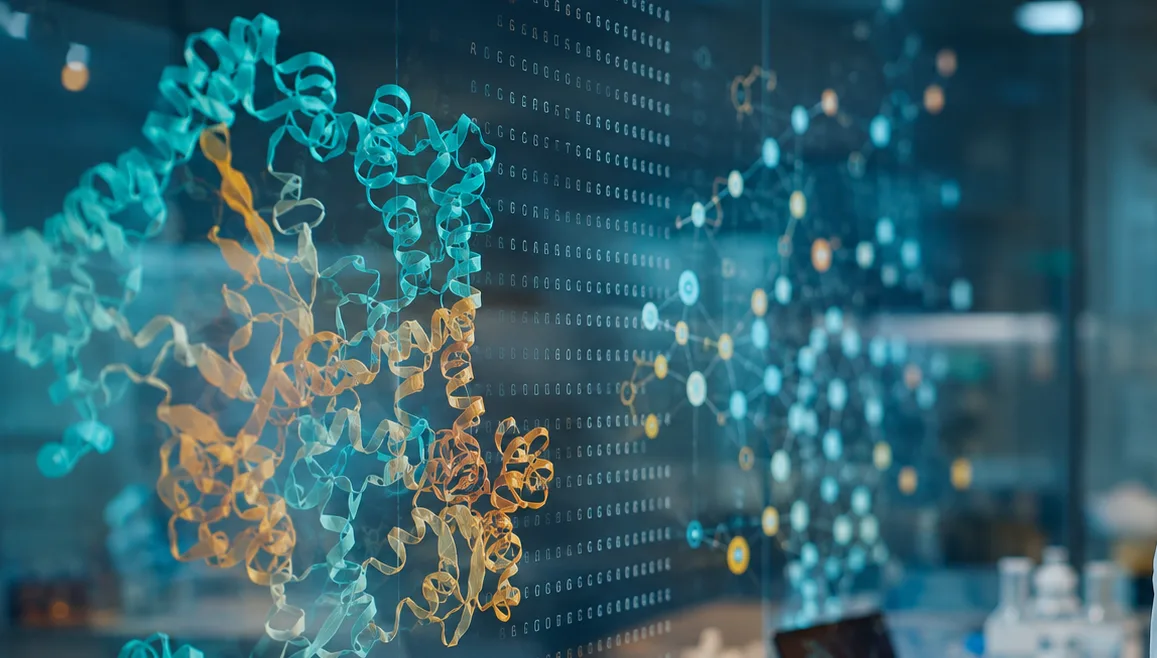
The foundation is Evolutionary Scale Modeling Cambrian (ESMC), a protein language model trained on roughly 2.8 billion sequences drawn from across the tree of life: bacteria from deep soil, organisms from extreme environments, and the more than 20,000 protein types in the human body (Biohub, 2026). Its training objective is almost comically simple. Show it a protein sequence with gaps, ask it to predict the missing amino acids. Because evolution tends to keep the proteins that work and discard the ones that don't, the patterns baked into billions of years of sequence data quietly encode the physical rules of how proteins fold and function. Learn to predict the sequence well enough, the argument goes, and you've learned the biology.
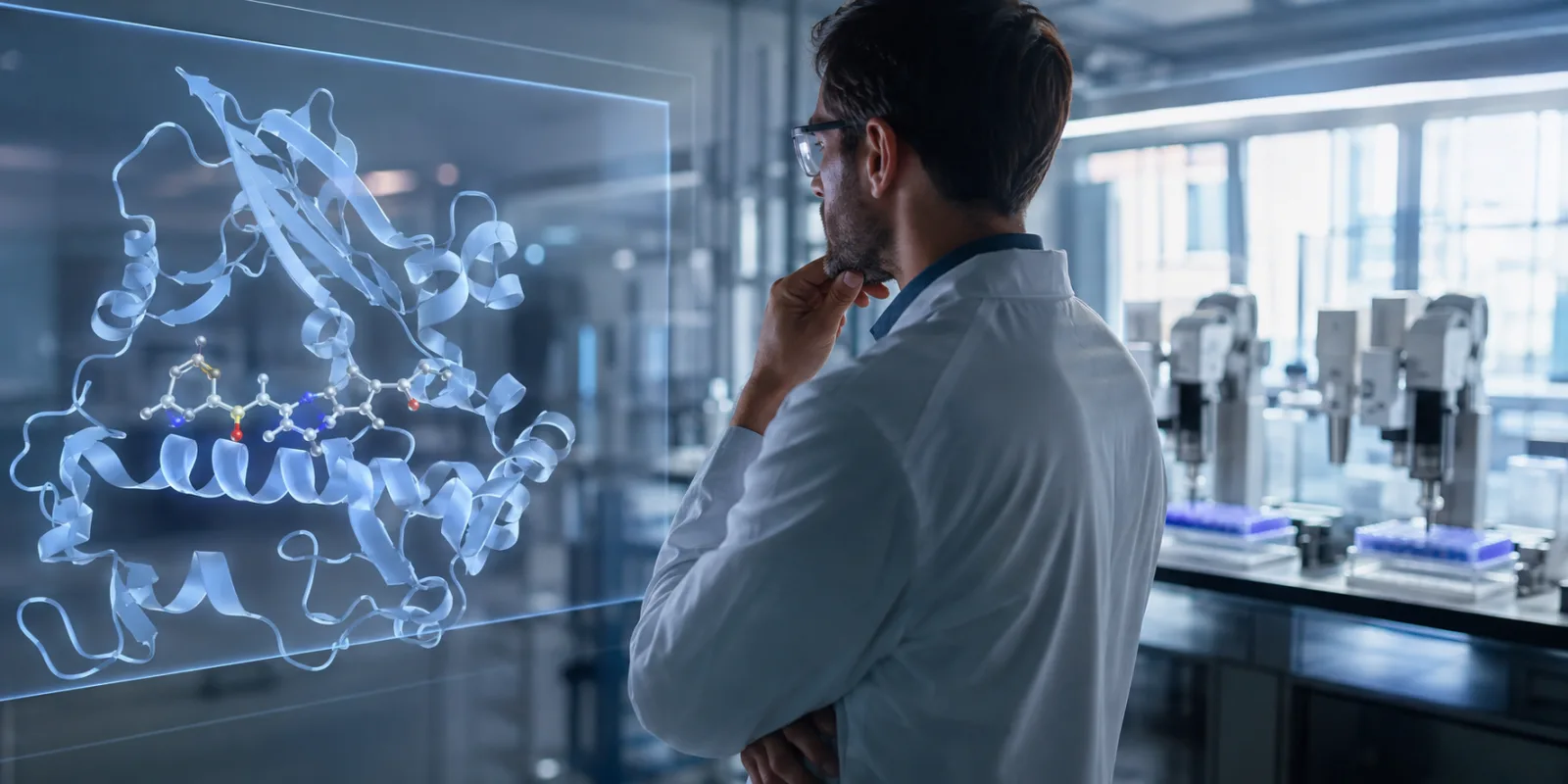
The second piece, ESMFold2, is the design and structure-prediction engine. It converts ESMC's internal representations into atomic-resolution 3D structures of proteins and their complexes. Notably, it skips the multiple sequence alignment (MSA) step that models like AlphaFold lean on, pulling evolutionary context straight from pretraining instead (GEN, 2026). It also uses a looped transformer architecture, which lets the model spend more compute at inference time when a hard problem calls for it.
The third piece, ESM Atlas, is a map. It organises 6.8 billion protein sequences and 1.1 billion predicted structures by the relationships the model itself learned. That's the largest application of AI to protein biology so far, according to Biohub (Biohub, 2026). Building that atlas by experiment would have taken, in the organisation's words, "billions of years." Computational inference compressed it into a couple of weeks.
All three are available through the Biohub platform under the permissive MIT license, for commercial and academic use alike.
Why the binder results matter#
Designed molecules that behave as predicted in a test tube are difficult. This is where the release earns attention.
Biohub researchers pointed ESMFold2 at five targets that sit at the centre of oncology and immunology: EGFR and PDGFRβ, two receptor tyrosine kinases tied to tumour growth; PD-L1 and CTLA-4, the immune checkpoints tumours exploit to hide from the immune system; and CD45, a regulator of immune-cell signalling (Biohub, 2026). The model proposed binders. The lab tested them.
The hit rates landed between 36% and 88% for compact mini-binders and 15% to 29% for antibody-derived formats (GEN, 2026). Many designs bound at nanomolar affinity (tight enough to matter clinically) with the specificity and stability you'd want in a drug candidate. The PD-L1 binders did more than stick. In lab tests they restored T-cell signalling by blocking the same pathway that approved checkpoint therapies target, which is about as close to "this could be a real drug" as an early result gets (GEN, 2026).
The designed sequences also showed little resemblance to anything in public databases (Biohub, 2026). That detail matters more than it sounds. It suggests the model is inventing genuinely new solutions rather than retrieving remembered ones: the difference between a search engine and a designer.
On benchmarks, ESMFold2 held its own against the field: AlphaFold 3 from Google DeepMind, Chai-1 from Chai Discovery, and Boltz-1 out of MIT (GEN, 2026). On the therapeutically brutal task of predicting antibody-antigen binding poses, Biohub reports it edged out AlphaFold 3 using its own representations alone (Biohub, 2026).
The interpretability twist#
There's a second finding that AI researchers, not just biologists, should care about. When the team probed ESMC using sparse autoencoders (a technique borrowed from the effort to understand what's happening inside large language models), they found the model had organised itself into a hierarchy it was never explicitly taught (GEN, 2026). The basic chemistry of individual amino acids sat at one level, local structural interactions at another, and abstract functional concepts shared across unrelated proteins at a third.
One example stands out. The model's features grouped together RNA-guided DNA endonucleases, eukaryotic Fanzor proteins, and their prokaryotic ancestor TnpB. These proteins are so evolutionarily divergent that their sequences barely resemble each other (GEN, 2026). It saw a family relationship that raw sequence comparison misses. For anyone hunting new gene-editing tools, that kind of hidden connection is exactly the sort of lead worth chasing.
Why open-sourcing this is the real story#
Plenty of labs can train a big model. Fewer give it away. Biohub's decision to release ESMC, ESMFold2, and ESM Atlas under an MIT license is a deliberate bet on how science moves faster.
"Biohub was built on the belief that open science accelerates discovery," co-founder Priscilla Chan said. "Making these tools freely available means researchers everywhere can move faster toward personalised cures" (Biohub, 2026). The organisation is routing access through partners including AWS, Benchling, Tamarind Bio, and SandboxAQ, and pairing it with subsidised compute so the barrier isn't just the model weights but the hardware to run them (GEN, 2026).
This lands in a specific moment. Big tech is pouring money into life-science platforms, and the field is quietly splitting between closed, commercial pipelines and open, permissively licensed ones. Boltz's developers spun out a public benefit corporation to keep their platform open (GEN, 2026). Biohub, backed by a $500 million Virtual Biology Initiative and the team behind EvolutionaryScale (recruited roughly seven months before the release), has planted a large flag on the open side of that line (GEN, 2026). The work was first presented by Biohub's head of science, Alex Rives, at the "AI in Biology" symposium at Cold Spring Harbor Laboratory.
There's an ethics dimension here too, and it cuts a cleaner path than most AI-training debates. The training data is the public evolutionary record: sequences deposited in open scientific databases, not scraped art or copyrighted text. When your corpus is life itself, the usual arguments about consent and provenance look very different.
The limitations nobody should skip#
First, and most important: the work is a preprint that has not been peer-reviewed (GEN, 2026). The benchmark numbers and hit rates are the authors' own reporting. Independent replication hasn't happened yet, and in structural biology, in-house results and reproduced results have parted ways before.
Second, a binder that works in a dish is a long, long way from a drug. Biohub's own team is explicit that the results are "still a step away from clinical impact" (GEN, 2026). Affinity and specificity in a laboratory assay say nothing yet about toxicity, immunogenicity, manufacturability, pharmacokinetics, or whether the thing survives contact with a living body. Those stages are where the overwhelming majority of candidates die.
Third, the hit rates, while strong, are not magic. A 15% success rate on antibody-derived formats means most designs still fail. The model narrows the search dramatically; it does not eliminate it. Wet-lab validation remains the gatekeeper, not an afterthought.
Fourth, five targets is a demonstration, not a general proof. EGFR, PD-L1, and the others are among the most studied proteins in medicine, rich with data the model could lean on. How the approach performs on genuinely under-characterised targets (the ones where the biology is a fog, like novel viral proteins) is the open question that matters most, and it's one an atlas of uncharacterised proteins is meant to attack but hasn't yet answered.
Finally, "the model learned a world model of biology" is a strong interpretive claim resting on a training objective that is, at bottom, sequence prediction. Sparse-autoencoder features are suggestive, not definitive. Whether the network has truly internalised physical law or has found a very good statistical shortcut is a question the AI field hasn't settled for language models either.
Why this fits a bigger pattern#
Step back, and the release rhymes with a shift happening across AI. Models trained on nothing but next-token prediction keep turning out to have absorbed structure their designers never hand-coded. Biohub's contribution is a clean, testable version of that story in biology, with the added twist that its "tokens" are the amino acids evolution has been editing for four billion years. It also joins a growing Biohub ecosystem, including the cross-species cell model TranscriptFormer, published in Science earlier this year (GEN, 2026).
If the results hold up under outside scrutiny, the useful headline isn't "AI cures cancer." It's quieter and more durable: the earliest, slowest, most expensive stretch of drug discovery is becoming a computational search, and, for once, the tools to run that search are open to everyone.
Frequently asked questions#
Is this an approved drug? No. These are early-stage designed binders validated in laboratory experiments, described in a non-peer-reviewed preprint. No candidate has entered clinical trials, and the great majority of preclinical binders never become approved drugs (GEN, 2026).
How is ESMFold2 different from AlphaFold? Both predict protein structure, but ESMFold2 draws evolutionary context from its pretrained language model rather than requiring a multiple sequence alignment for each prediction, and it's built specifically to design new binders, not only to predict existing structures. Biohub reports it matched or beat AlphaFold 3 on protein-protein and antibody-antigen benchmarks, per its own preprint (Biohub, 2026).
What does "trained on evolution" mean? ESMC learned from roughly 2.8 billion natural protein sequences by predicting masked amino acids. Because evolution preserves functional proteins, those sequences implicitly encode the rules of protein biology, and the model appears to have internalised them (Biohub, 2026).
Can I actually use these models? Yes. ESMC, ESMFold2, and ESM Atlas are released under an MIT license through the Biohub platform and partner ecosystems, with subsidised compute for researchers (GEN, 2026).
Who is behind it? Biohub, a nonprofit co-founded by Priscilla Chan and Mark Zuckerberg, with a science team led by Alex Rives that previously built EvolutionaryScale's ESM models (GEN, 2026).
Sources#
- Biohub press release, "Biohub releases a world model of protein biology," May 27, 2026 — https://biohub.org/news/world-model-of-protein-biology/
- Biohub et al., "Language Modeling Materializes a World Model of Protein Biology," bioRxiv preprint (not peer reviewed), posted June 2026 — https://www.biorxiv.org/content/10.64898/2026.06.03.729735v1
- Fay Lin, "Biohub Releases Protein Biology World Model to Address Disease," GEN (Genetic Engineering & Biotechnology News), May 27, 2026 — https://www.genengnews.com/topics/artificial-intelligence/biohub-releases-protein-biology-world-model-to-address-disease/
- Rosetta Commons, "Biohub releases open source models that utilize evolution to design disease target binders," June 9, 2026 — https://rosettacommons.org/2026/06/09/biohub-releases-open-source-models-that-utilize-evolution-to-design-disease-target-binders/
- Biohub Platform (model access) — https://biohub.ai
- TranscriptFormer, published in Science — https://www.science.org/doi/10.1126/science.aec8514
This post covers a scientific preprint. Preprints have not undergone peer review, and early results may change on replication.