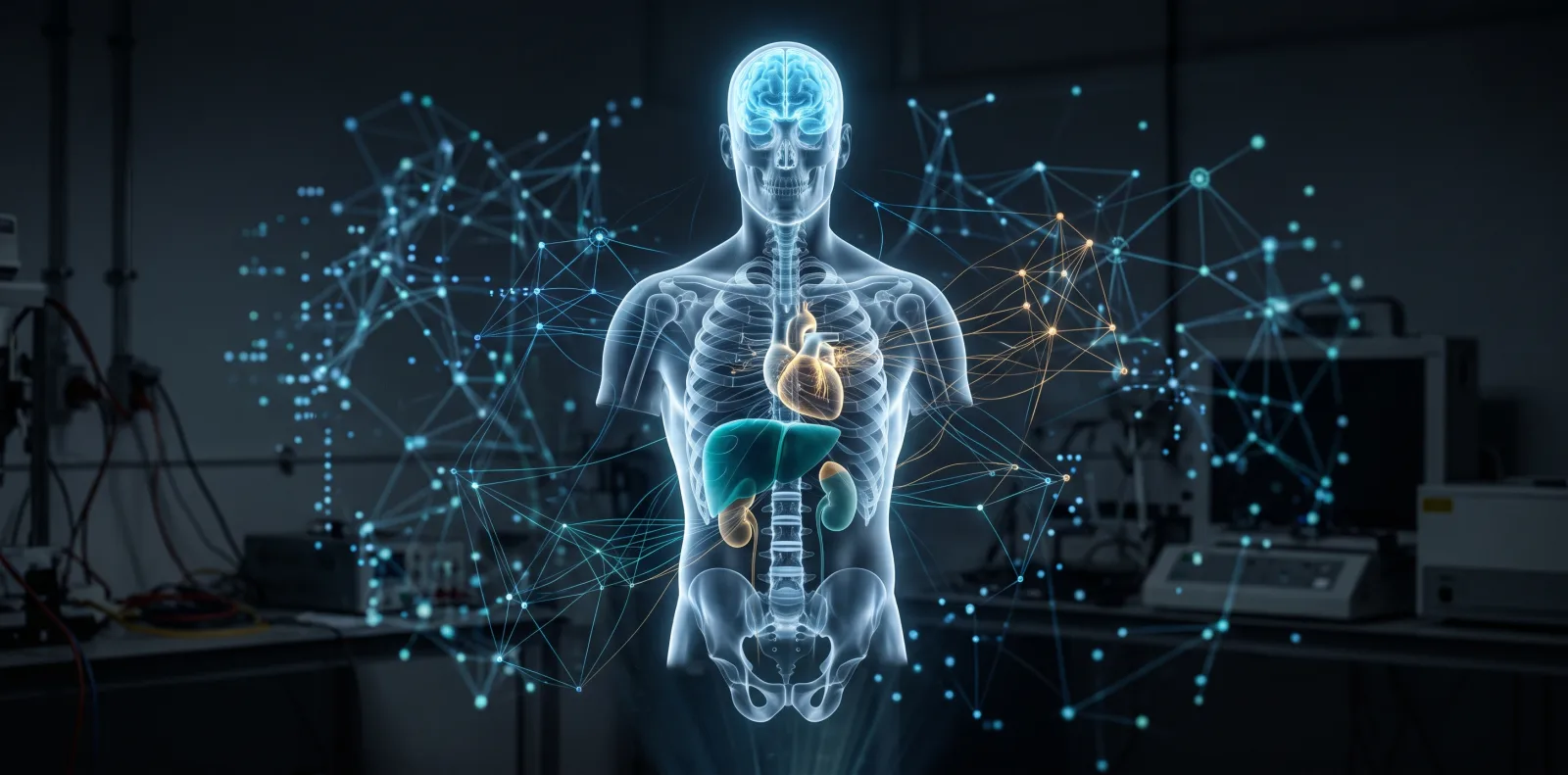
For about a decade, the headline tool in longevity science has been the ageing clock: feed it a blood sample or a swab, and it returns a single number, your "biological age". The number is seductive because it is simple. It is also, increasingly, the thing researchers are trying to move beyond. The most interesting shift in ageing research this year is not a new clock that predicts your age slightly better. It is a change in what we are asking the machine to do at all: from counting to reasoning.
That shift has a name that researchers have started using only half-jokingly. A bioRxiv preprint titled "The End of Aging Clocks" argues that the field should stop building narrow predictors and start training foundation models, the same broad, general-purpose systems behind large language models, to reason across the messy biology of ageing. Whether or not the title proves prophetic, it captures where the science is heading in 2026.
Two things converged. First, in a peer-reviewed study in Nature Medicine, researchers showed that a large language model could estimate a person's overall and organ-specific biological age from ordinary health-examination reports, and do it better than the established tools. Validated across six population cohorts covering more than ten million people, the model reached a concordance index of 0.757 for predicting all-cause mortality, beating telomere length, the frailty index, eight epigenetic clocks and four conventional machine-learning models. The team then used the model's "age gaps", the difference between biological and chronological age, to build risk models for 270 diseases.
Second, the frontier has moved from prediction to generation. A wave of 2026 preprints describes systems that do not just read biology but write it back. The "End of Aging Clocks" group trained Longevity-LLM, a 14-billion-parameter model fine-tuned on DNA methylation, proteomics, clinical markers and RNA data. It predicts epigenetic age to within about 4.34 years, edging past the classic Horvath clock, and it can generate plausible proteomic profiles, a task at which it reportedly outperforms general-purpose frontier models. These are preprints and have not been peer reviewed, so the specific numbers should be read as claims, not settled results.
Underpinning all of this is a quieter but important development: a way to grade the models. LongevityBench, also a preprint, is a benchmark that asks whether today's AI systems can actually do the work of an ageing researcher, predicting survival from clinical records, inferring age from molecular data, and working out how a genetic change alters lifespan. A field only matures once it agrees on how to keep score.
From clocks that count to models that reason#
To see why this matters, it helps to know what an ageing clock is. Chronological age is how many birthdays you have had. Biological age is an estimate of how worn your body actually is, which can be higher or lower than the calendar suggests. The first clocks, pioneered by Steve Horvath and others, read chemical tags called DNA methylation marks, spots on the genome where a small molecule attaches and switches genes on or off. The pattern of these tags changes predictably with age, so a statistical model trained on thousands of samples can guess your age from them.
These "epigenetic clocks" were a real advance, but they share a limitation. Each is a narrow model trained to minimise the error on one type of data for one outcome, usually chronological age itself. That makes them good at echoing the calendar and less good at explaining anything. They tend to be a black box: they give a number without a mechanism, and they rarely transfer across tissues, species or data types.
Foundation models change the shape of the problem. A foundation model is trained on enormous, varied data first, then adapted to specific jobs, which lets it carry general "knowledge" from one task to the next. Applied to ageing, that means one system can, in principle, read methylation, protein levels, gene activity and clinical notes together, rather than needing a separate clock for each. Some groups are going further and treating a cell's gene-activity profile like a sentence. A single-cell ageing clock built on a language model represents each cell as an ordered list of active genes, a "cell sentence", and fine-tunes a pretrained model to read it, then flags the genes whose adjustment would lower a cell's predicted age.
Why this matters#
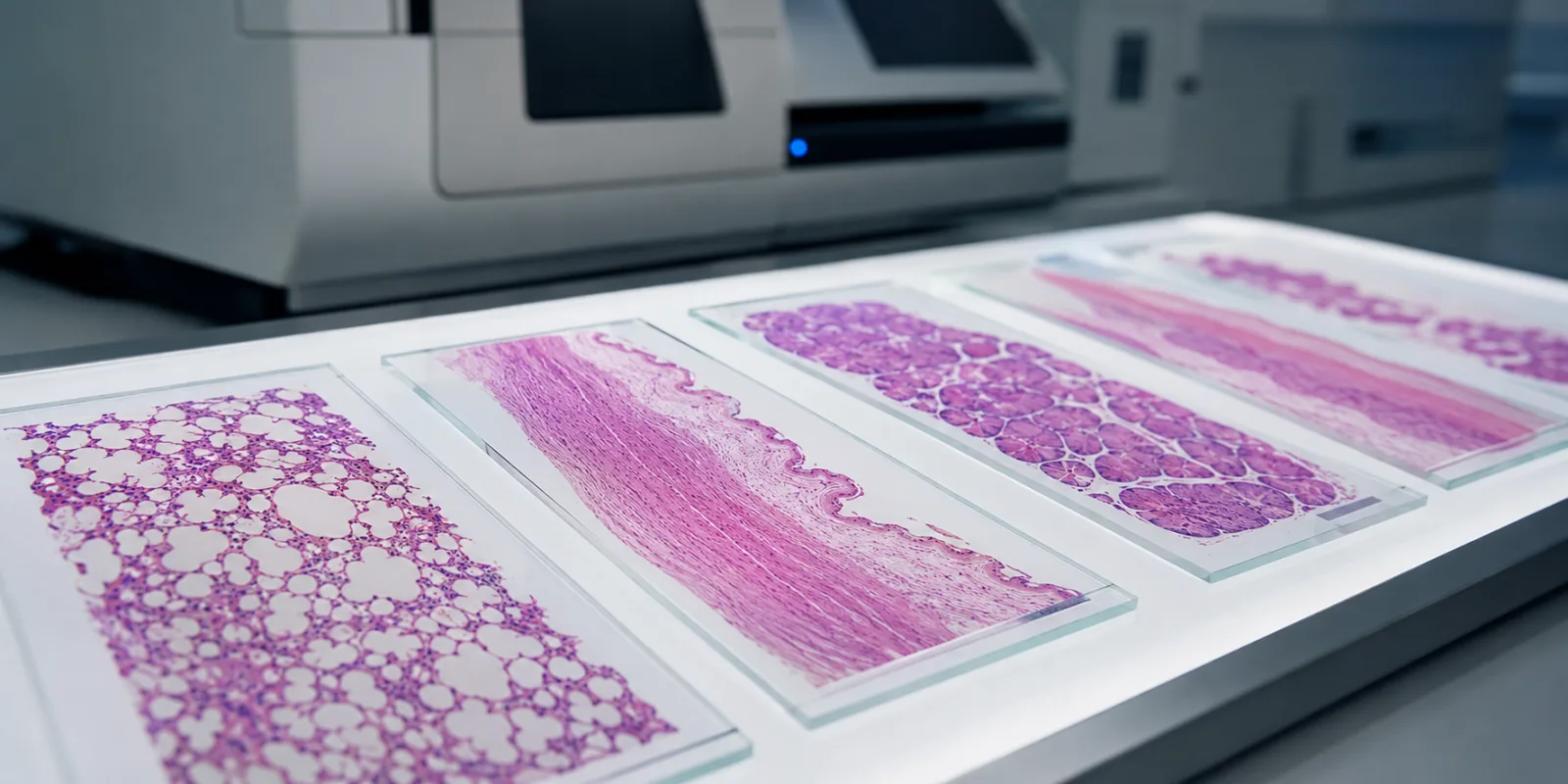
The practical prize is a shift from measuring ageing to acting on it. Consider organ-specific ageing. Your heart, brain and kidneys do not age in lockstep, and knowing which organ is running fast could tell you where to intervene first. Machine-learning work on blood proteins has already built organ-specific clocks in the UK Biobank, validated in cohorts in China and the United States, and found that an ageing brain was the single strongest protein signal linked to death. A separate Nature Medicine study trained deep-learning models on more than 25,000 tissue samples across 40 tissue types and then reproduced those tissue-ageing signals from a blood test, picking up patterns tied to Alzheimer's, diabetes, stroke and other conditions. The direction of travel is a single, cheap blood draw that reports on the ageing of the whole body.
Foundation models raise the ceiling further because they can generate and explain, not only score. A model that can propose a plausible protein profile for a "younger" state, or nominate the genes whose tweak would roll back a cell's clock, starts to look less like a thermometer and more like a hypothesis generator for drug discovery. That is the same logic that has made AI useful across the rest of biology, from protein structure prediction to the protein-design tools that OpenAI and Retro Biosciences aimed at re-engineering longevity-related factors. If the same trick works for ageing, the value is not the number on the readout; it is the list of things worth testing in the lab.
Critical analysis#
Enthusiasm should be tempered by what these models cannot yet do. The most stubborn problem is validation. A recent review in Frontiers in Aging found that only a small fraction of ageing-clock studies tested their predictions against actual biology in a living system; most stop at statistical accuracy. A model that predicts age well can still be capturing correlations that have nothing to do with the machinery of ageing. Some researchers go further and ask, in the title of a 2025 npj Aging paper, whether we even need ageing clocks in their current form, given how loosely many are tied to health outcomes.
There are technical constraints too. Foundation models are hungry for large, clean, diverse datasets, and ageing biology is short on all three: cohorts skew European and wealthy, molecular measurements are noisy, and long-term outcome data take decades to accrue. Bigger models can memorise dataset quirks rather than learning general biology, and their outputs are hard to interpret, an awkward property in a field that ultimately needs mechanisms, not just predictions. Generative claims deserve particular caution: a model that writes a "rejuvenated" proteomic profile has produced a hypothesis, not a therapy, and the gap between the two is where most longevity ideas have historically died.
Finally, the reasoning framing invites hype. An AI system scoring well on a benchmark such as LongevityBench is a promising sign, not proof that it understands ageing. Benchmarks can be gamed, and doing well on curated tasks is different from making a discovery that survives a randomised trial. The honest summary is that AI has changed how ageing is measured and modelled; it has not yet been shown to extend a healthy human life by a single day. Any real-world clinical impact is years away and will move at the pace of trials, not of software releases.
Expert perspective#
Set against earlier milestones, the change is genuine but evolutionary. The first-generation epigenetic clocks proved that ageing leaves a readable molecular fingerprint. Second-generation clocks such as GrimAge and DunedinPACE improved the link to disease and mortality. The current wave keeps that progress and adds two things the earlier tools lacked: breadth, because one model can span many data types, and generativity, because the model can propose as well as predict.
It is worth being clear about what makes the foundation-model approach different from simply building a bigger clock. A clock is optimised for one prediction; a foundation model is optimised to be adapted. That is why the same base system can be pointed at survival prediction, organ ageing and target nomination without starting from scratch each time. The competing school of thought, favoured by many biologists, is that ageing is too mechanistic and too poorly sampled for general-purpose AI, and that careful, hypothesis-driven experiments will outperform large models trained on thin data. Both can be right at once: the models are best seen as fast, tireless generators of hypotheses that human experiments still have to confirm.
Key takeaways#
- The frame is shifting from prediction to reasoning. The notable 2026 development in ageing AI is not a more accurate clock but foundation models that read many biological data types together and propose interventions, not just report a number.
- The peer-reviewed proof point is real. An LLM predicted biological age from routine health reports across more than ten million people and beat established markers for forecasting mortality, published in Nature Medicine.
- The frontier is still preprint. Systems such as Longevity-LLM and the LongevityBench benchmark are promising but not yet peer reviewed; treat their headline numbers as claims.
- Organ-specific ageing is the near-term payoff. AI clocks that read blood proteins can already say which organs are ageing fastest, pointing to where intervention might help.
- Validation, not accuracy, is the bottleneck. Very few models are tested against living biology, and none has been shown to extend healthy human lifespan. The science is advancing faster than the evidence for benefit.
Frequently asked questions#
What is a biological age test? It is an estimate of how old your body seems based on molecular or clinical data, rather than your birth date. A biological age higher than your chronological age suggests faster ageing; lower suggests slower. Results vary by test and are not yet standardised for clinical decisions.
Is this the same as an epigenetic clock? Not quite. An epigenetic clock is one type of ageing clock that reads DNA methylation. The newer foundation models can use methylation and many other data types together, and can generate and explain, not only predict.
Can AI reverse ageing? No. AI can nominate targets and model what a "younger" biological state might look like, but reversing ageing in humans has not been demonstrated. These are research tools that generate hypotheses for the lab, not treatments.
Should I pay for a biological age test? That is a personal decision, and this article is not medical advice. Be aware that most consumer tests are not clinically validated to guide treatment, and results can differ between providers. Discuss any health concern with a qualified clinician.
Why do foundation models matter more than better clocks? Because a clock is built for one prediction, while a foundation model is built to be adapted to many tasks, carrying general knowledge from one problem to the next. That flexibility is what lets a single system move from measuring ageing to proposing what to do about it.
Are the results trustworthy? The peer-reviewed Nature Medicine work is credible within its stated limits. The most eye-catching 2026 claims come from preprints that have not been peer reviewed, and independent replication is still needed.
Glossary#
Biological age: An estimate of how worn the body is, inferred from biological data, as opposed to chronological age counted from birth.
Ageing clock: A model that estimates biological age from molecular or clinical measurements.
Epigenetic clock: An ageing clock based on DNA methylation, chemical tags on the genome that shift with age.
DNA methylation: The attachment of small chemical groups to DNA that help switch genes on or off without changing the underlying sequence.
Foundation model: A large AI model trained broadly on varied data, then adapted to many specific tasks; the family that includes large language models.
Multi-omics: The combined analysis of several layers of biology at once, such as genes, proteins and metabolites.
Proteomics: The large-scale study of the full set of proteins in a sample, a rich readout of current cell state.
Concordance index (C-index): A measure of how well a model ranks who will experience an outcome sooner; 0.5 is chance, 1.0 is perfect.
References#
- Li, Y. et al. (2025). Large language model-based biological age prediction in large-scale populations. Nature Medicine. Peer-reviewed.
- The End of Aging Clocks: Training Foundation Models to Reason in Aging and Longevity (2026). bioRxiv. Preprint (not peer reviewed).
- LongevityBench: Are SotA LLMs ready for aging research? (2026). bioRxiv. Preprint (not peer reviewed).
- Horvath, S. (2013). DNA methylation age of human tissues and cell types. Genome Biology. Peer-reviewed.
- Sehgal, R. (2025). Universal single-cell transcriptomic aging clock powered by LLMs. Innovation in Aging. Conference abstract.
- Organ-specific proteomic aging clocks predict disease and longevity across diverse populations (2025). Nature Aging. Peer-reviewed.
- Histological aging signatures for monitoring tissue-specific aging and disease (2026). Nature Medicine. Peer-reviewed.
- A comprehensive review of artificial intelligence as a catalyst in aging research (2026). Frontiers in Aging. Peer-reviewed.
- Do we actually need aging clocks? (2025). npj Aging. Peer-reviewed.
- OpenAI has created an AI model for longevity science (2025). MIT Technology Review. Science journalism.
- Jumper, J. et al. (2021). Highly accurate protein structure prediction with AlphaFold. Nature. Peer-reviewed.
This article is for general information and is not medical advice. Preprints are labelled and have not been peer reviewed; their findings should not be treated as established scientific consensus.