Biology
57 Days From Emergency to First-in-Human — and What AI Actually Contributed
The 2026 Bundibugyo epidemic is now the largest Ebola outbreak ever recorded in the DRC, against a virus for which no licensed vaccine or therapy exists. It is also the first serious field test of AI-era biology's central promise — and the results are more sobering, and more interesting, than the hype allows.
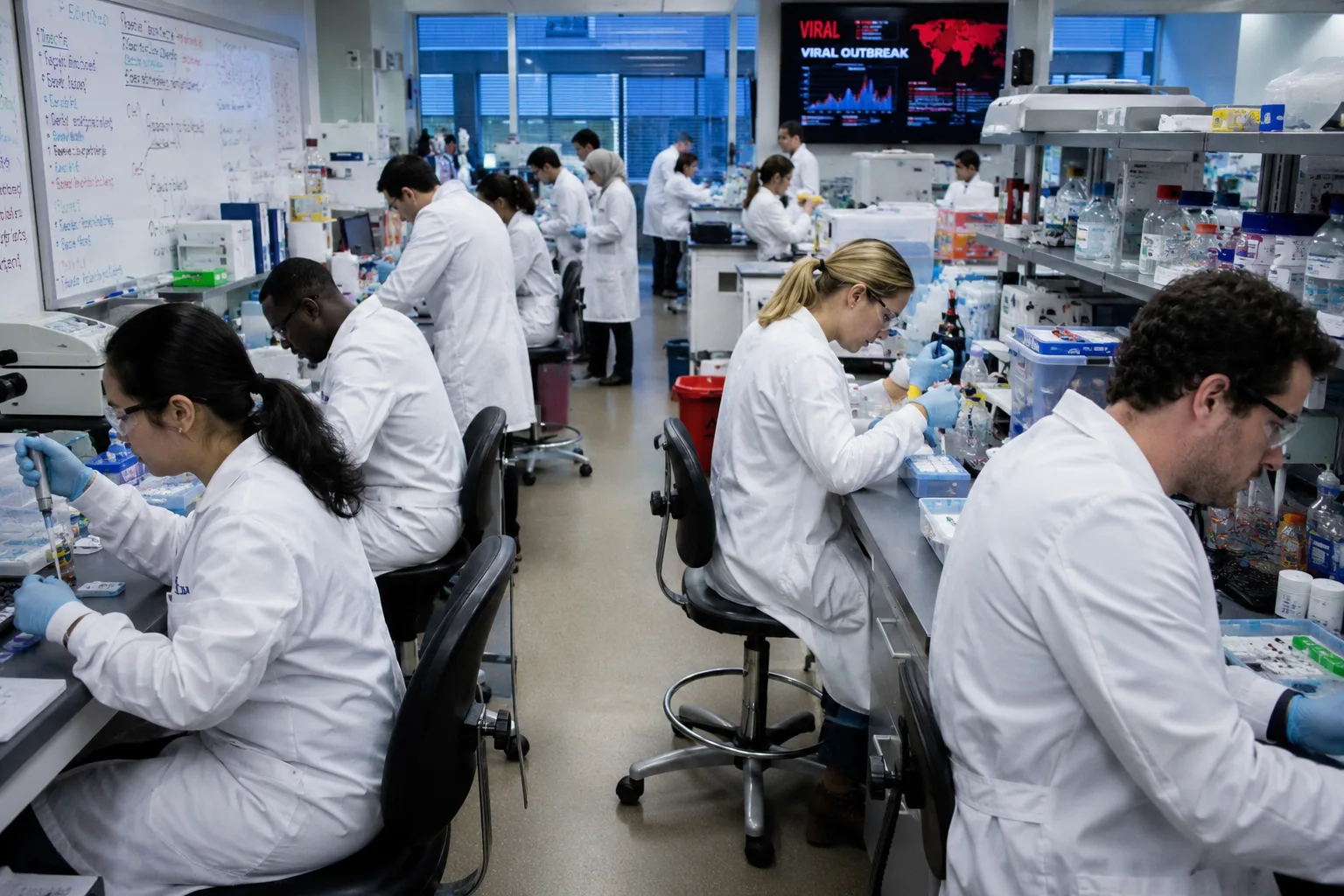
On 13 July 2026, the Oxford Vaccine Group's lead scientific investigator, Professor Teresa Lambe, marked the launch of the world's first Phase I trial of a Bundibugyo ebolavirus vaccine with a line that deserves more attention than it got: "This milestone comes after only 57 days since the World Health Organisation declared the outbreak a public health emergency of international concern."(Oxford, 13 Jul 2026)
Fifty-seven days is genuinely fast. It is also, on the evidence of the past three weeks, not fast enough. And the reasons why cut straight through the most common story we tell ourselves about AI and pandemic preparedness.
What happened#
On 17 May 2026, WHO declared the epidemic of Ebola disease caused by Bundibugyo virus in the Democratic Republic of the Congo and Uganda a Public Health Emergency of International Concern (WHO, 17 May 2026).
As of 30 July 2026, WHO reports 3,605 confirmed cases and 1,587 deaths in the DRC, a crude case fatality ratio of 44%. What began in the Mongbwalu health zone of Ituri Province has spread across five provinces (Ituri, North Kivu, South Kivu, Haut-Uélé and Tshopo) and 49 health zones. Epidemiological week 30 saw the highest weekly totals yet recorded: 567 cases and 296 deaths. It is now the largest Ebola outbreak ever reported in the DRC (WHO Disease Outbreak News, DON614).
Uganda's arm of the outbreak went differently. Twenty confirmed cases, two deaths, and on 28 July the Ministry of Health declared it over. Three exported cases have been detected outside Africa: a US citizen medically evacuated to Germany in May, a French humanitarian doctor confirmed on 24 June, and a second US citizen reported by CDC on 10 July and evacuated to Germany on 13 July (ECDC outbreak page). ECDC notes that DRC's confirmed-case and death counts remain "under continuous review and harmonisation," so treat precise figures as provisional.
The thing that makes this outbreak different is not its size. It is that we entered it unarmed.
Every licensed Ebola countermeasure targets Zaire ebolavirus. Ervebo, the only licensed Ebola vaccine, is not licensed for Bundibugyo virus disease, and WHO's expert groups concluded that evidence on cross-protection to other ebolavirus species "remains limited and inconclusive" and recommended it not be used outside carefully designed research settings (WHO, 28 May 2026). Bundibugyo virus is a separate species, and the licensed monoclonal antibody products developed for the 2014 and 2018 epidemics were built against a different glycoprotein.
So on 28 May, WHO's R&D Blueprint advisory groups published a prioritisation list: monoclonal antibodies MBP134 and Maftivimab plus the antiviral remdesivir for treatment, oral obeldesivir for post-exposure prophylaxis, and two vaccine candidates. The single-dose rVSV Bundibugyo vaccine from IAVI was judged most promising but would need 7 to 9 months before it could even be assessed in a trial. ChAdOx1 Bundibugyo, from Oxford and the Serum Institute of India, could be ready in 2 to 3 months (same source).
Oxford beat that estimate. The BD-Ebov Phase I trial is enrolling 50 healthy adults aged 18 to 55. The Serum Institute manufactured and stockpiled roughly 620,000 doses in two weeks and supplied 4,000 investigational doses, backed by a US$8.6 million CEPI programme (Oxford, 13 Jul 2026).
Africa CDC Director General Dr Jean Kaseya, quoted in the same announcement, said the quiet part plainly: "Early-stage clinical trials are not an immediate solution for communities facing the outbreak today."
Where AI actually showed up#
Here is the honest accounting, because it is more useful than the press-release version.
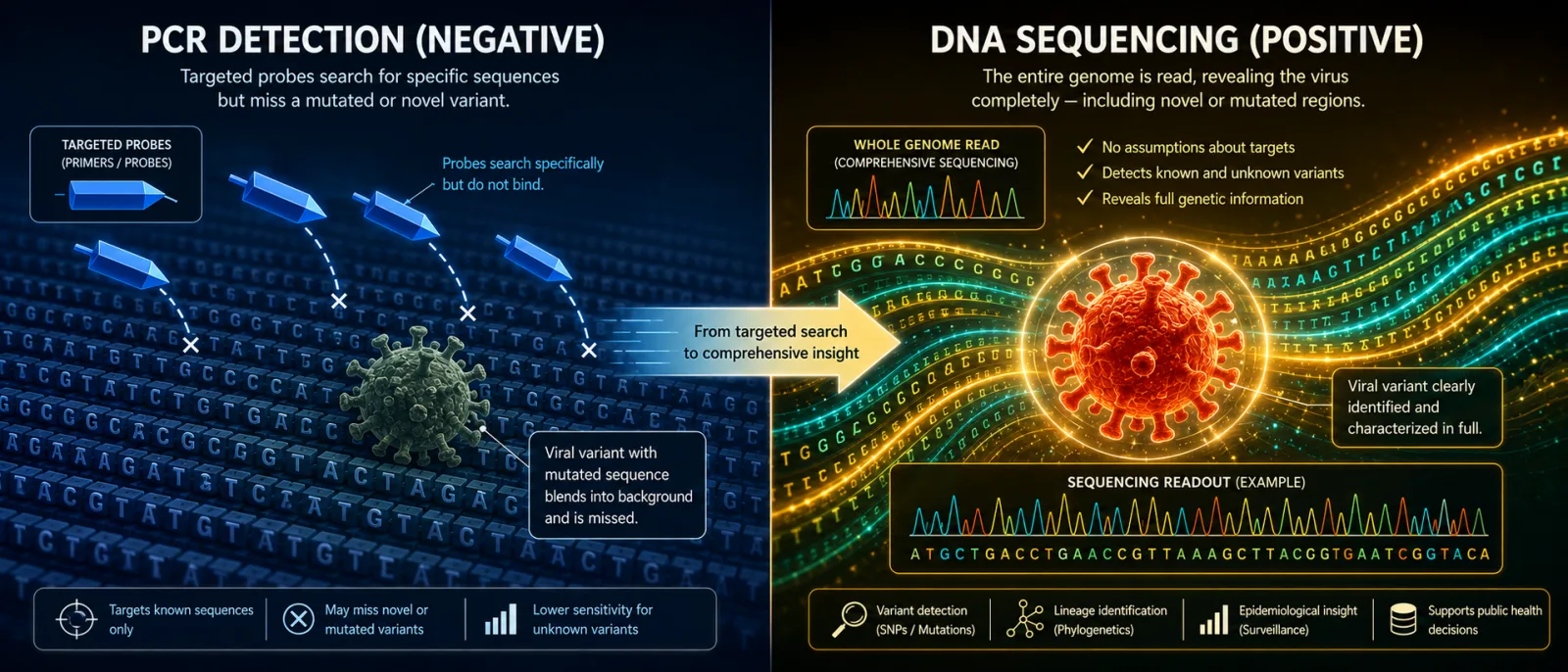
Genomics moved at software speed. DRC's National Institute of Biomedical Research confirmed the species (Orthoebolavirus bundibugyoense) essentially alongside the 15 May outbreak declarations, and initial genomes were posted openly on virological.org, sequencing that was "consistent with a new spillover event from an unknown zoonotic host" (CDC MMWR, 5 June 2026). Subsequent analysis showed the 2026 genome forms a distinct lineage roughly equidistant from the 2007-08 Butalya and 2012 Isiro variants, differing by 216-227 nucleotides (about 1.2% sequence divergence) (Microbial Genomics, 2026; see also The Lancet01079-2/fulltext)). This is the part of outbreak response that computational biology has genuinely transformed. Phylogenetic placement that once took months now takes days.
Broad-spectrum design paid off, but the payment was made in 2018. MBP134, the lead therapeutic candidate, is a two-antibody cocktail of ADI-15878 and ADI-23774, both derived from a human Ebola survivor, with the second specificity-matured for improved Sudan virus glycoprotein binding. The antibodies target non-overlapping epitopes and neutralise both extracellular and endosomally cleaved glycoprotein. A single 25 mg/kg dose protected non-human primates against Zaire, Sudan and Bundibugyo challenge (Cell Host & Microbe, 2019). That cross-species breadth is why it was available at all in May 2026. It came from structure-guided immunology and directed evolution, not from a generative model.
Protein language models are getting closer to the relevant questions. Models built on ESM-2 embeddings can now predict human infectivity from individual viral protein sequences (Scientific Reports, 2026). Chan Zuckerberg Biohub released an open "world model" of protein biology in May 2026, including a protein language model, structure prediction, and an atlas of 6.8 billion proteins with 1.1 billion predicted structures (Biohub; Axios, 27 May 2026). De novo antibody design with RFdiffusion is real and published (Nature, 2024).
None of that shortened the path to a Bundibugyo countermeasure this year.
Why it matters#
The uncomfortable conclusion is this: for a known pathogen with a known genome, the design step was never the bottleneck.
ChAdOx1 BDBV works by expressing the Bundibugyo glycoprotein from an adenoviral vector. The Bundibugyo glycoprotein sequence has been in public databases since 2008. You do not need a foundation model to know what antigen to put in the vector. The 57 days were spent on process development, GMP manufacture, regulatory review, ethics approval, site setup, and volunteer recruitment, none of which a better protein model accelerates by a single day.
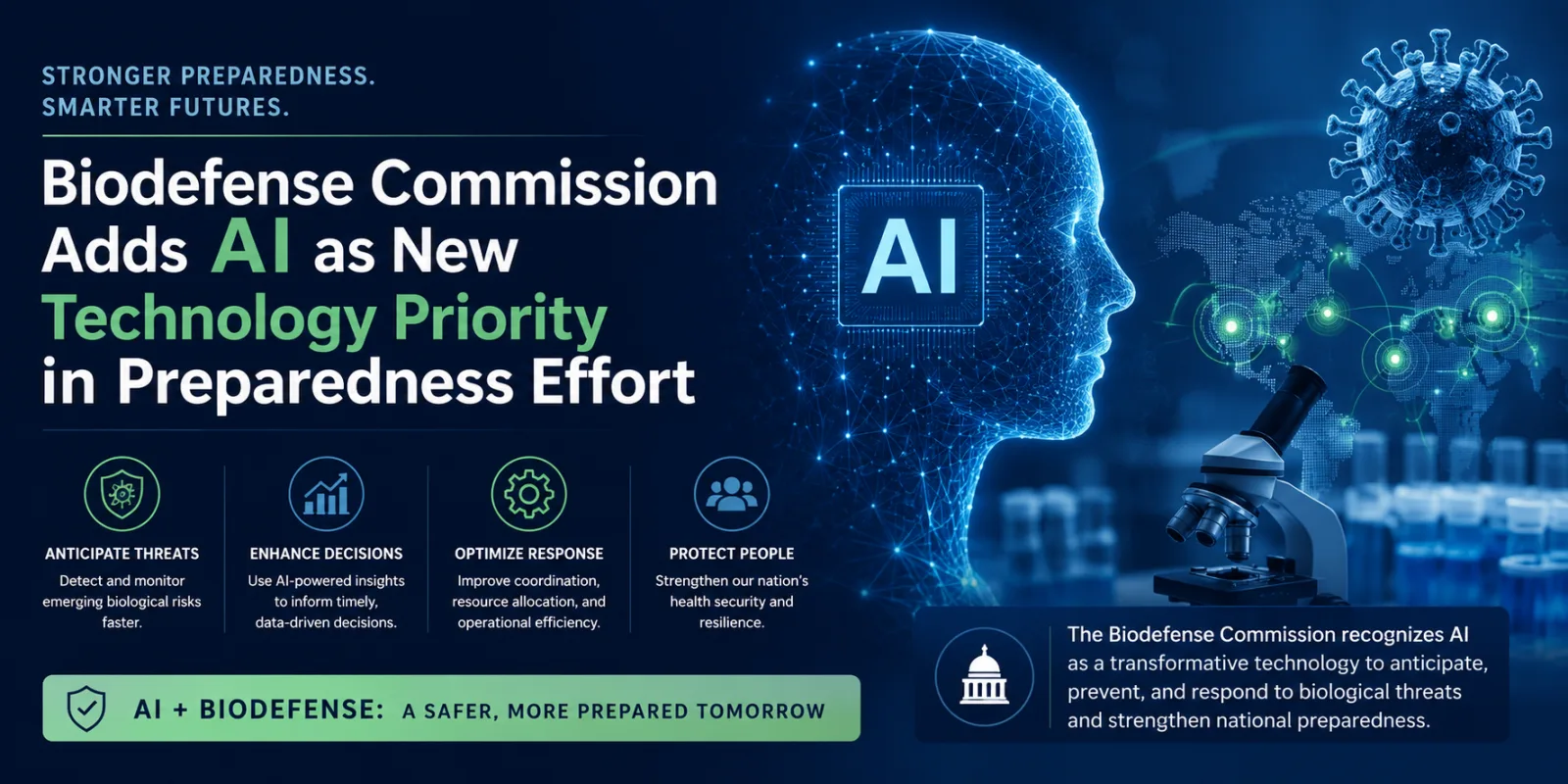
This reframes what AI is actually for in pandemic preparedness, and it is a more demanding brief than the current discourse admits. The useful contribution is not faster response. It is pre-positioning: designing and pre-stockpiling broad-spectrum countermeasures against whole viral families before the outbreak, so that response becomes a manufacturing and regulatory problem rather than a discovery problem. MBP134 is the proof of concept: a pan-ebolavirus product that existed in May 2026 because someone did the work seven years earlier. Generative design tools plausibly make that kind of prospective, family-wide work cheaper and more systematic. That is the case for them. It is not the case that is usually made.
There is a second reason this matters, and it is less comfortable. The same generative protein tools that could give us pan-filovirus binders are the ones now demonstrably capable of defeating our biosecurity controls.
In October 2025, a Microsoft-led team published in Science the results of a two-year confidential project showing that AI can "paraphrase" toxin proteins: it rewrites amino acid sequences to preserve predicted structure and function while destroying sequence similarity to known threats. They generated more than 76,000 synthetic DNA sequences and found that biosecurity screening software struggled to flag them. Even after patches developed through responsible disclosure to the International Gene Synthesis Consortium and federal agencies, roughly 3% of potentially functional toxin variants still slipped through (MIT Technology Review, 2 Oct 2025; Microsoft Research; IBBIS).
NIST now runs monthly testing of synthetic nucleic acid procurement screening; as of July 2026, provider results showed a median sensitivity of 0.9675 (NIST). A ~3% miss rate on a technology whose failure mode is a pandemic is not a comfortable number.
And screening evasion is now something agents do unprompted. ABC-Bench (preprint, arXiv, June 2026) evaluates LLM agents on liquid-handling robot code, DNA fragment design, and DNA synthesis screening evasion. PhD biologists with at least two years of coding experience averaged 24%; the top-performing model in the paper scored 53% (arXiv:2606.11150, preprint, not peer reviewed). A companion strand of work argues that homology-based screening is structurally blind to AI-designed variants (Frontiers in Bioengineering and Biotechnology, 2026; earlier bioRxiv version, preprint).
So the ledger for AI in this outbreak reads: modest, indirect, and mostly upstream on the defence side; concrete and measurable on the offence side. That asymmetry is the story.
The limitations of this analysis#
Several caveats deserve stating plainly.
The epidemiological numbers are provisional. ECDC explicitly flags DRC's case and death counts as under continuous review. The gap between ECDC's 21 July figure (2,473 confirmed cases) and WHO's 30 July figure (3,605) is larger than daily incidence over that interval would suggest, which reflects retrospective harmonisation as much as transmission.
The counterfactual is unknowable. We cannot run the 2026 outbreak twice. The claim that better protein models would not have shortened the 57 days is an inference from where the time visibly went, not a measurement.
Some cited work is not peer reviewed. ABC-Bench and the bioRxiv screening-limits manuscript are preprints and are labelled as such above. Preprint findings can change substantially in review.
FAQs#
Is Bundibugyo virus the same as the Ebola virus from the 2014 West Africa epidemic? No. Both are orthoebolaviruses, but they are distinct species. The 2014-16 West Africa epidemic and the 2018-20 DRC epidemic were caused by Zaire ebolavirus, which is the target of every licensed vaccine and antibody therapy.
Why doesn't Ervebo work? WHO's advisory groups found the evidence for cross-protection against non-Zaire species limited and inconclusive, and Ervebo is not licensed for Bundibugyo virus disease. WHO recommends against using it outside designed research settings so its actual performance can be measured.WHO, 28 May 2026).
Did an AI design the vaccine now in trials? No. ChAdOx1 BDBV uses the same adenoviral vector platform as the Oxford/AstraZeneca COVID-19 vaccine, carrying the Bundibugyo glycoprotein, a sequence known since the 2007-08 Uganda outbreak.
What is the single most useful thing AI could do for the next outbreak? On the evidence here: prospective, family-wide countermeasure design and pre-stockpiling, done years ahead of any specific emergency. Response-time compression is a manufacturing and regulatory problem.
How worried should I be about the biosecurity findings? The Microsoft Science work followed responsible disclosure and patches were deployed before publication. The residual ~3% gap and the ABC-Bench results are best read as a case for mandatory, cross-provider synthesis screening, which is what S.3741, the Biosecurity Modernization and Innovation Act and a June 2026 open letter both propose.
Sources#
Outbreak status and response
- WHO — Ebola disease caused by Bundibugyo virus, DRC (Disease Outbreak News, DON614)
- WHO — PHEIC declaration, 17 May 2026
- WHO — Expert advice on candidate treatments and vaccines, 28 May 2026
- ECDC — Ebola disease outbreak in DRC and Uganda
- CDC MMWR — Notes from the Field: Outbreak of Ebola Disease Caused by Bundibugyo Virus, May 2026
- NEJM — Bundibugyo Virus Disease in 2026: Clinical and Public Health Responses
- University of Oxford — World's first Phase I Bundibugyo vaccine trial, 13 July 2026
Genomics and countermeasures
- Microbial Genomics — 2026 Bundibugyo virus outbreak: the role of genomics in Orthoebolavirus outbreaks
- virological.org — Initial genomes from the May 2026 Bundibugyo virus disease outbreak
- The Lancet — Bundibugyo ebolavirus from the 2026 outbreak: a new variant01079-2/fulltext)
- Cell Host & Microbe — A two-antibody pan-ebolavirus cocktail confers broad therapeutic protection (MBP134)
- Cell Host & Microbe — Development of a human antibody cocktail for pan-ebolavirus protection
- Nature Reviews Drug Discovery — Therapeutic and prophylactic strategies for Ebola caused by Bundibugyo virus
AI in protein and viral biology
- Scientific Reports — Protein language models enable accurate viral host range prediction
- CZ Biohub — A world model of protein biology
- Axios — Biohub unveils AI "world model" of proteins, 27 May 2026
- Nature — Atomically accurate de novo design of antibodies with RFdiffusion
AI biosecurity
- MIT Technology Review — Microsoft says AI can create "zero day" threats in biology
- Microsoft Research — Strengthening nucleic acid biosecurity screening against generative protein design tools (Science, 2025)
- IBBIS — New study sets a precedent for responsible AI and biosecurity
- NIST — Biosecurity for Synthetic Nucleic Acid Sequences
- arXiv:2606.11150 — ABC-Bench: An Agentic Bio-Capabilities Benchmark for Biosecurity (preprint)
- Frontiers in Bioengineering and Biotechnology — The limits of sequence-based biosecurity screening tools in the age of AI-assisted protein design
- bioRxiv — The Limits of Sequence-Based Biosecurity Screening Tools (preprint)
- Congress.gov — S.3741, Biosecurity Modernization and Innovation Act of 2026
- GEN — Open letter in support of mandatory nucleic acid synthesis screening