Eleven thousand steps, and nobody touched a pipette#
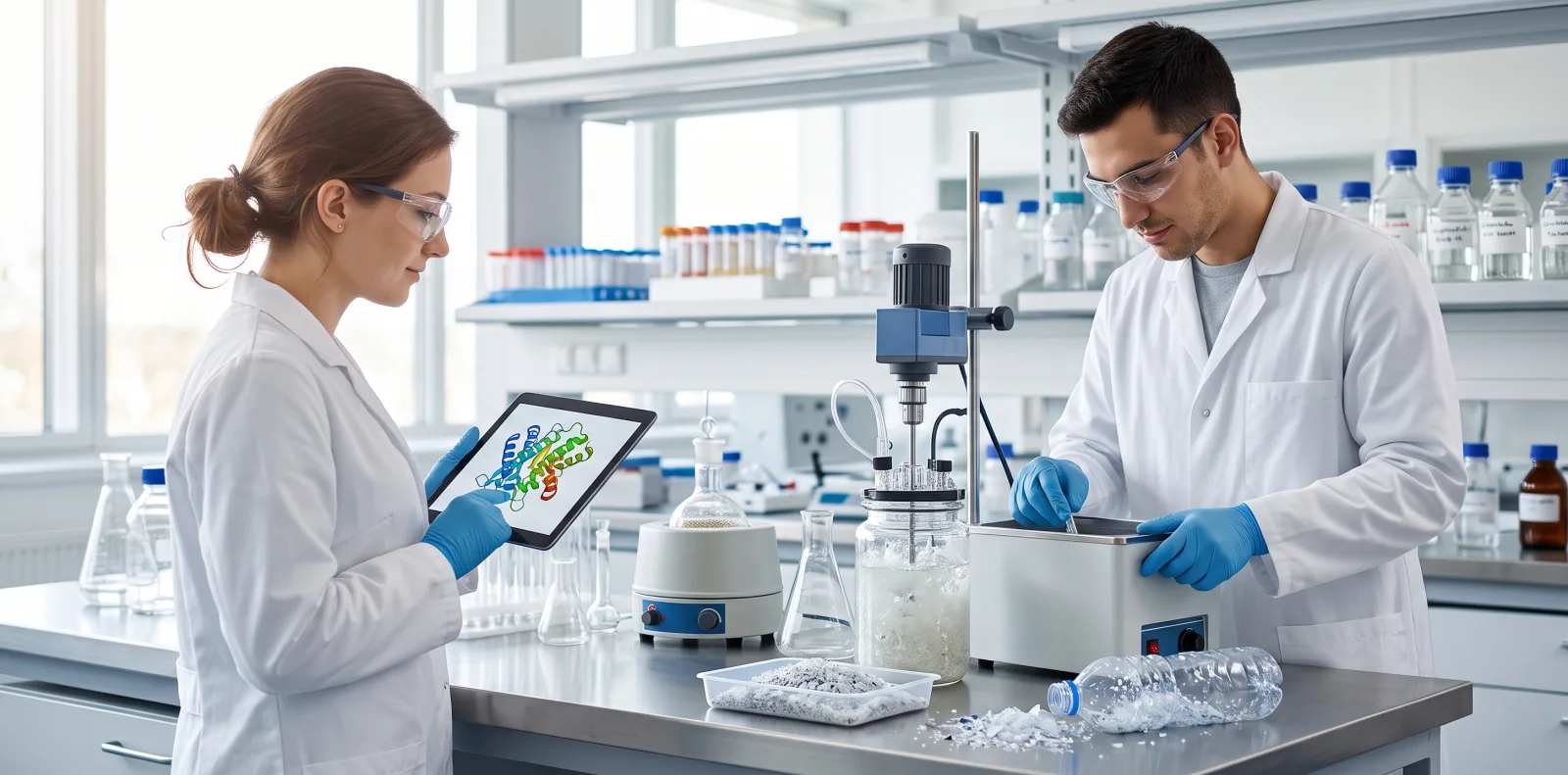
In molecular biology, saying a colleague has "good hands" is real praise. Pipetting microlitre volumes without introducing bubbles, handling delicate glassware, keeping a plate layout straight at hour nine: these are craft skills, learned slowly and lost quickly.
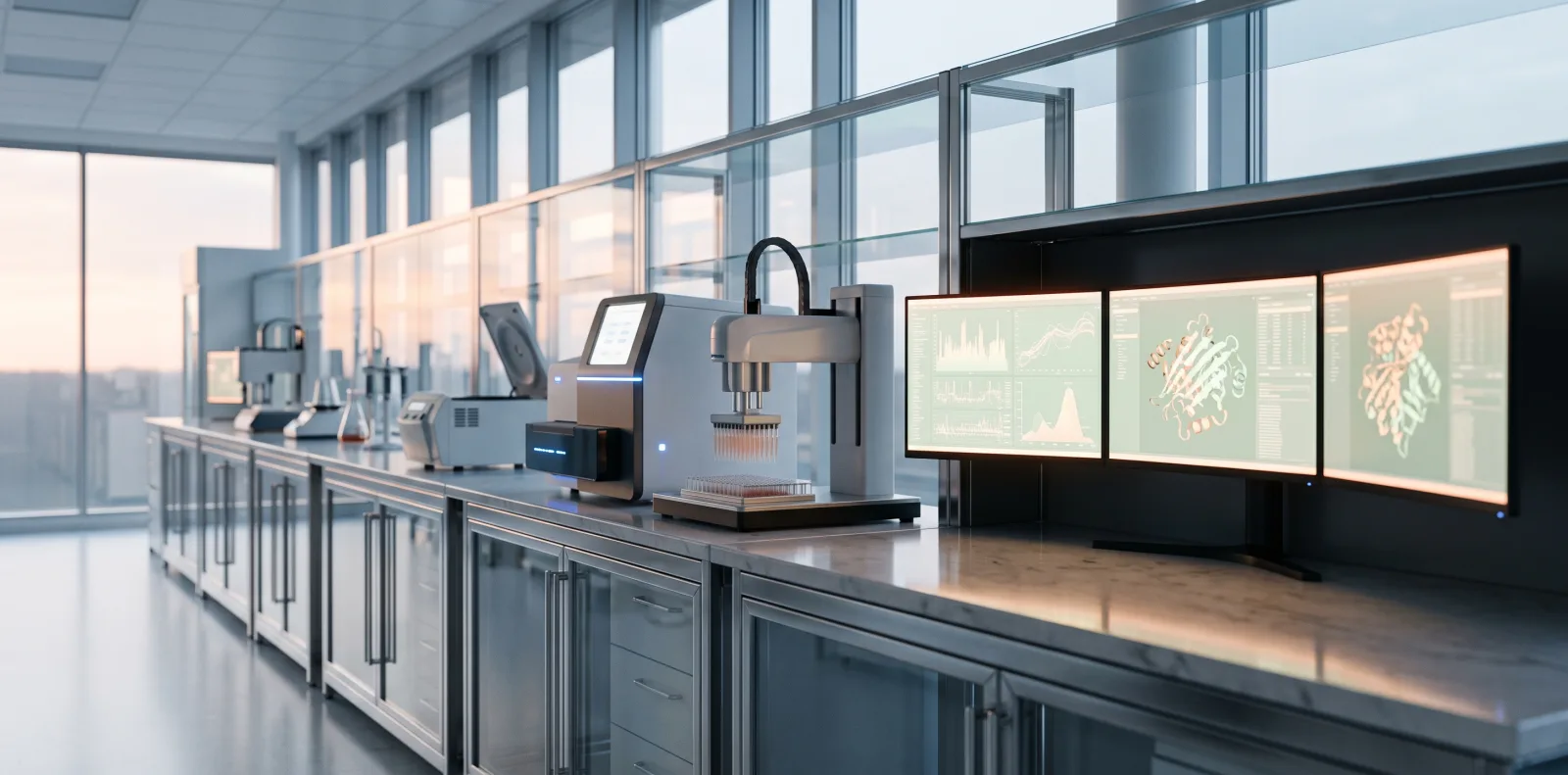
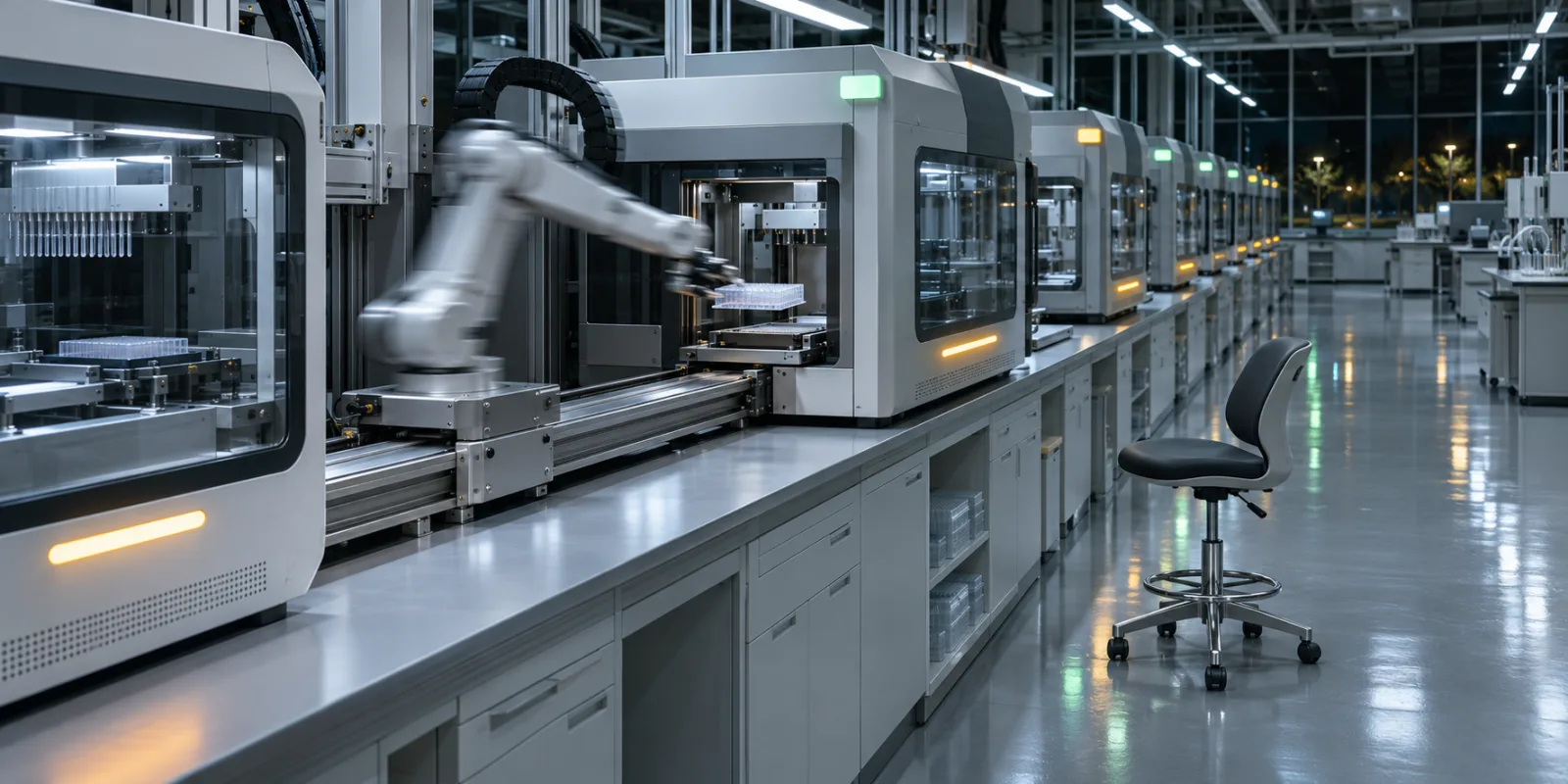
At Shanghai Jiao Tong University there is now a genetics laboratory where the hands are gone (Ledford, 2026). A system called AutoDNA takes a prompt from a human operator and then designs and runs the experiment itself, coordinating more than 20 types of instrument across upwards of 11,000 steps to carry out synthesis, transcription, amplification and sequencing. People are still needed, but for refilling reagents, replacing labware and servicing hardware (Wu et al., 2026).
The work was published in Nature on 4 November 2026. It is tempting to file it under "robots doing science," which would miss the point. Plenty of laboratories have robots, and lab automation is decades old. What the authors are actually arguing is that almost everyone has been wiring them up the wrong way round.
Background: what a self-driving lab is, and why biology resisted it#
A self-driving lab is a facility where an AI system does more than analyse results. It proposes experiments, executes them on physical equipment, reads the outcome, and uses that outcome to decide what to try next. The loop closes without a person in the middle.
Three terms will help. Wet lab work means physically handling liquids, chemicals and biological material, as opposed to computational or dry lab analysis. An AI agent is a model given tools and some autonomy to pursue a goal over multiple steps, rather than answering a single question. Orchestration is the coordination problem: getting many separate machines, each with its own control software and timing, to execute one coherent plan.
Autonomous laboratories have made real progress in AI for science, mostly in chemistry and materials. A mobile robotic chemist searched for photocatalysts largely unattended (Burger et al., 2020). Coscientist used large language models to plan and execute chemical research (Boiko et al., 2023). Robotic chemists have since been extended to autonomous organic synthesis (Ha et al., 2023) and to exploratory synthetic chemistry with mobile robots (Dai et al., 2024).
Molecular biology has been harder, and the AutoDNA team is direct about why. Existing autonomous systems remain largely confined to domains with singular objectives, well-defined workflows and simple instrumentation (Wu et al., 2026). Biology offers none of those three. Its workflows branch, its objectives multiply, and its instruments are a heterogeneous zoo bought from different vendors over a decade.
There is also a timing problem that James Zou of Stanford puts crisply in the accompanying News and Views: an AI system might design a promising biologically active molecule in minutes, but testing it can take weeks or months and a great deal of human effort (Zou, 2026). Computational biology accelerated. The bench did not. AutoDNA is an attempt to close that gap from the bench side.
Add-on versus AI-native, and why the distinction matters#
Here is the paper's central claim, and it is more interesting than the step count.
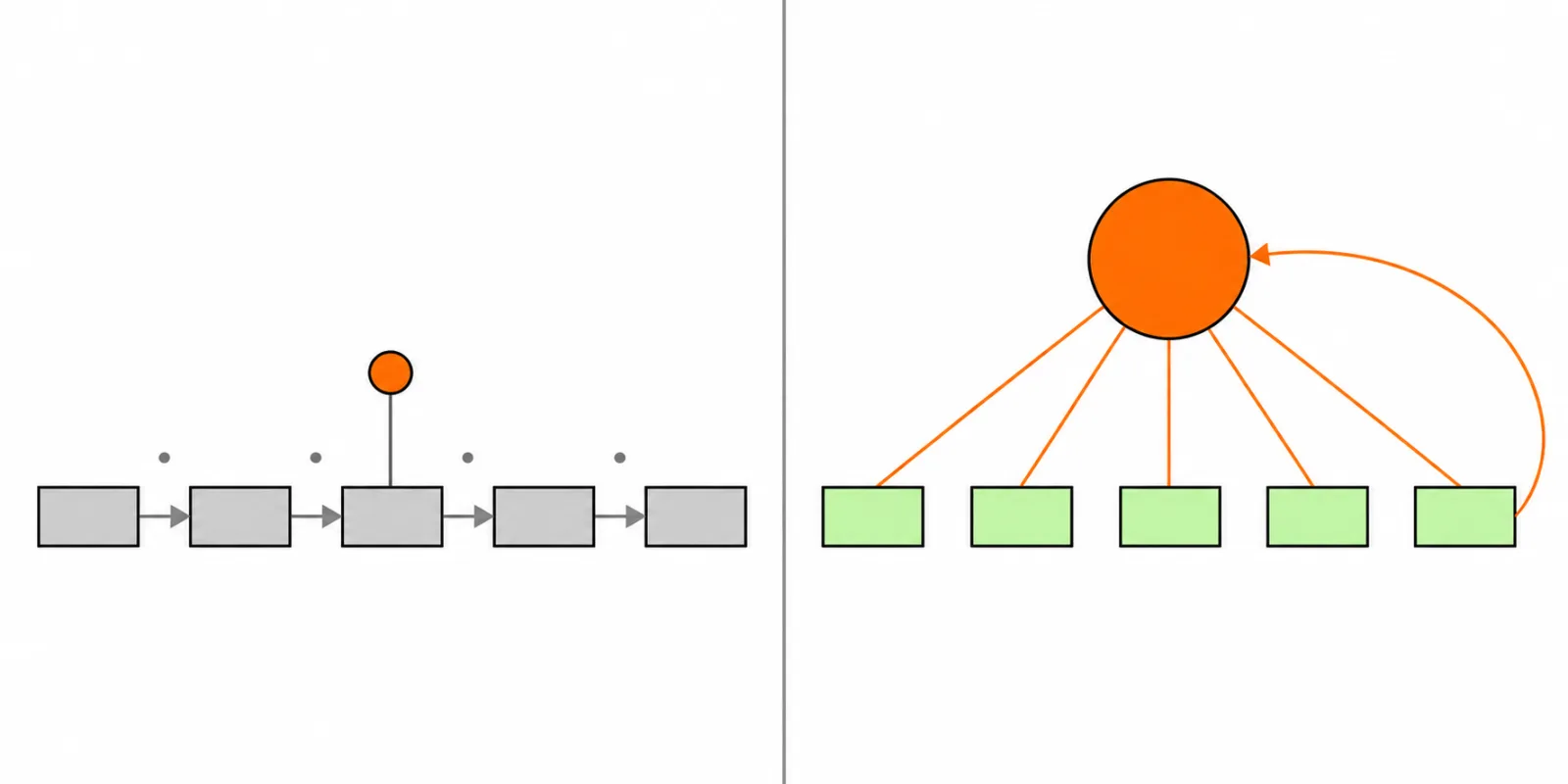
The authors argue that the limitation of previous systems reflects an "add-on" architecture, one that uses AI as a task-specific tool rather than giving it a global understanding of the experiment (Wu et al., 2026). Co-author Haibo Chen, a computer scientist at Shanghai Jiao Tong University, describes the status quo bluntly: in many existing systems human experts are still required to configure the instruments, and AI is mostly added to handle just one part of the process (Ledford, 2026).
So the team built the other way round. Rather than retrofitting intelligence onto an existing automation stack, they co-designed the models, the experiments and the instruments together, which they describe as allowing the AI and the automation system to co-evolve inside a single end-to-end, multi-user framework (Wu et al., 2026).
If that sounds like a software engineering argument rather than a biology one, that is because it largely is. The senior authorship reflects it: the team spans Shanghai Jiao Tong's Institute of Parallel and Distributed Systems and its chemistry and DNA nanotechnology groups (Wu et al., 2026). Operating systems people and nucleic acid people, in other words, which is an unusual combination and probably the reason this worked.
Four jobs they gave it#
The paper demonstrates AutoDNA on several distinct services rather than one showcase task, which is the harder test. Its figures cover an end-to-end nucleic acid testing service, autonomous optimisation of enzymatic DNA synthesis, management of concurrent experiment requests from multiple users, an end-to-end DNA data storage service, and end-to-end cancer detection (Wu et al., 2026).
Two deserve a closer look.
In the cancer work, the team asked the system to detect a cancer-linked mutation in a DNA sample (Ledford, 2026). That is a complete diagnostic chain rather than a single assay: prepare the sample, amplify the region of interest, sequence it, interpret the result.
In the DNA data storage demonstration, the system encoded a message using the four nucleotide bases A, C, G and T, then read it back. The researchers chose a quote often misattributed to Stephen Hawking: "Intelligence is the ability to adapt to change" (Ledford, 2026). Storing digital information in DNA is a long-standing idea whose practical obstacle has always been the laborious write-and-read cycle. Automating that cycle end to end is a more consequential demonstration than the choice of quotation suggests.
The multi-user result is the one I would watch. A laboratory that handles concurrent requests from different users is not a demonstration rig; it is infrastructure. That is a different category of claim.
Where this sits in the lineage#
| System | Year and venue | Domain | What the AI did |
|---|---|---|---|
| Mobile robotic chemist | 2020, Nature | Photocatalyst discovery | Searched a chemical space using a mobile robot over many unattended experiments (Burger et al., 2020) |
| Coscientist | 2023, Nature | Chemical research | Used large language models to plan and carry out chemical experiments (Boiko et al., 2023) |
| AI-driven robotic chemist | 2023, Science Advances | Organic synthesis | Autonomous synthesis of organic molecules (Ha et al., 2023) |
| Mobile exploratory robots | 2024, Nature | Synthetic chemistry | Mobile robots running exploratory chemistry (Dai et al., 2024) |
| The Virtual Lab | 2025, Nature | Nanobody design | A team of LLM agents designed SARS-CoV-2 nanobodies, validated experimentally by humans (Swanson et al., 2025) |
| AutoDNA | 2026, Nature | Nucleic acid engineering | Planned and physically executed multi-objective DNA workflows across 20-plus instrument types (Wu et al., 2026) |
Read down that column and the trajectory is clear enough. The chemistry systems achieved physical autonomy in narrow domains. The Virtual Lab achieved impressive design autonomy in biology, with humans still doing the wet work. AutoDNA is an attempt at both at once, in biology, which is why it is worth paying attention to even if the engineering turns out to be harder to replicate than the paper makes it look.
Milad Abolhasani, a chemical engineer at North Carolina State University who was not involved in the work, singles out two things: the degree of autonomy, and the fact that it can readily incorporate a diverse range of laboratory equipment (Ledford, 2026). The second may matter more commercially. A system that only works with one vendor's instruments is a product demonstration. One that absorbs whatever is already on the bench is a platform, and that is what a working synthetic biology facility would need.
What humans still do, and what that tells us#
The summary of AutoDNA's autonomy is specific: human intervention is limited to hardware maintenance tasks such as replenishing reagents and labware (Wu et al., 2026).
That is a meaningful achievement and also a revealing boundary. The remaining human jobs are precisely the ones requiring general-purpose physical manipulation in an unstructured environment: opening a box, carrying a bottle, noticing a spill. Everything inside the structured world of racks and plates and defined positions has been automated. Everything requiring hands in the ordinary sense has not.
Two caveats are worth stating plainly. First, detailed performance data sits behind Nature's paywall, so the comparative figures on yield, error rate and speed against human operators are not something I can report here. Second, a demonstration in the laboratory that built the system is not the same as deployment elsewhere, and reproducibility across sites is the usual place where automation claims deflate.
The screening question that arrives with the capability#
There is a governance thread here that the field is, to its credit, not avoiding.
Zou's News and Views cites, alongside the AutoDNA paper, recent work on strengthening biosecurity screening against AI-driven protein design (Zou, 2026). That study found that AI-redesigned sequences could evade the screening tools used by nucleic acid synthesis providers, and the authors then developed and deployed patches that substantially improved detection (Wittmann et al., 2025).
The relevance is structural rather than alarming. DNA synthesis has long been a practical chokepoint: designs are just text until somebody orders the oligonucleotides, and providers screen those orders. A laboratory that synthesises nucleic acids in-house under autonomous control is a different shape of system from one that places orders. That is an argument for making sure screening and oversight scale alongside these platforms, which is roughly what the published record shows responsible groups already doing.
What I take from the week is narrower than the headlines. Not that biologists are about to be replaced, which they plainly are not, and not that every laboratory will have this by 2028, which it will not. The durable idea is architectural: if you want a machine to run an experiment end to end, you cannot bolt intelligence onto the one step that was easiest to automate. You have to design the instruments, the protocols and the model around each other from the beginning. That lesson will outlive this particular system.
Frequently asked questions#
What is a self-driving lab? A laboratory where an AI system designs experiments, runs them on real instruments, reads the results and decides what to do next, closing the loop with little human involvement. AutoDNA is a recent example built for molecular biology (Wu et al., 2026).
What did AutoDNA actually do? It autonomously orchestrated more than 20 types of instrument across over 11,000 steps to perform core nucleic acid operations including synthesis, transcription, amplification and sequencing (Wu et al., 2026). Demonstrations included detecting a cancer-linked mutation and encoding a message in DNA (Ledford, 2026).
What does "AI-native" mean here? That the models, experiments and instruments were co-designed together, rather than AI being added to an existing automation setup as a task-specific tool. The authors argue this add-on pattern is what has kept previous systems narrow (Wu et al., 2026).
Do humans still have a role? Yes. Human intervention is limited to hardware maintenance such as replenishing reagents and labware, which happens to be exactly the work that needs general-purpose physical dexterity (Wu et al., 2026).
How is this different from the AI agent systems that design molecules? Those operate in software. The Virtual Lab, for instance, used a team of LLM agents to design SARS-CoV-2 nanobodies, with the experimental validation done separately (Swanson et al., 2025). AutoDNA attempts the physical execution as well.
Why has biology lagged chemistry in laboratory automation? Because biological workflows branch, pursue several objectives at once and depend on varied, precise instrumentation, whereas most autonomous systems have been built for domains with single objectives and well-defined workflows (Wu et al., 2026).
What is DNA data storage? Encoding digital information in the sequence of the four DNA bases, then sequencing the DNA to read it back. AutoDNA ran such a service end to end, storing and recovering a short quotation (Ledford, 2026).
What are the biosecurity implications? They point towards screening rather than panic. Research published in 2025 showed AI-redesigned sequences could evade the screening tools used by DNA synthesis providers, and the authors developed and deployed improvements (Wittmann et al., 2025). Oversight needs to scale with autonomous synthesis capability (Zou, 2026).
References#
- Boiko, D. A., MacKnight, R., Kline, B., & Gomes, G. (2023). Autonomous chemical research with large language models. Nature, 624, 570 to 578. https://doi.org/10.1038/s41586-023-06792-0
- Burger, B., et al. (2020). A mobile robotic chemist. Nature, 583, 237 to 241. https://doi.org/10.1038/s41586-020-2442-2
- Dai, T., et al. (2024). Autonomous mobile robots for exploratory synthetic chemistry. Nature, 635, 890 to 897. https://doi.org/10.1038/s41586-024-08173-7
- Ha, T., et al. (2023). AI-driven robotic chemist for autonomous synthesis of organic molecules. Science Advances, 9, eadj0461. https://doi.org/10.1126/sciadv.adj0461
- Ledford, H. (2026, 4 November). AI agents run this automated biology lab that sequences DNA and more. Nature news. Cited for details reported from the authors and independent commentators that are not in the paper's open abstract. https://doi.org/10.1038/d41586-026-03552-8
- Swanson, K., Wu, W., Bulaong, N. L., Pak, J. E., & Zou, J. (2025). The Virtual Lab of AI agents designs new SARS-CoV-2 nanobodies. Nature, 646, 716 to 723. https://doi.org/10.1038/s41586-025-09442-9
- Wittmann, B. J., et al. (2025). Strengthening nucleic acid biosecurity screening against generative protein design tools. Science, 390(6768), 82 to 87. https://doi.org/10.1126/science.adu8578
- Wu, M., Wang, Z., Wang, J., Dong, Z., Yang, J., Li, Q., Huang, T., Zhang, C., Song, P., Zhao, L., Li, M., Zuo, X., Wang, F., Fan, C., & Chen, H. (2026). An AI-native experimental laboratory for autonomous biomolecular operations. Nature, published online 4 November 2026. https://doi.org/10.1038/s41586-026-11228-6
- Zou, J. (2026, 4 November). AI agents enter the 'wet lab'. Nature News and Views. https://doi.org/10.1038/d41586-026-03270-1