The doctor in charge said the quiet part out loud#
Ask the medical director of the world's first licensed healthy longevity centre whether the medicine he practises makes people live longer, and you might expect a sales pitch. Dr Rory Melville of the Institute for Healthier Living Abu Dhabi gave the opposite. "I'm being honest with you. I would say to you there's no evidence," he told Health Policy Watch at the Abu Dhabi Future Health Summit (Cullinan, 2026).
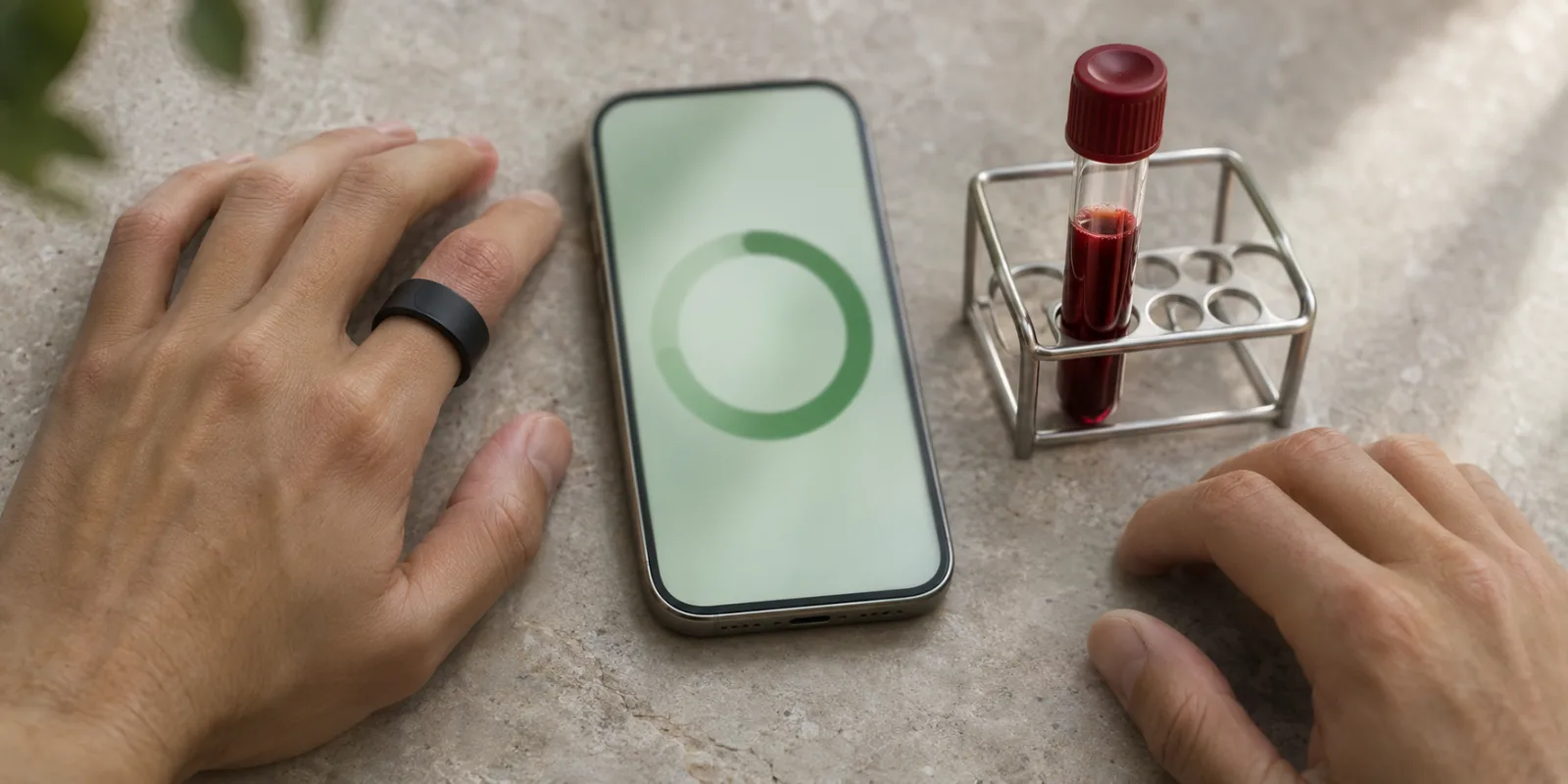
That candour is admirable, and it sits awkwardly beside what the emirate is building. On 13 October 2026, Abu Dhabi's Public Health Centre signed a two-year agreement with the smart-ring maker Ultrahuman to construct a "biological health age" model from medical test results and wearable data. A health age score already appears in the government's Sahatna app, available to any resident (Cullinan, 2026).
So a government is preparing to tell millions of people how fast they are ageing, in what may be the largest AI health deployment of its kind. The question nobody at the summit could fully answer is whether the number means anything at the level of an individual person. The peer-reviewed measurement literature suggests the honest answer is: not yet, and for reasons that are specific and fixable rather than vague.
Background: what a biological age clock actually measures#
Chronological age is how long you have been alive. Biological age is an attempt to express how worn your body is, which plainly varies between people of the same birth year. The appeal is obvious. The difficulty is that biological age is not a quantity anyone can measure directly, so every number comes from a model.
The best-studied family is the epigenetic clock. DNA carries chemical tags called methyl groups attached at specific positions, and the pattern of those tags shifts with age. Measure methylation at thousands of sites, feed it to a regression model trained to predict something, and you get an age estimate. Different clocks predict different things, which matters more than it sounds. First-generation clocks such as Horvath and Hannum were trained to predict chronological age. Later ones such as PhenoAge and GrimAge were trained on health and mortality outcomes, and DunedinPACE estimates the rate of physiological ageing rather than a level.
Two further terms. Epigenetic age acceleration is the gap between your clock reading and your chronological age, the thing people mean when they say they are "biologically younger". A surrogate endpoint is a measurement used in a trial as a stand-in for the outcome you actually care about, because waiting for the real outcome, here death, takes decades.
Newer approaches drop methylation entirely. Proteomic clocks read blood proteins. In the consumer wearables health market, models infer ageing from heart rate, sleep and temperature. A foundation model trained on more than 40 million facial photographs has been fine-tuned for biological age estimation and survival prediction (Haugg et al., 2026). The common thread is that all of them are predictions, and predictions have error bars that users rarely see.
The deployment, and the standard that contradicts it#
Here is the tension worth sitting with.
Abu Dhabi licensed the Institute for Healthier Living in November 2024 as a specialised healthy longevity medicine centre, and its Healthy Longevity Medicine Clinic Standard has been in force since April 2025 (Department of Health, Abu Dhabi, 2025). That standard is notably more cautious than the industry around it. Epigenetic and protein-based clocks claiming to measure biological age are listed as "Optional AND needs further validation", and drugs repurposed for longevity are expected to have randomised controlled trial data in humans with positive results (Cullinan, 2026).
So the regulator's own document says these clocks are not yet validated, while the public health centre builds one into a consumer app. Both things are true at once.
There is a governance wrinkle too. The rules were written by a small circle: the clinic helped the Department of Health draft them with input from the Healthy Longevity Medicine Society, on whose council the clinic's chief executive sits. Asked who had independently reviewed the standard, Melville said there were no global standards yet (Cullinan, 2026). That is not evidence of bad faith. It is what a field looks like before it has institutions.
| What is being deployed | What the evidence currently supports |
|---|---|
| A biological health age score from records and wearable data on a government app (Cullinan, 2026) | Abu Dhabi's own standard lists biological age clocks as optional and needing further validation (Department of Health, Abu Dhabi, 2025) |
| Individual readings presented as a personal number | Technical noise alone produced deviations of up to 3 to 9 years between replicate measurements of the same sample across six major clocks (Higgins-Chen et al., 2022) |
| Repeated tracking to show whether you are improving | Across 18 methylation-based ageing biomarkers, biological reliability over short intervals was mostly low to moderate, and technical reproducibility did not predict it (Sehgal et al., 2026) |
| Clocks used to judge whether an intervention worked | Different clocks may disagree about the same intervention, and some apparent changes are technical noise producing false positives (Borrus et al., 2024) |
| Results compared across studies and platforms | Methylation age estimates differ between EPICv1 and EPICv2 arrays across eleven clocks (Tay et al., 2025) |
Run the same sample twice#
The single most clarifying experiment in this field is also the simplest. Take one blood sample, split it, and run both halves.
When researchers did this across six major epigenetic clocks, technical noise alone produced deviations of up to three to nine years between replicates (Higgins-Chen et al., 2022). Not between people. Between two measurements of the same blood, on the same day.
That 2022 paper also proposed a fix, using principal components to suppress noise, and it worked well enough that PC-based clocks are now standard in careful work. But a 2026 study using the TranslAGE platform drew a sharper distinction. Evaluating 18 methylation-based ageing biomarkers, it found that most had excellent technical reproducibility across replicate assays, yet biological reliability, measured across repeated samples taken over short intervals under varying conditions such as meals, stress and environmental exposures, was substantially lower, with most clocks showing only low to moderate stability (Sehgal et al., 2026).
The sting is in a single sentence of that paper: technical reproducibility did not predict biological reliability. A clock can be beautifully consistent on repeat assays of the same tube and still wander when you eat lunch.
And this is not merely academic fastidiousness. The same work found that reliability propagates downstream: clocks with higher reliability produced more stable associations with cognitive outcomes and more consistent responses to interventions, while less reliable clocks yielded variable or misleading results (Sehgal et al., 2026).
Why this bites hardest in trials#
If a biological age score were only a consumer curiosity, measurement noise would be an annoyance. It becomes a scientific problem when clocks are used as surrogate endpoints, which is precisely where the field is heading, because nobody can run a trial whose endpoint is death in forty years.
With dozens of clocks available, different clocks may disagree about whether an intervention worked, and an apparent improvement in one clock can simply be technical noise producing a false positive (Borrus et al., 2024). Researchers analysing methylation at baseline, year one and year two in 899 participants of a supplement trial reached similar methodological conclusions about how clocks behave over short follow-up in healthy older adults (Hamaya et al., 2025).
Keep that in mind when reading the strongest-looking AI longevity result of the autumn. Insilico Medicine's rentosertib, an AI-discovered candidate for idiopathic pulmonary fibrosis, was reported in Nature Biotechnology in September to have made 42 patients from an earlier trial look biologically younger on six protein-based ageing clocks. As the reporting that surfaced it noted, these are exactly the clocks Abu Dhabi's standard says need further validation, and a small analysis of this kind cannot show whether patients aged more slowly or simply had healthier lungs (Cullinan, 2026). The company has since begun a 52-week phase III trial, which is the test that counts.
That caveat generalises. When a drug improves the disease a clock's inputs are sensitive to, the clock will move. Whether anything about ageing changed is a separate question, and one the clock cannot answer on its own.
What would make these numbers trustworthy#
None of this argues for abandoning the project. Ageing biology needs measurable intermediate endpoints, and clocks remain the most promising candidate anyone has. The useful question is what would have to be true before a government puts one on a phone.
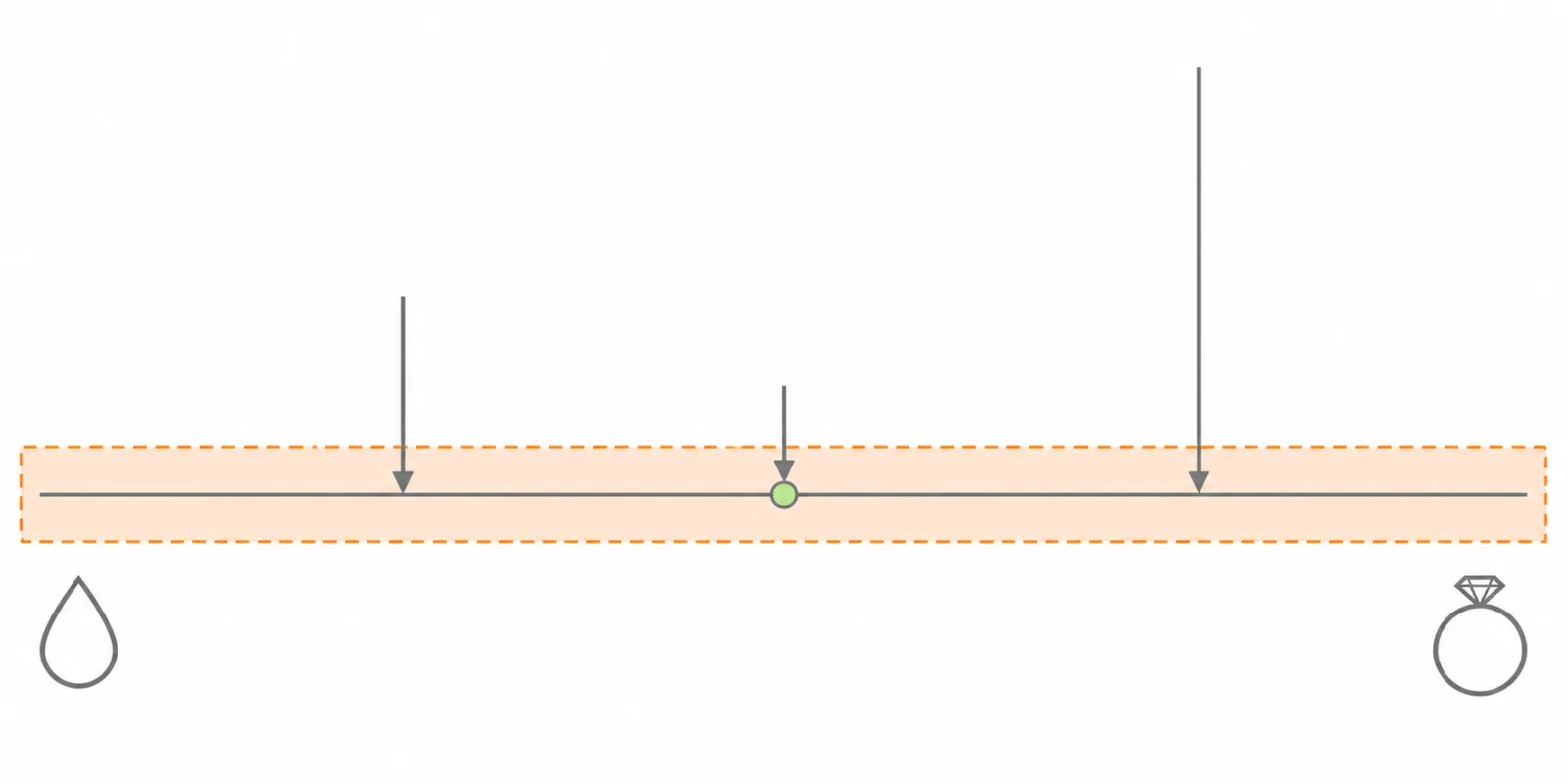
Report the uncertainty with the number. A biological age of 41 means something different if the method's replicate range is one year rather than nine, and users currently see the point estimate alone.
Specify which clock, trained on what. A reading from a first-generation chronological-age clock and one from a mortality-trained clock are not the same quantity, and the Singapore trial protocol language is right that these capture distinct aspects of ageing rather than one universally valid measure (Chong et al., 2026).
Publish the validation. Abu Dhabi has the genomes, the linked records and the political will to do something no country has done: run this as a properly evaluated public health programme rather than a product launch. Its own wearables white paper concedes that the most basic rule is still missing, asking what consent model should govern wearable data across clinical care, public health, research and secondary use, without answering it (Cullinan, 2026).
And keep the prize in proportion. Analysis of three decades of demographic data suggests survival to age 100 is unlikely to exceed 15% for females and 5% for males this century unless biological ageing itself can be markedly slowed (Olshansky et al., 2024). The realistic goal was never immortality. It is healthspan, the years lived free of illness, which is both more achievable and harder to sell.
Melville, to his credit, framed it the same way. "We need to prove that what we're doing actually does have validity," he said (Cullinan, 2026). That is the whole brief. The interesting thing about Abu Dhabi is not that it is selling longevity. It is that it may be the first place with enough data, and enough stated willingness, to find out whether any of it works.
Frequently asked questions#
What is biological age? An estimate of how worn your body is, as distinct from how long you have been alive. It cannot be measured directly, so every biological age figure is the output of a model trained to predict something, usually chronological age, mortality risk or pace of ageing.
What is an epigenetic clock? A model that reads chemical methyl tags attached to DNA at thousands of positions and converts that pattern into an age estimate. Horvath and Hannum clocks were trained on chronological age; PhenoAge and GrimAge on health and mortality outcomes; DunedinPACE on the rate of ageing (Chong et al., 2026).
How accurate is a biological age test? Less precise than the single number suggests. Technical noise alone produced deviations of up to three to nine years between replicate measurements of the same sample across six major clocks (Higgins-Chen et al., 2022).
Have clocks got more reliable since then? Technically, yes for some. A 2026 evaluation of 18 methylation-based biomarkers found most had excellent technical reproducibility, but biological reliability across repeated samples under everyday conditions was only low to moderate, and technical reproducibility did not predict it (Sehgal et al., 2026).
Can these clocks tell whether an anti-ageing intervention worked? Cautiously at best. Different clocks may disagree about the same intervention, and some apparent changes reflect technical noise rather than biology (Borrus et al., 2024).
What is Abu Dhabi actually doing? Its Public Health Centre signed a two-year agreement in October 2026 to build a biological health age model from medical test results and wearable data, and a health age score is already available to residents through a government app (Cullinan, 2026).
Does the emirate's own regulation support that? Not straightforwardly. Its Healthy Longevity Medicine Clinic Standard, in force since April 2025, lists epigenetic and protein-based biological age clocks as optional and needing further validation (Department of Health, Abu Dhabi, 2025).
Should I pay for a biological age test? That is a personal decision rather than a medical recommendation, and this article is not medical advice. What the evidence supports is modest expectations: treat a single reading as a noisy estimate rather than a verdict, ask which clock was used and what it was trained on, and be sceptical of any product claiming to have reversed your ageing on the basis of one measurement.
References#
- Borrus, D. S., Sehgal, R., Armstrong, J. F., Kasamoto, J., Gonzalez, J., & Higgins-Chen, A. T. (2024). When to trust epigenetic clocks: avoiding false positives in aging interventions. Aging Cell. https://doi.org/10.1111/acel.70756
- Chong, J., et al. (2026). Study protocol for evidence-based LIFEstyle interventions for the delay of COgnitive DEcline among Singaporean older adults (LIFECODES): a randomised controlled trial. Frontiers in Aging Neuroscience. Cited for its summary of what different classes of methylation clock estimate. https://doi.org/10.3389/fnagi.2026.1837717
- Cullinan, K. (2026, 6 November). 'No evidence' it will make you live longer: inside Abu Dhabi's rush to sell the science of ageing. Health Policy Watch. Reputable journalism, cited for the Abu Dhabi deployment, the summit interviews and direct quotations, none of which are available in primary sources. https://healthpolicy-watch.news/inside-abu-dhabis-gold-rush-to-sell-the-science-of-ageing/
- Department of Health, Abu Dhabi (2025). Healthy Longevity Medicine Clinic Standard. Official organisation document, in force since April 2025. https://www.doh.gov.ae/-/media/DOH/StanddardOfLogeivity.ashx
- Hamaya, R., Li, S., Chen, B. H., Pereira, A. C., Rigby, N., Zhu, H., Ivey, K. L., Rist, P. M., Manson, J. E., Dong, Y., & Sesso, H. D. (2025). Longitudinal changes in epigenetic measures over 2 years: methodological implications. GeroScience. https://doi.org/10.1007/s11357-025-01990-2
- Haugg, F., Lee, G., He, J., et al. (2026). Foundation artificial intelligence models for health recognition by use of face photographs (FAHR-Face): a model development and validation study. The Lancet Digital Health. https://doi.org/10.1016/j.landig.2026.101056
- Higgins-Chen, A. T., Thrush, K. L., Wang, Y., et al. (2022). A computational solution for bolstering reliability of epigenetic clocks: implications for clinical trials and longitudinal tracking. Nature Aging, 2, 644 to 661. https://doi.org/10.1038/s43587-022-00248-2
- Olshansky, S. J., Willcox, B. J., Demetrius, L., & Beltrán-Sánchez, H. (2024). Implausibility of radical life extension in humans in the twenty-first century. Nature Aging, 4, 1635 to 1642. https://doi.org/10.1038/s43587-024-00702-3
- Sehgal, R., Borrus, D. S., Gonzalez, J., Markov, Y., & Higgins-Chen, A. (2026). Biological versus technical reliability of epigenetic clocks and implications for disease prognosis and intervention response. Aging Cell. https://doi.org/10.1111/acel.70635
- Tay, J. H., Chew, Y. E., Wang, W., et al. (2025). DNAm age differences between Infinium MethylationEPICv1 vs EPICv2 in buffy coat, PBMC, and saliva samples. Communications Biology. https://doi.org/10.1038/s42003-025-08021-y