A headline number that needs a second look#
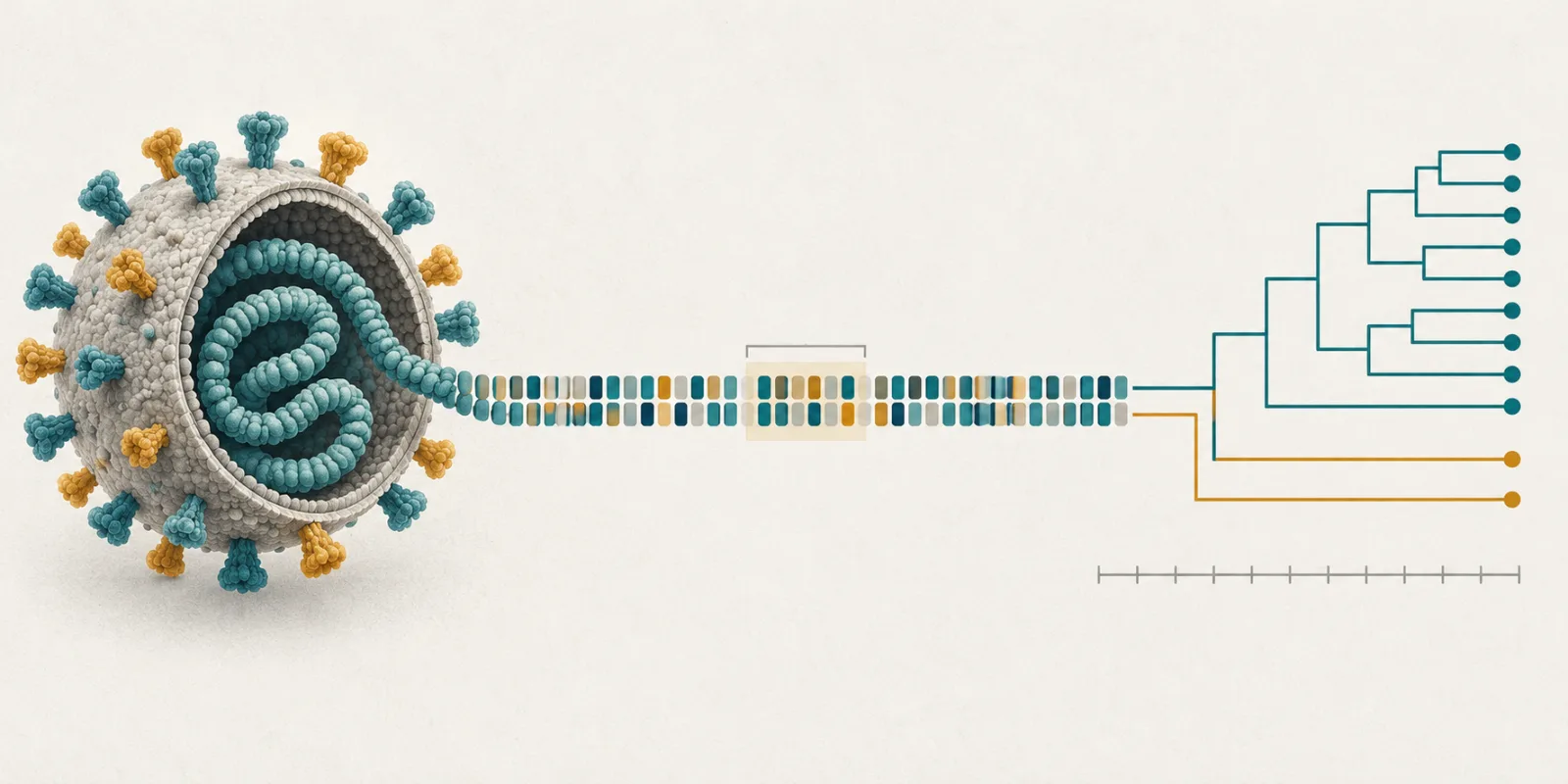
On 10 November 2026, The Lancet Regional Health Southeast Asia published a study from Delhi with a figure that sounds alarming: Zika-binding antibodies were detected in 609 of 657 blood samples, or 92.7% (Kumar et al., The Lancet Regional Health - Southeast Asia, 2026). Read quickly, it suggests that nearly everyone in a part of the capital has had Zika.
Read slowly, it says something more interesting. The same study found dengue-binding antibodies in 96.7% of samples, and every Zika-positive sample also reacted to dengue (Kumar et al., The Lancet Regional Health - Southeast Asia, 2026). The two viruses are close relatives, and antibodies made against one often stick to the other. The more informative result came from a smaller group tested twice, which let the team look for fresh Zika infections directly.
This article explains what the study did, why the headline figure cannot be taken at face value, and how it fits with earlier Indian serosurveys for dengue and Zika.
Background: terms you need#
Seroprevalence is the share of people whose blood contains antibodies to a given germ, which reveals past exposure including infections that caused no symptoms. Dengue and Zika are both flaviviruses spread by Aedes mosquitoes and are frequently mild or silent. A systematic review of 133 studies and 176,001 people estimated that 80% of dengue infections and 50% of Zika infections are inapparent (Systematic review, PLoS Neglected Tropical Diseases, 2021).
A binding antibody test shows that antibodies attach to viral material. A neutralising antibody (NAb) test is stricter: it asks whether the antibodies can actually stop a live virus infecting cells. Neutralisation is generally harder to do but more informative, and rising neutralising titres in the same person over time are a stronger sign of new infection than a single positive result.
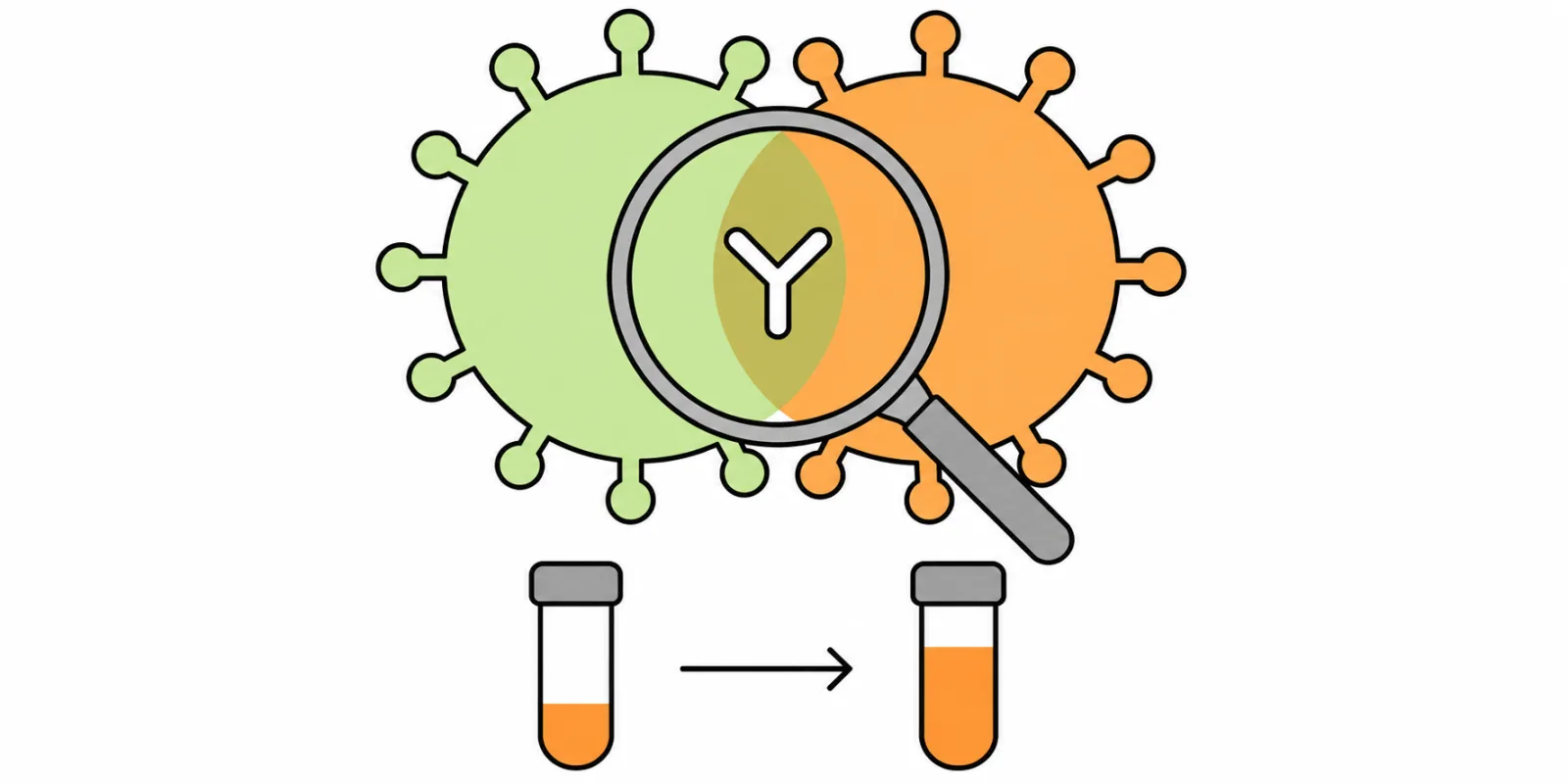
Cross-reactivity means an antibody raised against one virus binds a related one. Another Delhi team noted that standard ELISA tests may detect cross-reactive antibodies from other endemic flaviviruses, potentially inflating estimates (Sharma et al., Tropical Medicine and Infectious Disease, 2026). In a city where dengue is nearly universal, that is the central difficulty of measuring Zika.
What the new Delhi cohort did#
The study was nested within a larger prospective community cohort across three resettlement camps in New Delhi. The authors enrolled healthy participants aged 4 to 80 years (Kumar et al., The Lancet Regional Health - Southeast Asia, 2026).
Rather than a standard ELISA, the team estimated seroprevalence with a cell-based infection assay (Kumar et al., The Lancet Regional Health - Southeast Asia, 2026). A second blood sample was collected from consenting participants after close to eight months of follow-up, giving 220 paired samples, which were then tested by microneutralisation against Zika and all four dengue serotypes (Kumar et al., The Lancet Regional Health - Southeast Asia, 2026).
The study was funded by India's Department of Biotechnology and by intramural funds (Kumar et al., The Lancet Regional Health - Southeast Asia, 2026). The design matters because most earlier Zika work in India relied on a single snapshot. Following the same people over time is the right way to see whether new infections are happening.
Why 92.7% does not mean 92.7% Zika#
Of the 657 participants, 635 (96.7%) were positive for dengue antibodies, 609 (92.7%) for Zika antibodies, and only 22 (3.3%) were negative for both (Kumar et al., The Lancet Regional Health - Southeast Asia, 2026). Crucially, all Zika-positive samples also carried dengue cross-reactive antibodies (Kumar et al., The Lancet Regional Health - Southeast Asia, 2026).
If dengue exposure is close to universal and dengue antibodies partly cross-react with Zika, a high Zika binding rate is what one would expect even with little or no Zika circulation. The authors do not claim that 92.7% of residents had Zika. Their interpretation is that the results show the presence of dengue and Zika cross-reactive antibodies and indicate probable co-circulation of both viruses in peri-urban New Delhi (Kumar et al., The Lancet Regional Health - Southeast Asia, 2026).
That is a careful claim, and it is worth noting what it leaves out. It does not say how many people were infected with Zika, when, or with which lineage. A binding assay alone cannot answer those questions.
The paired-sample result is the real signal#
Neutralising antibodies give a sharper view. The team classified a participant as having an incident Zika infection if their Zika neutralising titre rose more than four-fold between the first and second samples. By that definition, 16 of 220 paired samples qualified, giving a cumulative Zika incidence of 7.3% (95% confidence interval 4.5 to 11.5%) over the follow-up period (Kumar et al., The Lancet Regional Health - Southeast Asia, 2026).
Two details make this more convincing than a simple count. First, the Zika titre rises came with minimal accompanying changes in dengue neutralising titres, which the authors say suggests natural, asymptomatic Zika exposure (Kumar et al., The Lancet Regional Health - Southeast Asia, 2026). If dengue exposure were driving the Zika readings, dengue titres would be expected to move too.
Second, the 220 follow-up samples came from 133 families, and the 16 rises mapped to 14 families, which the authors say rules out a clustering effect (Kumar et al., The Lancet Regional Health - Southeast Asia, 2026). In other words, the infections were not simply one household's outbreak.
There are limits. Only 33.5% of participants contributed a second sample, so people who stayed in the study may differ from those who dropped out (Kumar et al., The Lancet Regional Health - Southeast Asia, 2026). A four-fold rise is a convention, not proof of infection, and the study had no clinical or PCR confirmation of Zika in those individuals. The confidence interval is also wide.
How it sits alongside India's dengue data#
The 2017 to 2018 ICMR national serosurvey sampled 240 clusters (118 rural, 122 urban) in 60 districts across 15 states and tested 12,300 people aged 5 to 45 for dengue IgG using ELISA (Murhekar et al., The Lancet Global Health, 2019). Overall seroprevalence was 48.7%, rising from 28.3% in children aged 5 to 8 years to 56.2% in adults aged 18 to 45.
A separate September 2026 serosurvey in a low-income district of north-east Delhi found dengue IgG in 81.91% of 752 people, rising from 48.77% in children aged 2 to 14 to 98.39% in those aged 50 and over (Sharma et al., Tropical Medicine and Infectious Disease, 2026). In a follow-up of 100 paired samples, neutralising antibodies against DENV-3 fell from 79% to 60% and against DENV-4 from 69% to 60%, while DENV-1 and DENV-2 held steady (Sharma et al., Tropical Medicine and Infectious Disease, 2026).
Notice the pattern. Dengue exposure in Delhi's lower-income neighbourhoods is very high in adults, so any Zika antibody test in those settings has to contend with a sea of dengue-primed immune systems. That makes the new cohort's use of neutralisation testing, rather than binding tests alone, especially valuable.
These surveys differ in age range, assay and site, so their percentages should not be lined up as if they described one trend. The national survey covered several states and a narrower age band, while the Delhi surveys looked at specific neighbourhoods (Murhekar et al., The Lancet Global Health, 2019).
What earlier Zika work in India showed#
The Zika evidence base before this paper was thin. Nationwide vector surveillance by the Indian Council of Medical Research, launched after the World Health Organization's 2016 emergency declaration, concluded that its findings did not indicate transmission of the American-lineage pandemic Zika virus in India (Kumar et al., International Journal of Infectious Diseases, 2021).
A 2024 pilot in Bhopal, a region where the last outbreak was reported in 2018, found no Zika RNA in 75 febrile patients by PCR (Nema et al., Indian Journal of Public Health, 2024). Among healthy volunteers, 10 blood donors (reported as 15.38%) and 5 antenatal mothers (6.66%) were positive for Zika IgG, an overall rate of 10% (Nema et al., Indian Journal of Public Health, 2024). The 15.38% figure does not match 10 of 75 (13.3%), which suggests a different denominator.
A hospital study in Kashmir tested 812 patients, found dengue in 12.93% and chikungunya in 2.09%, and detected no Zika (Fomda et al., Vector-Borne and Zoonotic Diseases, 2025). Because it sampled hospital patients at a single centre, it cannot be read as a population survey.
Put together, earlier work could not confirm much beyond the possibility of low-level exposure. The new Delhi cohort is the first of these studies, as far as we found, to combine a community sample, a cell-based assay and paired neutralisation data to estimate Zika incidence.
Putting the studies side by side#
| Study | Setting | Method | Zika finding | Dengue finding |
|---|---|---|---|---|
| Kumar et al., 2026 | 3 Delhi resettlement camps, 657 samples, 220 paired | Cell-based infection assay; microneutralisation on pairs | 92.7% binding positive; 7.3% cumulative incidence by NAb rise (Kumar et al., 2026) | 96.7% binding positive (Kumar et al., 2026) |
| Sharma et al., 2026 | North-East Delhi, 752 people | Dengue IgG ELISA; PRNT on 100 pairs | Not tested | 81.91% positive; waning DENV-3 and DENV-4 neutralisation (Sharma et al., 2026) |
| Nema et al., 2024 | Bhopal, 75 patients plus 150 healthy | PCR; Zika IgG ELISA | No RNA; about 10% IgG positive (Nema et al., 2024) | Not the focus |
| Murhekar et al., 2019 | 15 states, 12,300 people | Dengue IgG ELISA | Not tested | 48.7% positive (Murhekar et al., 2019) |
What this means, and what is still missing#
For public health planners, the finding is that people may be quietly infected with Zika in a city saturated with dengue. The paper does not report clinical illness or pregnancy outcomes, so it cannot say whether any harm follows (Kumar et al., The Lancet Regional Health - Southeast Asia, 2026). Surveillance that adds neutralisation confirmation, including in antenatal clinics, would be a sensible next step, though that is our suggestion rather than the authors'.
For researchers, three questions stand out. How much of the 92.7% binding signal is truly Zika? Which lineage is circulating, given that earlier surveillance did not find the American lineage (Kumar et al., International Journal of Infectious Diseases, 2021)? And does the 7.3% incidence hold in other cities and in other seasons? A single six-to-eight-month window in three camps cannot settle them.
For readers, the practical message is unchanged and sensible. Mosquito control, including window screens, is associated with lower odds of dengue infection in Delhi homes (adjusted odds ratio 0.36) (Sharma et al., Tropical Medicine and Infectious Disease, 2026). That association comes from a cross-sectional survey, so it supports the advice rather than proving it.
Frequently asked questions#
Did 93% of Delhi residents have Zika? No. The study found Zika-binding antibodies in 92.7% of samples, but all of those samples also carried dengue cross-reactive antibodies, so the figure reflects cross-reactivity as well as any true Zika exposure (Kumar et al., The Lancet Regional Health - Southeast Asia, 2026).
How was new Zika infection detected? The team looked for a more than four-fold rise in Zika neutralising antibody titre between two samples from the same person, and found it in 16 of 220 participants (Kumar et al., The Lancet Regional Health - Southeast Asia, 2026).
What is the estimated Zika incidence? The cumulative incidence was 7.3% (95% CI 4.5 to 11.5%) over the follow-up period of close to eight months (Kumar et al., The Lancet Regional Health - Southeast Asia, 2026).
Why can dengue and Zika tests be confused? The viruses are closely related, and ELISA-type tests may detect cross-reactive antibodies from other endemic flaviviruses (Sharma et al., Tropical Medicine and Infectious Disease, 2026).
How common is dengue exposure in India? The 2017 to 2018 national survey found 48.7% seropositivity in people aged 5 to 45 (Murhekar et al., The Lancet Global Health, 2019). The new Delhi cohort found dengue-binding antibodies in 96.7% of samples, though in a specific set of camps rather than nationwide (Kumar et al., The Lancet Regional Health - Southeast Asia, 2026).
Is Zika dangerous in India? This study cannot answer that. It found probable asymptomatic exposure and did not report clinical outcomes (Kumar et al., The Lancet Regional Health - Southeast Asia, 2026).
Do most infections cause symptoms? No. A systematic review estimated that 80% of dengue and 50% of Zika infections are inapparent (Systematic review, PLoS Neglected Tropical Diseases, 2021).
References#
- Kumar, P., Gautam, R., Anantharaj, A. et al. Seroprevalence of Zika and Dengue virus among apparently healthy individuals in a community-based cohort in Delhi, India: a longitudinal Sero-surveillance (2022 to 2023). The Lancet Regional Health - Southeast Asia (2026). https://doi.org/10.1016/j.lansea.2026.100892
- Sharma, N., Basu, S., Rao, S. et al. Dengue and Chikungunya Seroprevalence in an Urban Low-Income Cohort in Delhi: A Cross-Sectional and Nested Longitudinal Study. Tropical Medicine and Infectious Disease 11(9), 253 (2026). https://pmc.ncbi.nlm.nih.gov/articles/PMC13611423/
- Murhekar, M. V. et al. Burden of dengue infection in India, 2017: a cross-sectional population based serosurvey. The Lancet Global Health 7(8), e1065 to e1073 (2019).
- Nema, S. et al. A Pilot Seroprevalence Study Suggests Silent Zika virus Transmission in Bhopal Region of Central India. Indian Journal of Public Health (2024). https://doi.org/10.4103/ijph.ijph_1098_23
- Kumar, N. P. et al. Nation-wide vector surveillance on Zika and Dengue did not indicate transmission of the American lineage-pandemic Zika virus in India. International Journal of Infectious Diseases (2021). https://doi.org/10.1016/j.ijid.2021.09.074
- Fomda, B. A. et al. Prevalence of Emerging Arboviral Infections: A Tertiary Care Hospital-Based Study from Kashmir, Northern India. Vector-Borne and Zoonotic Diseases (2025). https://doi.org/10.1089/vbz.2024.0085
- The worldwide seroprevalence of DENV, CHIKV and ZIKV infection: A systematic review and meta-analysis. PLoS Neglected Tropical Diseases (2021). https://doi.org/10.1371/journal.pntd.0009337